Why a Mongol bow was built in layers
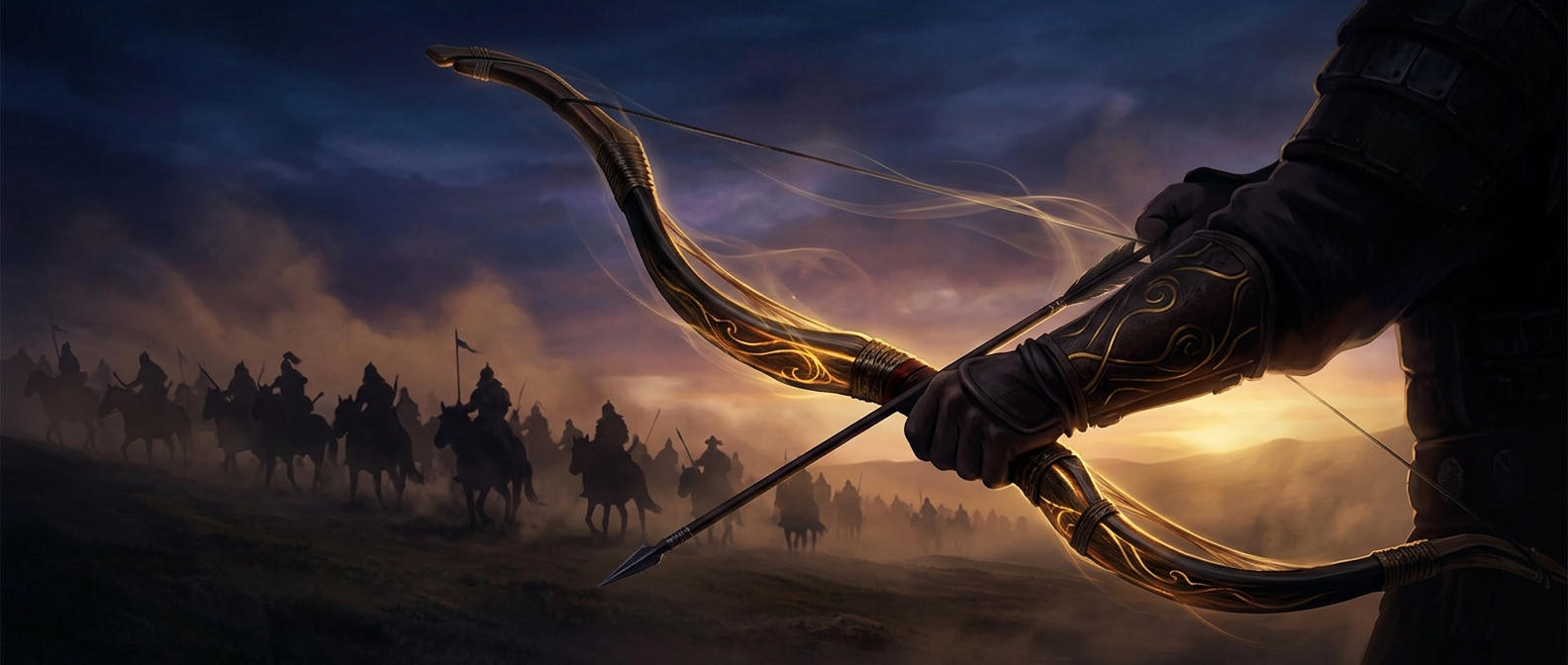
A steppe archer needed a weapon that could deliver force without being too long to handle on horseback. The solution was a composite bow: a compact bow made by joining materials with different strengths. Wood formed its core, horn was fitted to the side facing the archer, and sinew—the tough tissue from animal tendons—was attached to the outer side.
Each layer did a different job when the bow was drawn. The wood held the structure together; horn resisted compression, while sinew stretched under tension. Together, they let the limbs store substantial energy in a relatively short bow. When the string was released, that stored energy drove the arrow forward with great force.
Power came with a demanding draw
The bow’s compact size made it practical on horseback, but it did not make shooting easy. Drawing it required the archer to pull against the tension built into those layered limbs. Strength, practiced technique, and control mattered: a powerful bow could not produce a hard shot unless the archer could draw it consistently and release cleanly.
Its arrows could strike with enough force to threaten armor, though no bow made every arrow or every hit equally effective. Distance, angle, arrow construction, and the protection being struck all affected the result. The important advantage was the combination of stored energy and a manageable size—not effortless shooting or guaranteed penetration.
A weapon shaped by its environment
The materials also suited a mobile society whose craftworkers could use animal products and wood to make durable equipment. But composite bows demanded careful construction and protection from moisture, which could weaken their glued layers. Their performance depended not just on a clever design, but on skilled making and maintenance.
That tradeoff explains the bow’s reputation: it concentrated considerable power in a weapon suited to mounted use, while placing real demands on both the archer and the people who made it.