A report shaped by its messenger
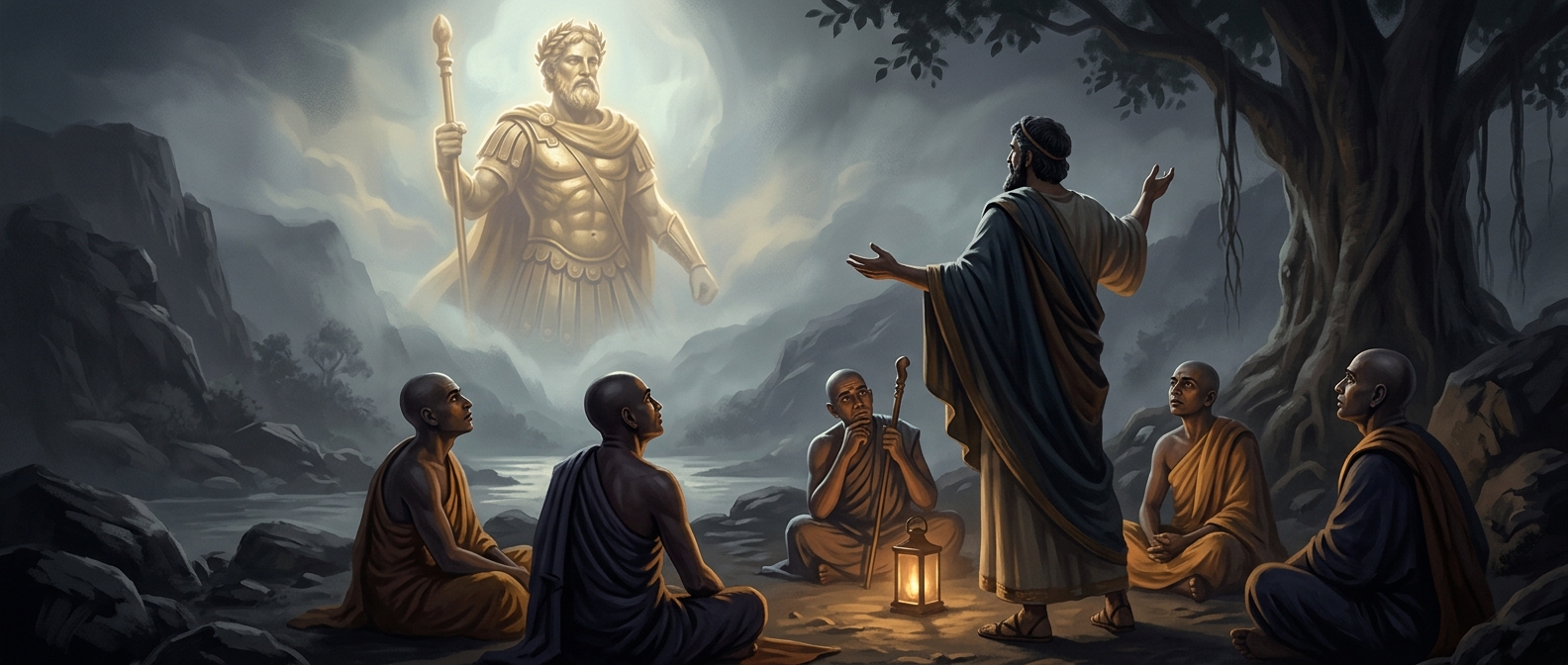
Onesicritus was a philosopher who traveled with Alexander the Great’s army during its campaign in India. He later wrote about what he had seen, including encounters with Indian ascetics—religious seekers who practiced a life of renunciation. In his account, the ascetics praised Alexander as a god.
That claim reached later readers through a work that has not survived intact. We know it from references and excerpts preserved by other ancient writers, so the episode comes to us already filtered through retelling.
Why his fellow Greeks were skeptical
Onesicritus was not a detached observer: he had accompanied Alexander and was telling the story of the expedition. His contemporaries accused him of making himself seem more important in his account. A story in which ascetics recognized Alexander’s divinity could also make the encounter—and the narrator’s role in it—sound extraordinary.
That suspicion does not prove the episode was fabricated. It does mean the report cannot by itself establish what the ascetics believed or exactly what they said. Ancient accounts of distant peoples often depended on a traveler’s interpretation, especially across language and cultural differences.
The lasting interest of the story is therefore twofold: it records a claim about Alexander, but also exposes how his companions competed to shape the meaning of his conquests. With Onesicritus’s original book lost, the boast and the doubt about it survive together.