A stadium designed for a crowd on a national scale
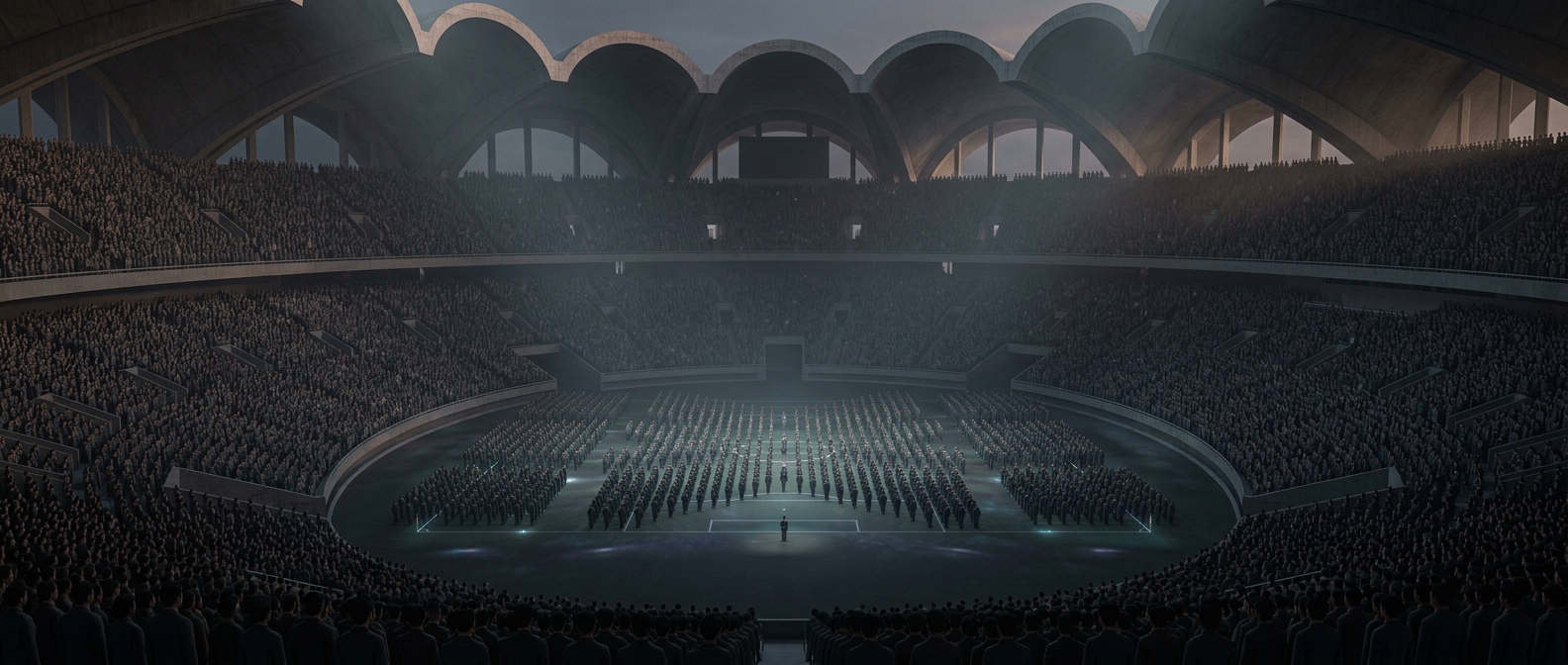
Pyongyang’s Rungrado 1st of May Stadium was built to hold as many as 150,000 spectators. At that scale, a stadium is not just a place to watch sport: it becomes a setting for ceremonies in which the audience itself is part of the spectacle.
The stadium opened in 1989 for the World Festival of Youth and Students, an international gathering hosted by North Korea. Its immense stands made it possible to bring a vast audience together under one roof, while the broad arena could accommodate sporting events and large-scale performances.
When spectators become part of the show
North Korea’s mass performances use synchronized groups of performers to create changing images and patterns. In some productions, people in the stands hold colored cards and flip them in sequence, turning the seating area into a giant moving backdrop. The venue’s scale makes that visual effect possible: patterns can be read across the stadium rather than only from nearby seats.
That design also has a practical tradeoff. A building meant for enormous gatherings needs extensive circulation space and coordination; filling it is an event in itself. Its significance lies not only in how many people it can seat, but in how it lets a government stage collective spectacle before a crowd large enough to seem like a nation gathered in one place.