Turning Separate Schools Into a Shared Practice
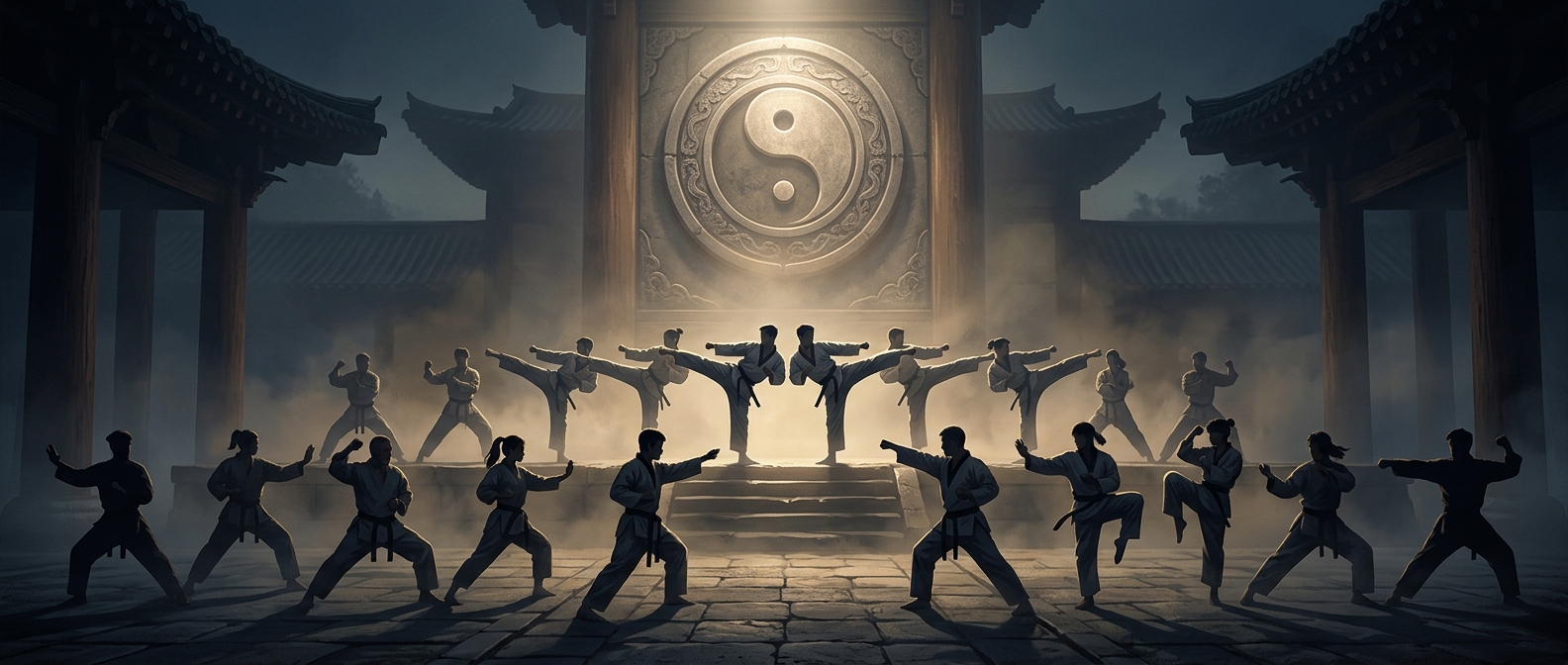
After the Korean War, martial-arts schools across South Korea taught related but distinct systems. Many drew on karate and other influences, and each school—often called a kwan—had its own lineage, teaching habits, and preferred techniques. That variety made it difficult to present them as one national martial art.
The effort to create taekwondo was therefore partly an act of organization. Leaders promoted a common name and worked toward shared methods of teaching, grading students, and describing techniques. Standardization meant that practitioners from different schools could recognize a common framework instead of encountering an entirely separate system at every training hall.
What a Common System Changed
A standardized curriculum makes a martial art easier to teach beyond its original schools. Students can move between instructors with fewer surprises; examiners can judge progress against shared expectations; and competitions can use common rules. Those practical tools also make a discipline easier for schools, public institutions, and eventually international organizations to adopt.
The process did not erase every difference or settle every dispute. The schools had distinct histories, and agreement on a name or framework did not instantly make their techniques identical. Taekwondo’s development involved both preserving martial practice and deciding which parts could represent the whole.
A National Identity You Could Practice
The result was more than a collection of fighting techniques. A common system gave South Korea a martial art that could be taught and recognized as distinctly Korean, while giving practitioners across the country a shared vocabulary and structure. The unification project turned a scattered landscape of schools into a practice that could travel—one class, rank test, and competition at a time.