One body, two kinds of behavior
Chiron is not switching between being an asteroid and a comet. Those labels describe different things: an asteroid-like object is identified mainly by its solid body and orbit, while a comet is recognized by activity such as a cloud of gas and dust around it. Chiron’s central body follows an orbit in the region between the giant planets, but it has also shown comet-like activity.
When sunlight warms a comet’s icy material, some of it can turn directly into gas. Escaping gas can lift dust from the surface, creating a faint surrounding cloud called a coma. Chiron’s activity is comparatively subtle and can vary, so it may look like an ordinary small body at one time and show signs of a comet at another.
Why astronomers call it a centaur
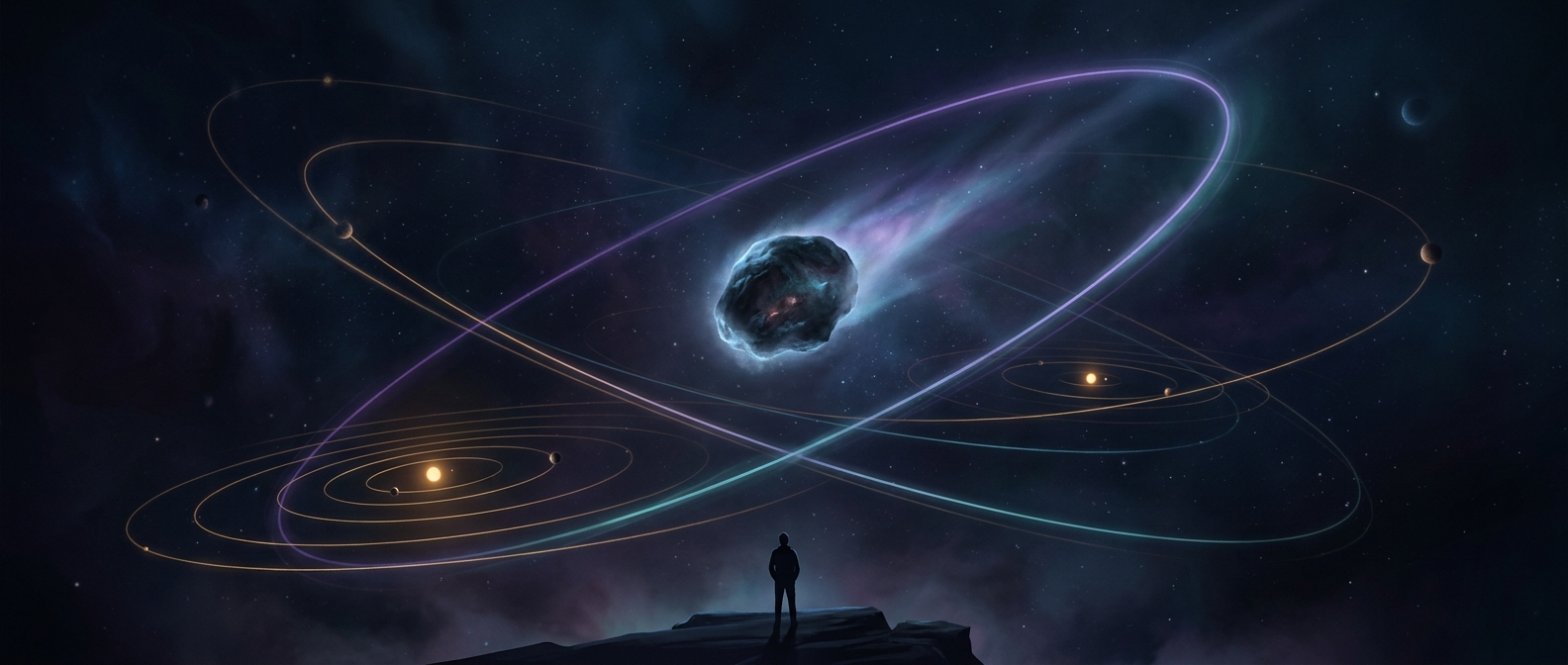
“Centaur” is an orbital category for small bodies traveling among the giant planets. Their paths can be disturbed by those planets’ gravity, making them less settled than the orbits of many asteroids farther inward. The category describes where Chiron travels; its comet-like activity describes what its surface can do.
That distinction explains its dual identity: Chiron is cataloged as both minor planet 2060 Chiron and comet 95P/Chiron. The paired designations reflect two useful ways of tracking the same object—not two separate bodies, or a transformation from one class into another.