Why Mercury stays near the Sun in our sky
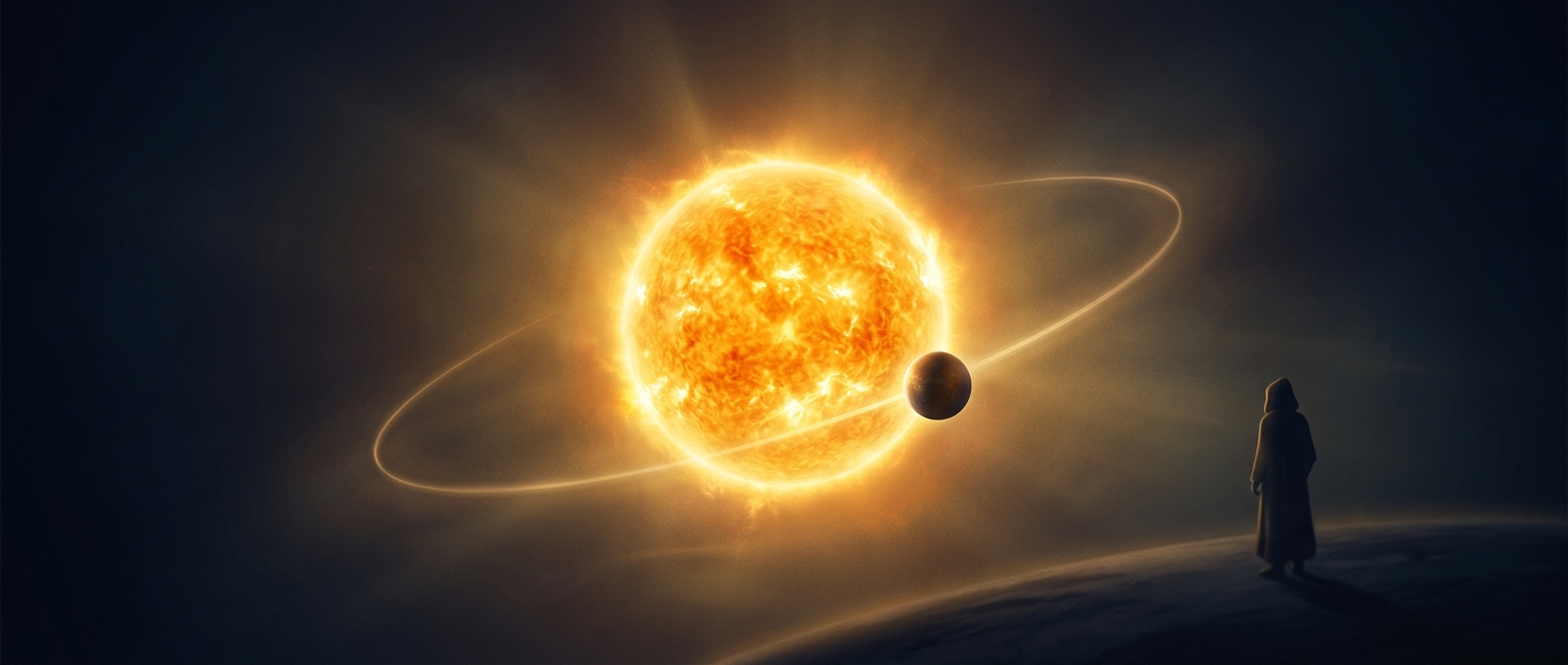
Mercury travels around the Sun on an orbit inside Earth’s. From our viewpoint, that means it can appear in only a limited part of the sky: even when it swings to the side of the Sun, it never gets very far away from it. The greatest apparent separation is about 28 degrees—roughly the width of a hand held at arm’s length.
This is a matter of perspective, not a sign that Mercury is fixed in place. As the planet moves along its orbit and Earth moves along ours, Mercury shifts from one side of the Sun to the other. But because its path lies closer to the Sun than Earth’s, it cannot appear on the opposite side of the sky, as an outer planet can.
A narrow window for seeing it
The geometry also explains why Mercury is often hard to spot. When it appears east of the Sun, it becomes visible low in the western sky after sunset; when it appears west of the Sun, it can be seen low in the east before sunrise. At other times, it is lost in daylight or hidden by the Sun’s glare.
Even at its farthest apparent distance, Mercury remains close to the bright horizon glow around sunrise or sunset. Its orbit therefore gives observers only brief, low-in-the-sky viewing windows—not a chance to find it high overhead in a dark night sky.