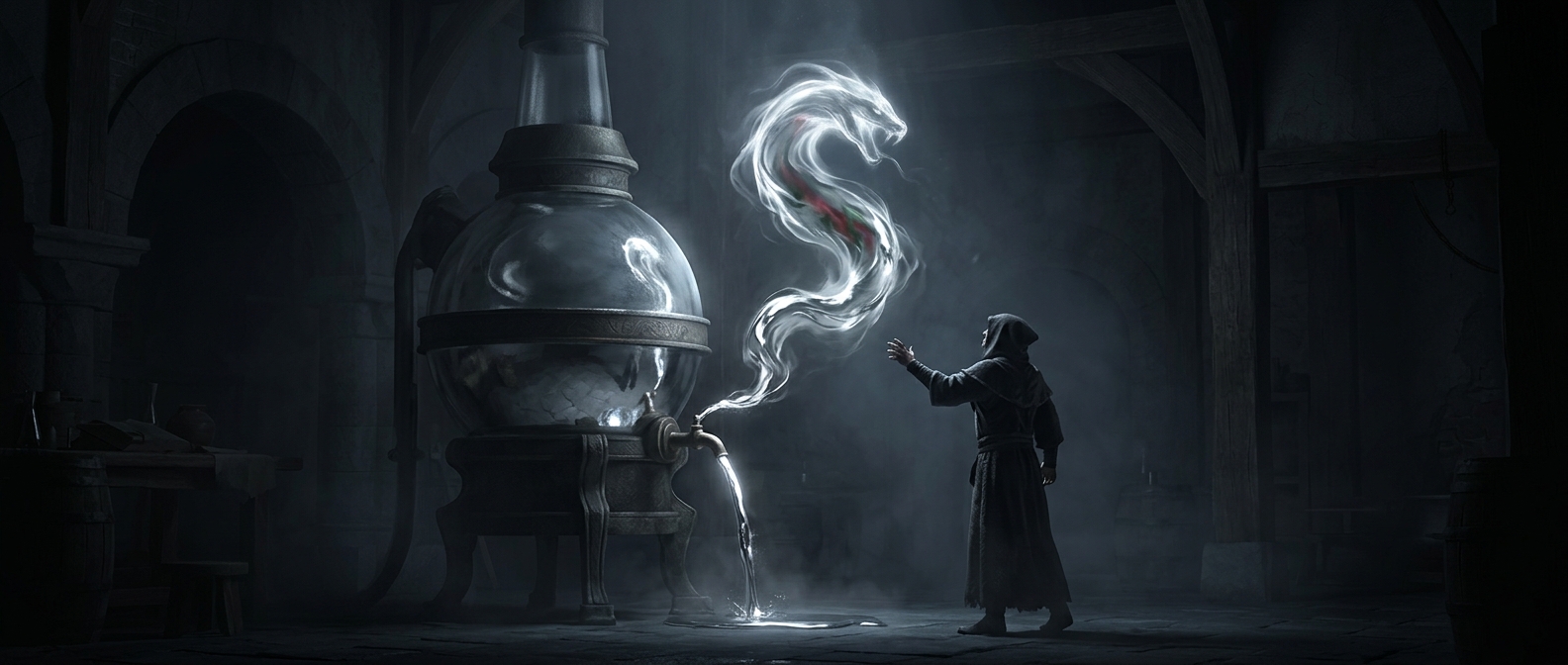
Why mercury seemed like a metal between states
Mercury looked like a contradiction: a bright, heavy metal that flowed at room temperature. It gathered into shifting beads, split apart, and joined again. To observers who expected metals to be solid, that behavior made it seem less like an ordinary material than a substance in motion.
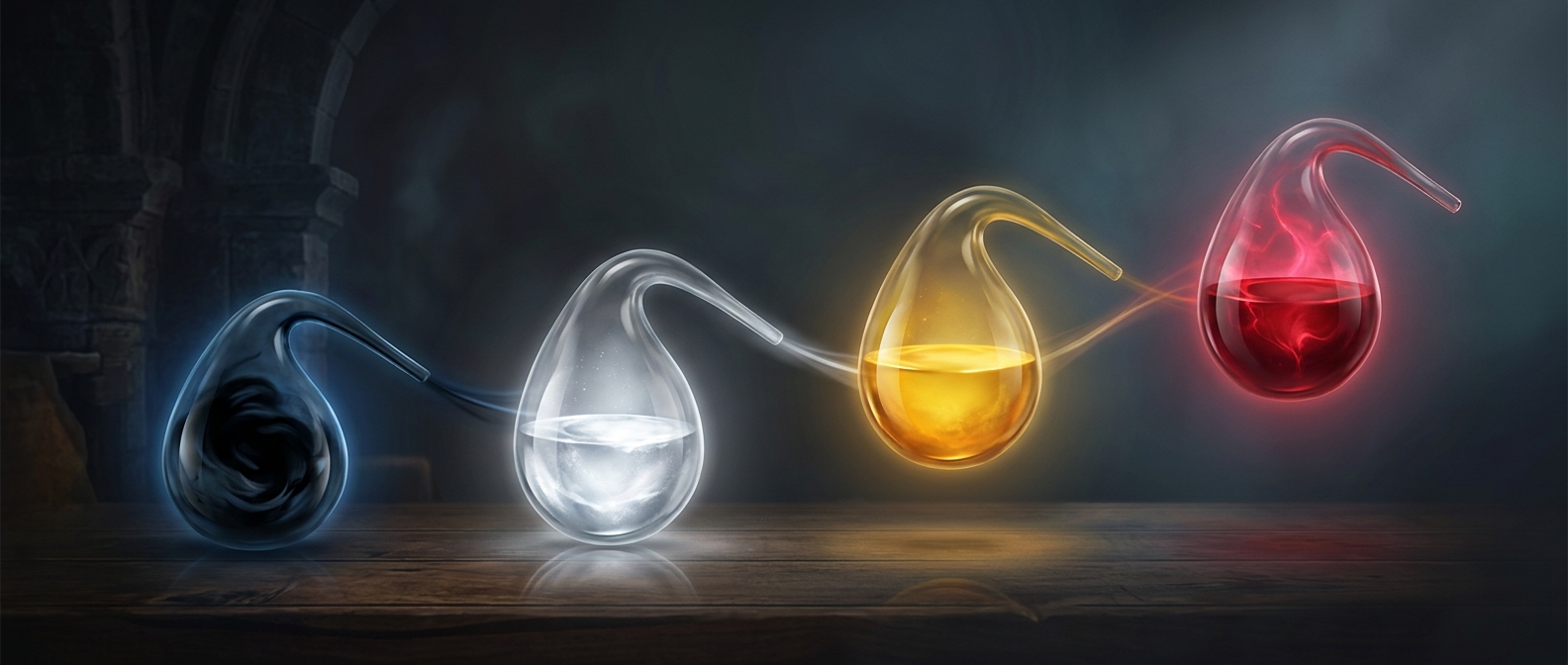
Some historical theorists gave that impression a deeper meaning. They treated mercury as a “spirit” of metals—not a ghost, but a hidden principle thought to link or animate earthly substances. Its metallic sheen suggested kinship with other metals; its fluidity suggested transformation. Mercury thus seemed to occupy a border between solid matter and something more elusive.
A metaphor with a physical danger
The symbolism grew from mercury’s actual properties, but those properties did not make it safe. Mercury is poisonous, and breathing its vapor can expose the body to harm; bare-hand contact was a real hazard even when the liquid itself seemed smooth and almost magical. The same substance that invited speculation about transformation could quietly threaten the people handling it.
That tension is part of the idea’s force: mercury looked like a metal escaping its usual form, so it could stand for a hidden connection among materials. Its apparent freedom was not spiritual evidence, but a striking physical behavior that gave the metaphor its grip.