The water in your glass has had a long journey
Water molecules do not get used up when an animal drinks them. The body absorbs some, then releases water through breath, sweat, or waste. From there, it may enter soil, rivers, lakes, or the air and eventually return as rain or snow. This repeating movement—the water cycle—has been running for billions of years.
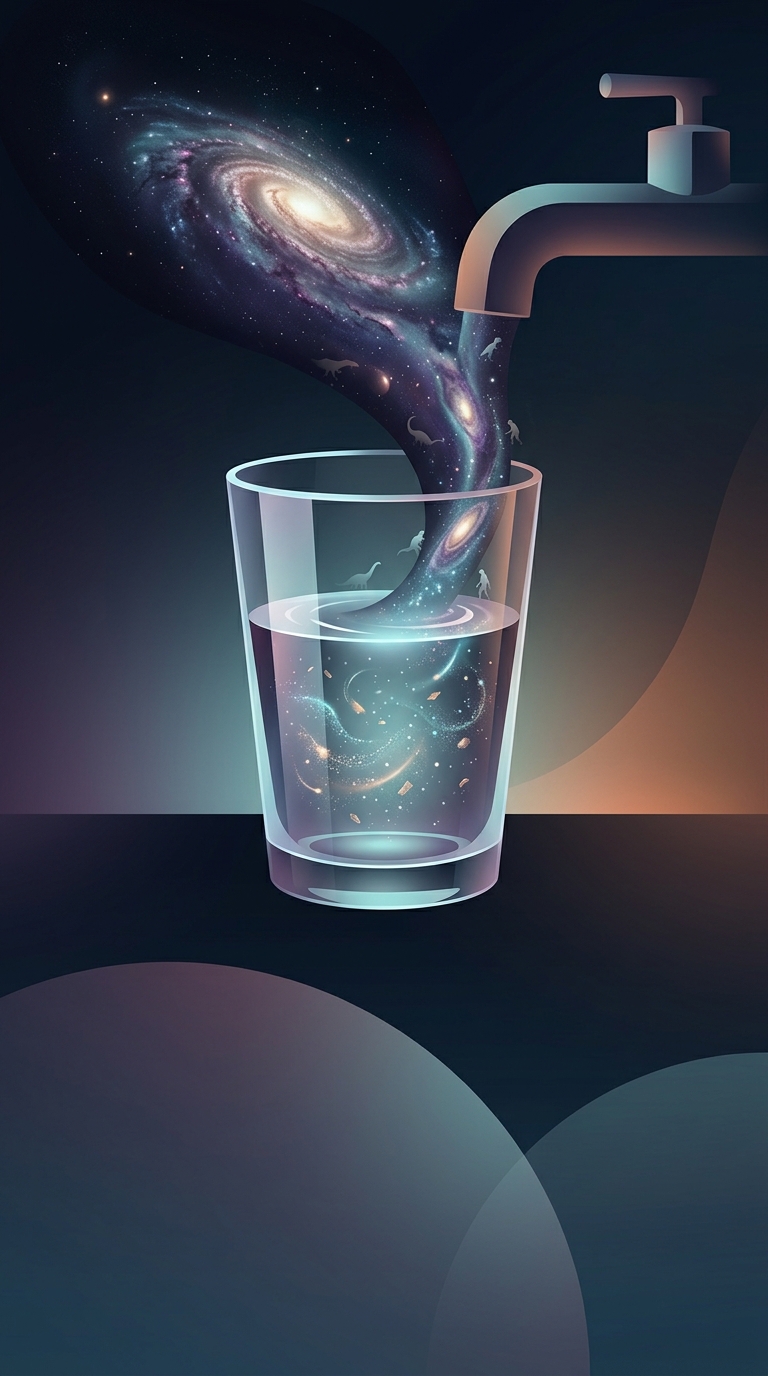
That means water reaching a tap is not necessarily “new” water in any everyday sense. Its molecules have been continually shuffled among oceans, clouds, groundwater, plants, and living things. Some molecules in today’s drinking water have almost certainly passed through ancient organisms, perhaps including dinosaurs. The same basic water molecules have been circulating since long before humans existed.
How old water reaches a modern faucet
A raindrop may seep underground and remain in an aquifer, a layer of water-bearing rock or sediment, before being pumped up for treatment. Or it may flow into a river or reservoir, where it mixes with water from many sources. Treatment removes contaminants and microbes; it does not normally replace the water molecules themselves. Pipes then carry that treated water to homes.
Mixing makes the history impossible to trace molecule by molecule. A glass is an enormous crowd of molecules, and only a tiny fraction could have come from any particular ancient drink. So the striking point is not that a dinosaur’s water survives as an intact gulp. It is that Earth keeps recycling the same water through radically different eras and forms—and some of it can eventually arrive at your kitchen tap.