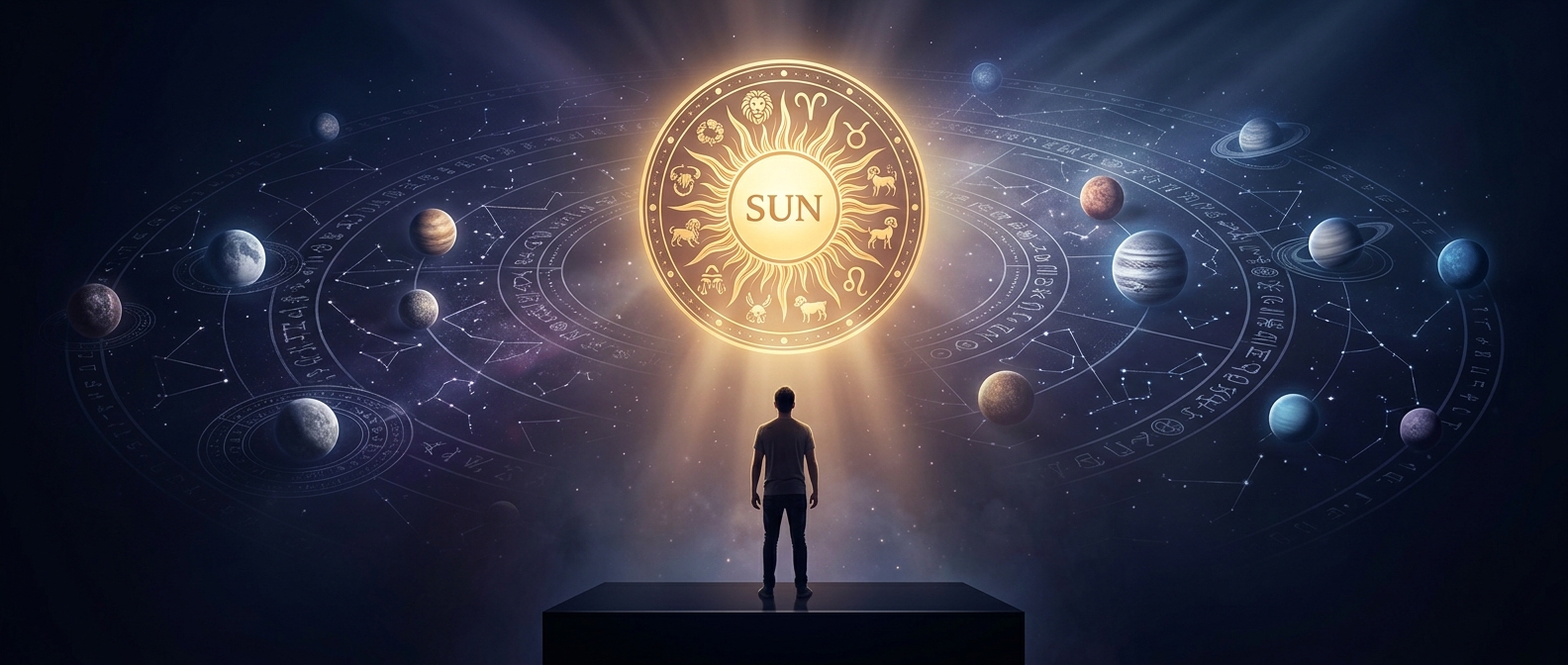
Why astrology’s shorthand stops at the Sun
A Sun sign is easy to package: it comes from one date and can be presented as a compact personality label. That makes it useful for horoscopes, character archetypes, and casual conversation. But within astrology itself, it is only one placement in a much larger symbolic map.
A birth chart places the Sun, Moon, and planets in the zodiac signs and in houses, which astrologers associate with different areas of life. It also tracks the angles between planetary positions. The chart depends on the time and place of birth as well as the date, so two people with the same Sun sign can have notably different charts.
What the other placements add
In astrological interpretation, the Sun is often treated as a central identity or sense of self. The Moon is associated with emotional responses, while other planets are assigned themes such as communication, relationships, drive, or expansion. Houses add another layer by connecting those themes to parts of life; angles describe how placements relate to one another.
These meanings are part of astrology’s interpretive tradition, not established scientific measures of personality. Their importance is that they show how much information a full chart is designed to consider. A single sign cannot capture those layers, even on astrology’s own terms.
A richer chart, a harder pop-culture hook
The basic Sun-sign format thrives because it is portable: readers usually need only a birthday to find their sign. A full chart asks for more birth details and takes longer to explain. That tradeoff favors the simple label in entertainment, even though it leaves out most of the framework astrologers use when reading a chart.
So when a film, meme, or horoscope reduces someone to “a Leo” or “a Pisces,” it is using astrology’s most recognizable entry point—not the whole chart. The omitted placements are where the system’s more individualized interpretations begin.