How the odd card turns into a penalty
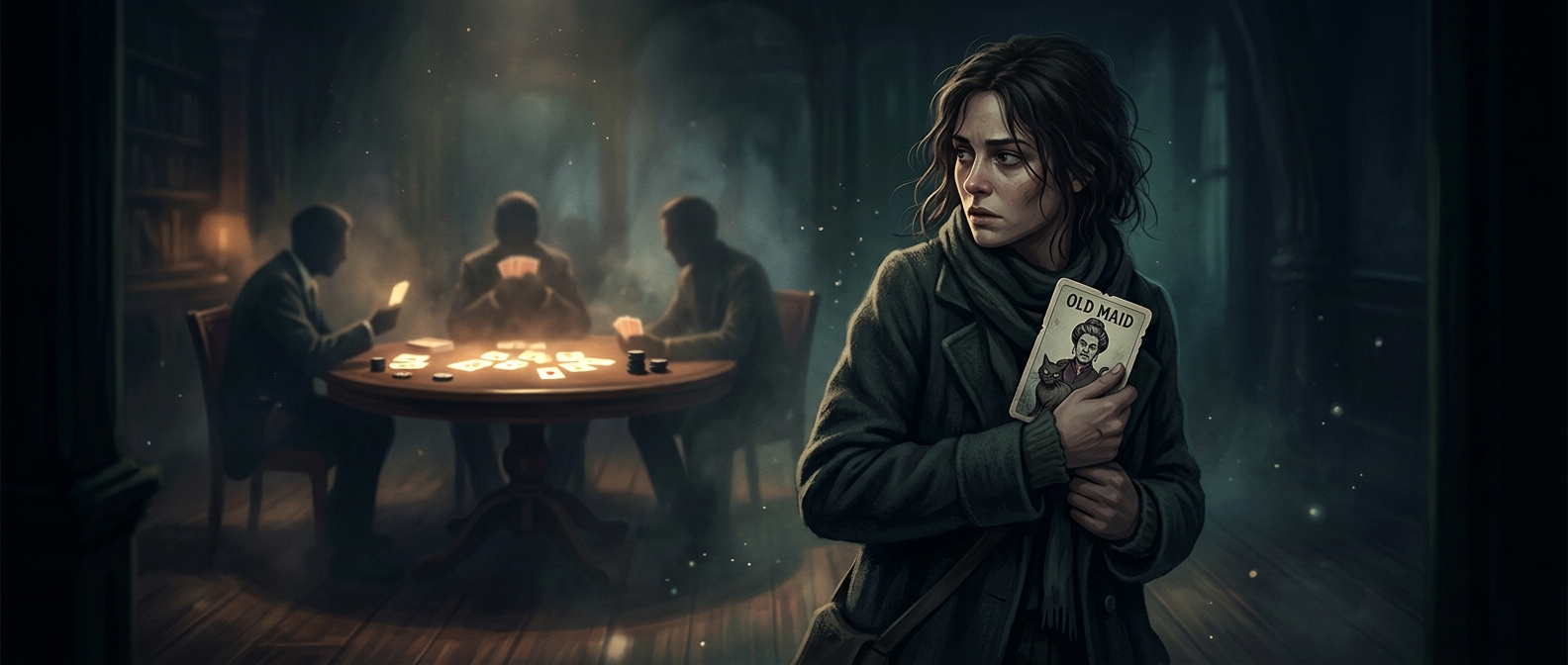
Old Maid is built around pairs. Players begin by removing matching pairs from their hands; on each turn, a player draws one card from a neighbor without seeing its face. If the new card completes a pair, that pair is discarded. The hands gradually shrink until every possible pair is gone and one card remains: the unpaired Old Maid.
That final card is the game’s built-in penalty. In the classic version, the deck is arranged so one queen has no matching queen. Other versions use a special Old Maid card or a deck with one card removed. Either way, the rules create a single leftover that cannot be cleared by making pairs.
A game of clues, not control
Most cards are temporary: a player can get rid of them as soon as a matching card arrives. The danger is the one card that cannot be paired, but no one can choose exactly where it goes. A player holding it must offer it during a draw, while the next player chooses a card at random from the offered hand.
That makes the game less about calculating a winning move than reading small clues. Players may remember which cards have appeared, watch an opponent’s hesitation, or try to keep a large hand from making the dangerous card easy to identify. These tactics can influence a turn, but they cannot guarantee safety.
The ending is deliberately simple: when the last pair disappears, the game stops immediately. Everyone else has managed to shed their cards; one player is left with the exception the deck was designed to preserve.