How physical discomfort could shape Tony Soprano’s mood
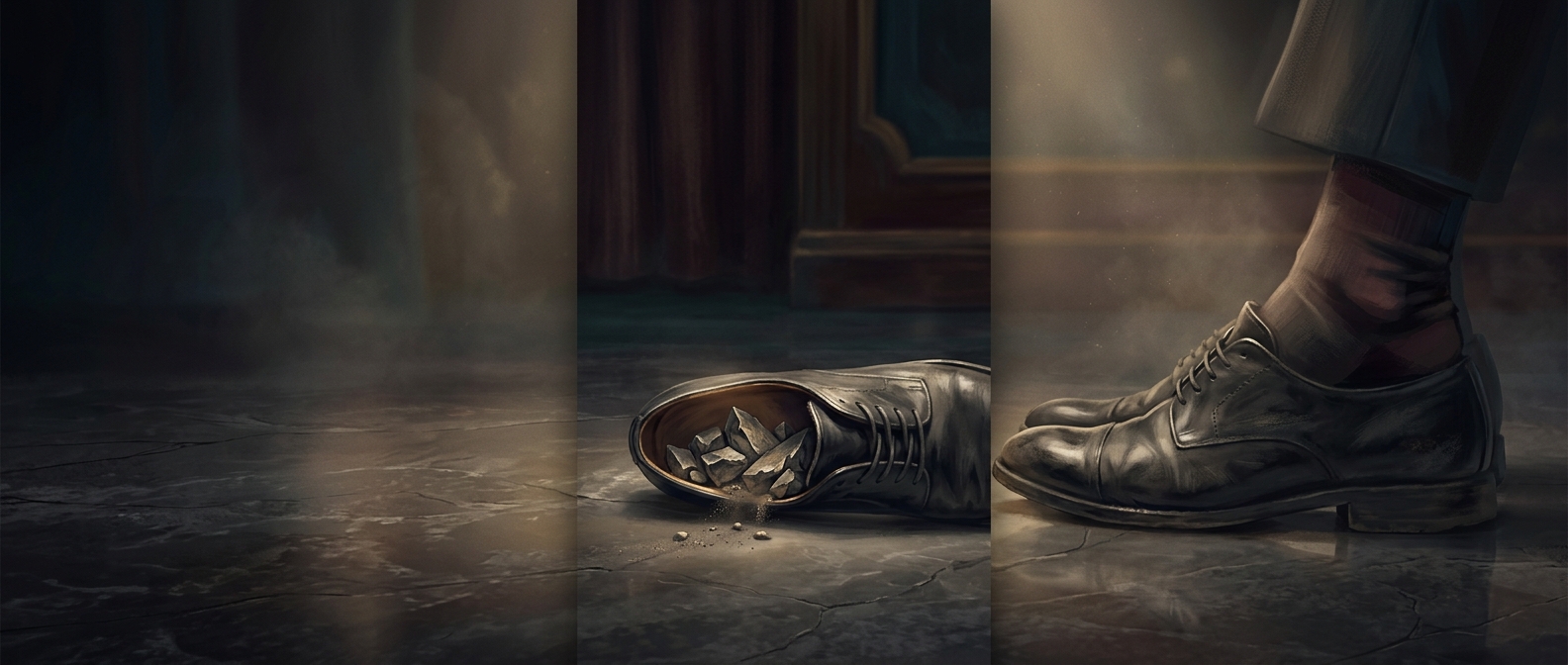
Rocks in a shoe turn irritation from an idea into a sensation: each step gives the actor a small, recurring annoyance to respond to. Sleep deprivation can similarly leave someone feeling worn down and short-tempered. Gandolfini used both kinds of discomfort to help sustain the edge he wanted for Tony, rather than relying only on an abstract instruction to “act irritated.”
A prompt, not a performance by itself
The discomfort would not dictate exactly how Tony behaved. Gandolfini still had to make choices about when to snap, how long to hold a pause, and how much tension to show. But a persistent physical nuisance can give those choices a bodily starting point: a tight posture, a restless shift, or less patience in a conversation. Small reactions can make a character’s temper feel present even in a quiet scene.
That approach also carries a tradeoff. Discomfort may help an actor access a particular state, but it can become distracting or interfere with movement and concentration. Its usefulness depends on whether it supports the scene rather than taking it over. In Gandolfini’s case, the rocks and lost sleep were tools for keeping Tony’s irritation close at hand—not substitutes for the acting that made it legible.