When a Tentacle Became a Sea Monster
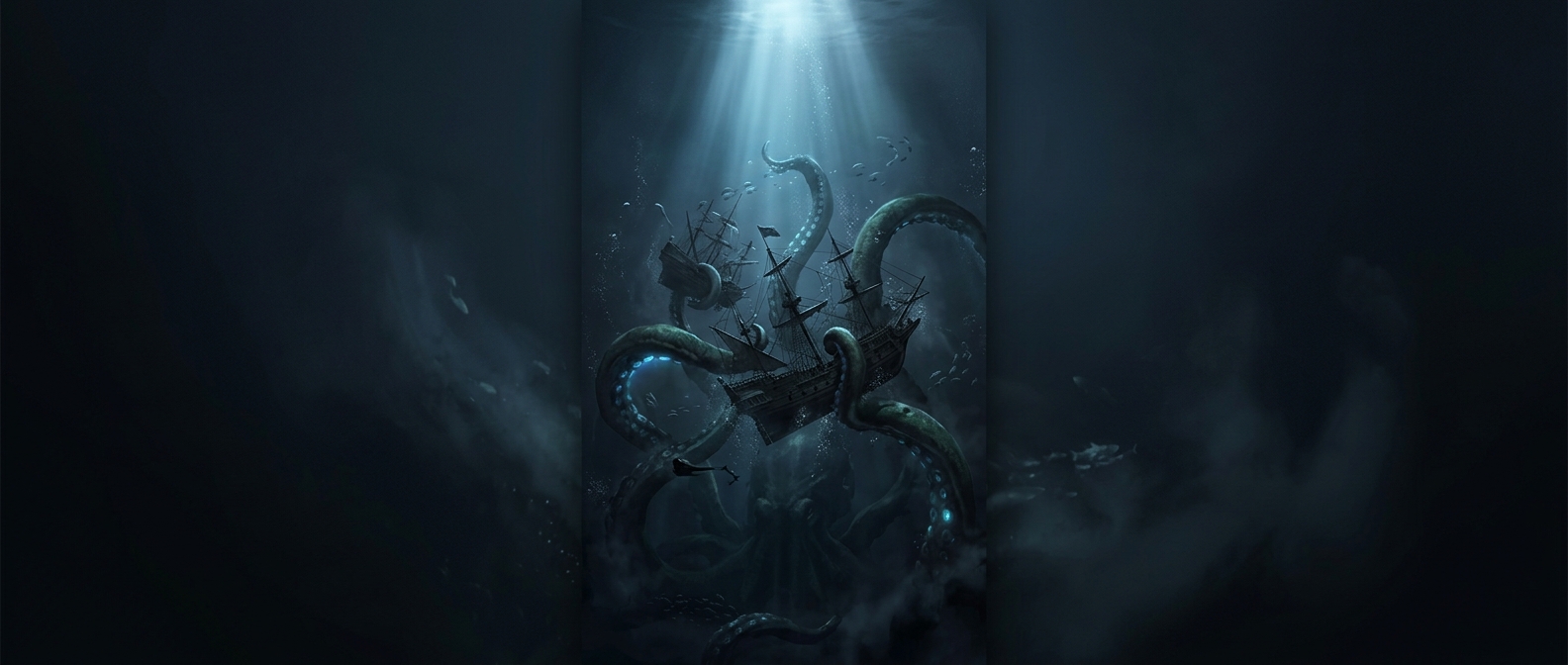
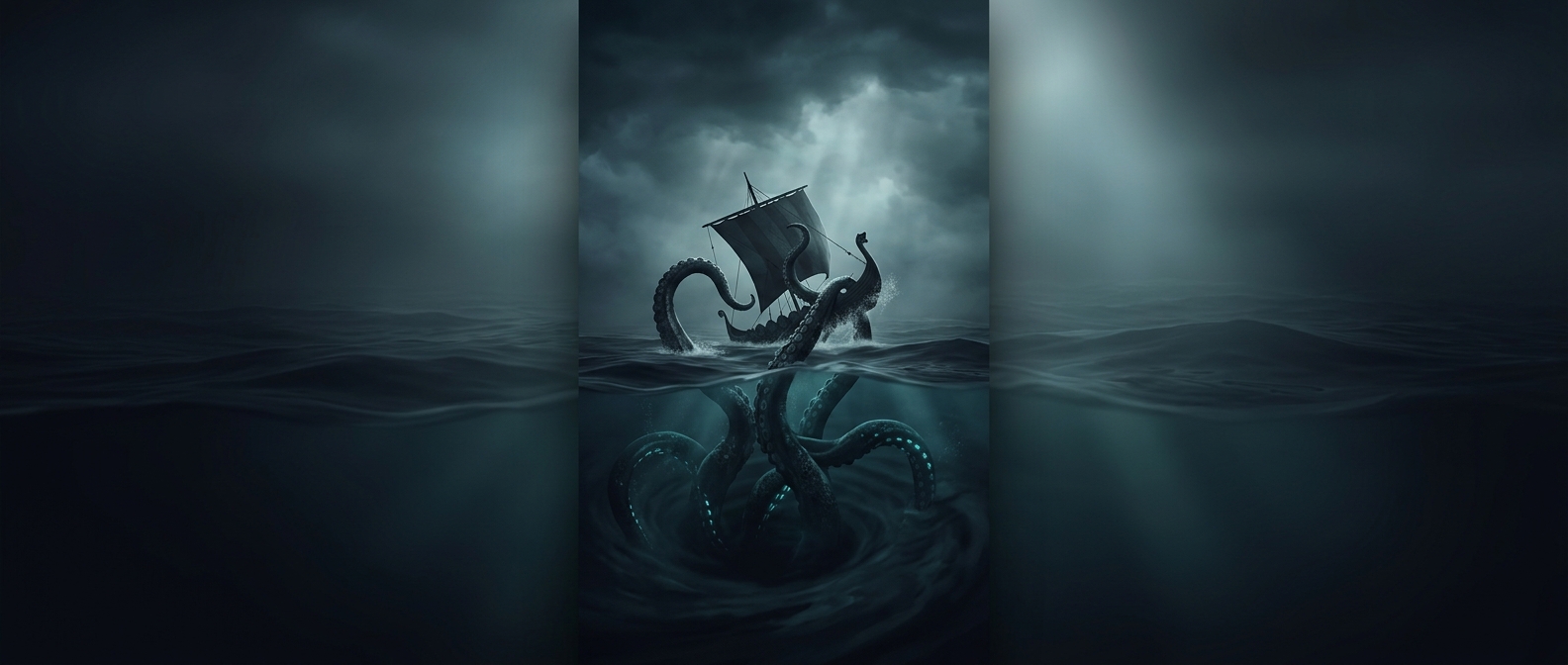
A sailor who saw only part of a giant squid had little chance of recognizing it. The animal’s long feeding tentacles can extend far beyond its body, and a glimpse of pale limbs at the water’s surface could look like something reaching up from below. In darkness, rough seas and poor visibility, the shape would be harder still to identify.
That makes giant squid a plausible influence on kraken stories—but not a proven origin for any particular tale. A real animal could supply a memorable image; retelling could turn an uncertain sighting into an increasingly enormous and threatening creature.
The Deep Keeps Its Animals Out of Sight
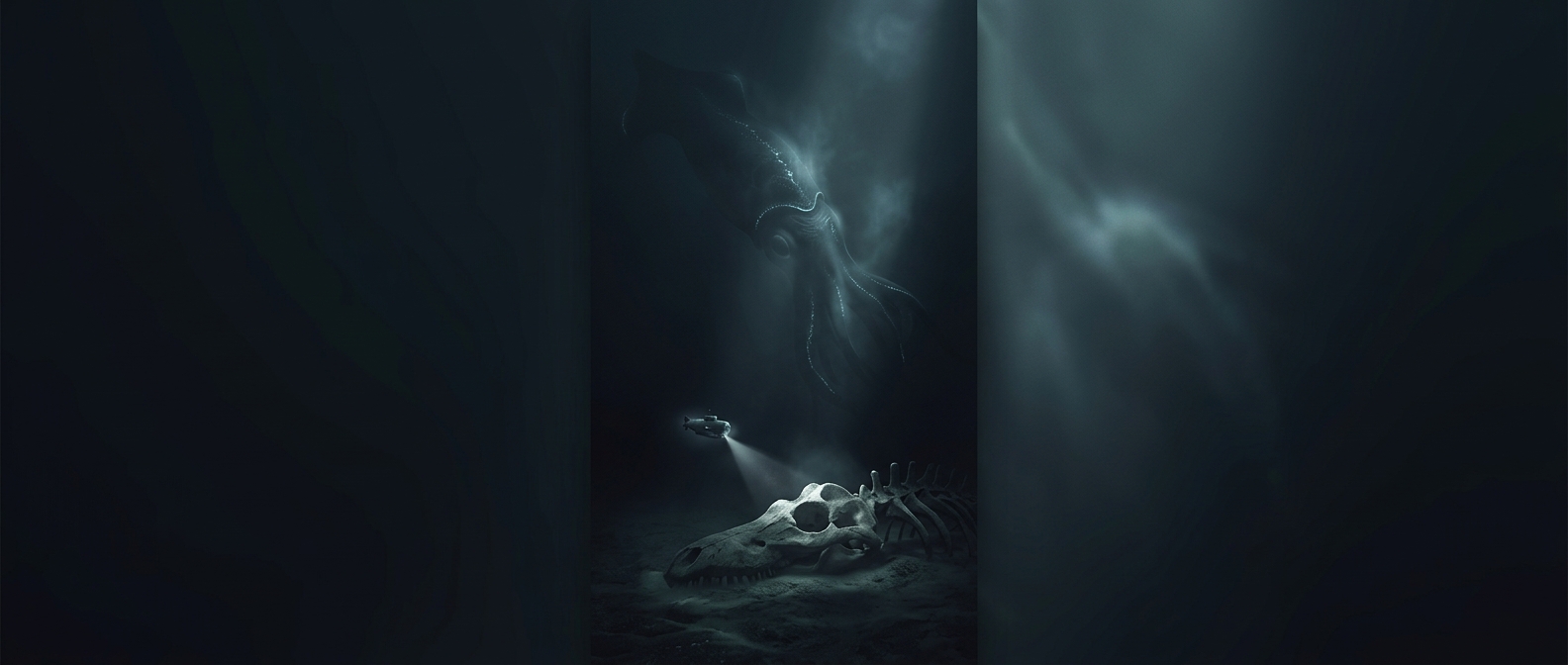
Giant squid live in the ocean’s deep, dim waters, where sunlight fades away. People do not routinely encounter them there: the animals are difficult to observe in their habitat, and sightings near the surface are uncommon. For much of history, accounts of unfamiliar deep-sea life therefore arrived as fragments—an animal seen briefly, or evidence found after it had died.
That gap between the living creature and the limited view of it is fertile ground for legend. A tentacle breaking the surface does not reveal the animal’s size, shape or behavior; the observer has to imagine what lies beneath. The enduring power of the kraken may begin in that moment: a real glimpse, made monstrous by everything the sea kept hidden.