When a Bandage Pulls More Than Hair
Cyanoacrylate is a fast-setting adhesive: it hardens as it reacts with moisture on a surface. In some medical products, it forms a firm bond with the outer skin. That bond can be stronger than the connections holding the skin’s outermost cells together.
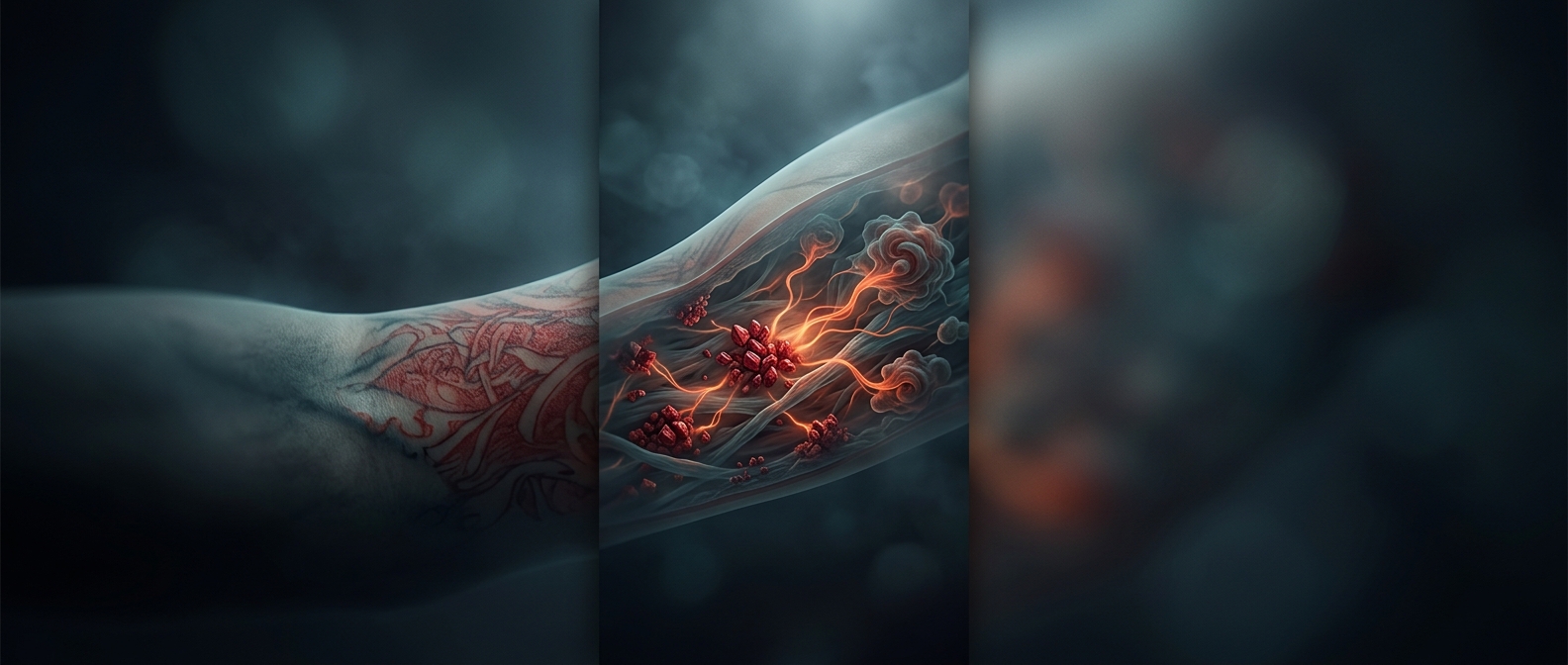
The epidermis—the skin’s thin outer layer—is made of cells joined in sheets. When an adhesive dressing is peeled off, the pull travels through the bond into those sheets. If the dressing grips firmly, the force may separate surface cells from one another or lift them away. The result can be a raw, tender patch, especially where skin is already delicate or damaged.
Why Removal Can Cause Injury
Peeling concentrates force at the moving edge of a dressing. Pulling quickly or upward can make that edge tug sharply on the skin instead of releasing gradually. Skin that has been weakened by age, illness, repeated adhesive use, or moisture may be less able to withstand the strain.
This is a mechanical mismatch: the adhesive holds on, while the skin’s own surface gives way. A strong bond is useful for keeping a dressing in place, but it also means removal matters. Medical adhesives should be taken off according to the product’s directions; pulling at stuck material can turn a secure dressing into an avoidable skin injury.