A small sound that traveled far
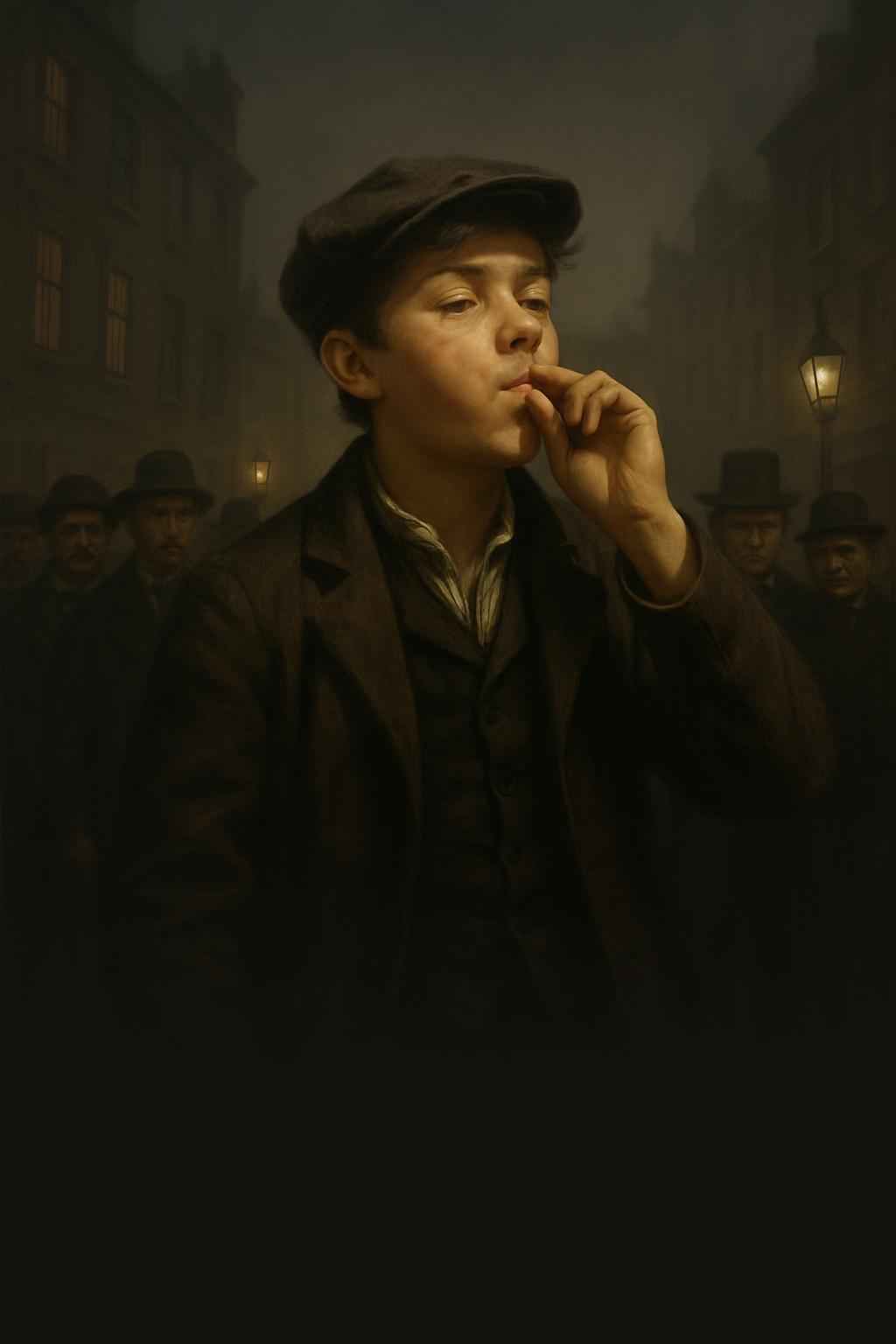
A whistle could cut through the layered noise of a nineteenth-century street. Its high, clear tone carried over conversation and traffic, while a person could make it without buying or carrying an instrument. For young Londoners, that made whistling an easy way to turn an ordinary walk into a performance: a tune could be improvised on the spot and heard well beyond its maker.
That reach also made the sound difficult to ignore. A carriage passed; a whistle could repeat the same piercing phrase, follow someone down a street, or continue outside a home. The nuisance was not simply loudness. It was a sound produced deliberately, at close range, with little effort and no obvious stopping point.
When noise became a public-order question
In crowded cities, officials had to distinguish ordinary street life from conduct that disturbed other people. Whistling sat awkwardly on that boundary: it could be harmless amusement, but it could also be persistent or directed at passersby. A rule against it offered a way to address an irritating behavior without having to judge the tune itself.
Some cities briefly tried anti-whistling laws, but such rules were inherently awkward to apply. The same sound might be a momentary flourish to one person and an intrusion to another; enforcement depended on circumstances such as repetition, timing, and disturbance. The episode shows how urban order was shaped not only by major hazards but by small, cheap behaviors that traveled through shared space—and could not be switched off at the window.