A crank could move the clothes, not finish the wash
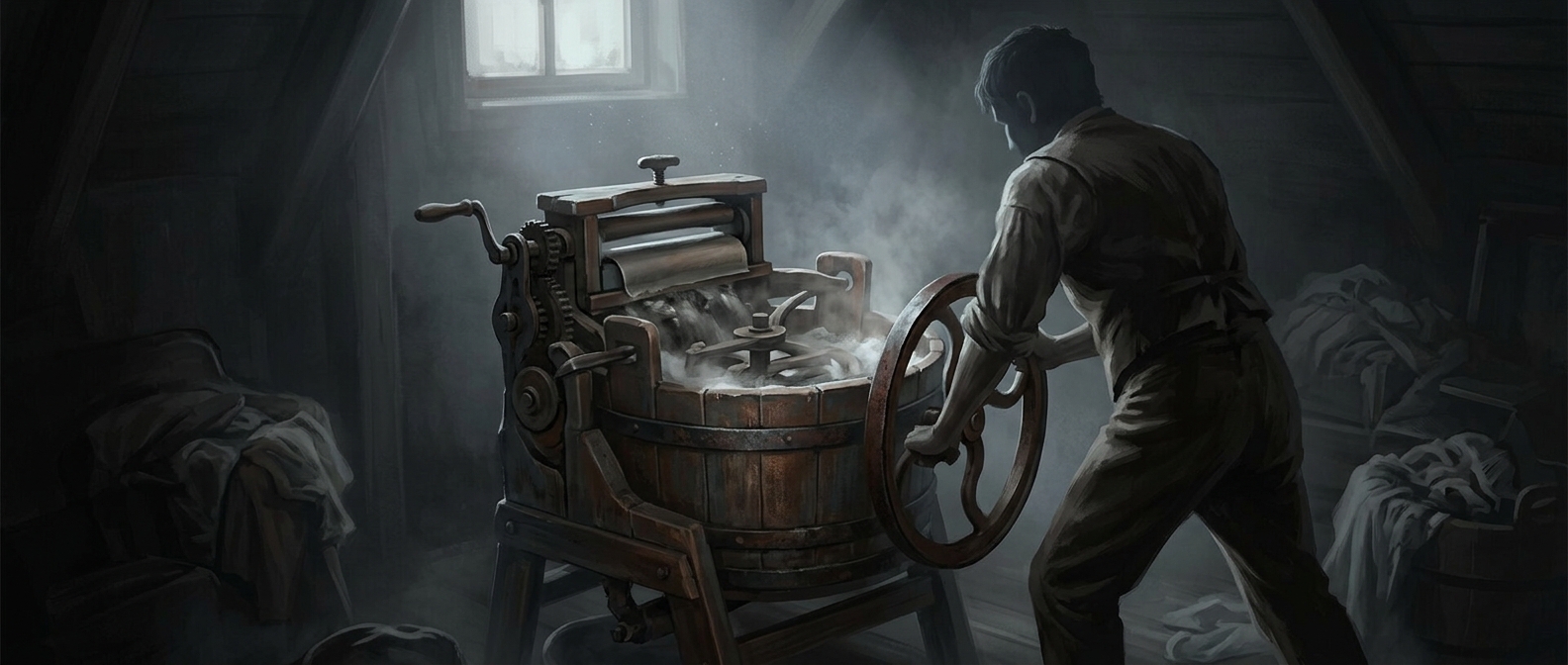
Before electric motors, a hand-powered washer offered a way to mechanize one demanding part of laundry: working garments through soapy water. Turning a crank drove gears or a moving mechanism inside the tub, agitating the clothes so water and soap could reach the fabric. Instead of rubbing every item by hand for the entire wash, a person could let the machine do some of that repetitive motion—while supplying the energy themselves.
The machine was only one stop in a long process
Laundry involved much more than agitation. Someone still had to bring water to the washer, often heat it, add soap, sort and load the garments, and operate the crank. After washing came rinsing, squeezing out water, and hanging the clothes to dry. The machine did not make those steps disappear; it addressed one task within a larger chain of labor.
That distinction mattered at home. A washer could reduce the amount of direct scrubbing needed, but its usefulness depended on the person operating it and handling everything around it. A heavy load or a stubborn stain still meant work, and the crank turned effort into motion rather than eliminating effort altogether.
Mechanization began as a handoff
Hand-powered washers are a reminder that household technology did not arrive all at once. Early machines could reorganize a chore before they could take over its power source. The key change was not effortless laundry, but a tool that made human effort more mechanical and repeatable. Electricity would later supply the turning force; until then, every churn of the wash still began with someone’s hand on the crank.