The room is designed for quick, repeatable service
A fast-food restaurant has to move customers through a shared space while keeping it easy to clean and ready for the next meal. That makes furniture and lighting operating decisions, not just décor. A chair that is inexpensive, sturdy, and quick to wipe down can be more practical than a soft upholstered seat that traps crumbs, stains, and odors or needs more involved cleaning.
Hard seating can also make a dining room feel less like a place to settle in for hours. That may support faster table turnover—the rate at which one table serves successive groups—though it does not mean every chain has a formal policy of making customers uncomfortable. The design reflects a business where short visits and predictable upkeep often matter more than lounging.
Bright light helps staff manage the space
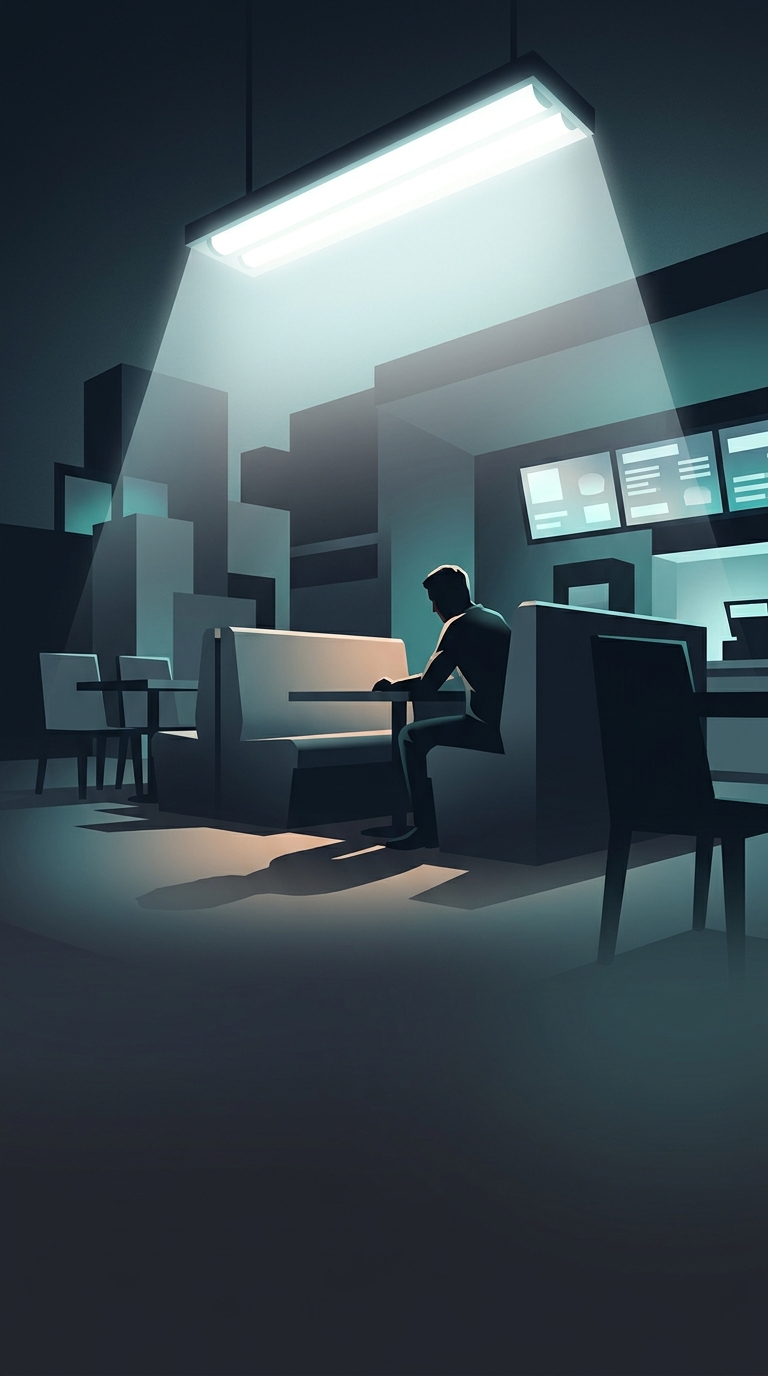
Strong overhead lighting makes spills and litter easier to spot, helps employees clean efficiently, and keeps menus and counters legible. It also makes the room feel open and visible, which can be useful in a busy setting where customers place orders, collect food, and leave without much table service. Compared with mood lighting, bright fixtures are generally straightforward to maintain and replace.
Those practical gains come with a tradeoff: hard surfaces and intense light can make a restaurant feel stark, especially when a customer wants to linger. Softer seats and warmer lighting might be more comfortable, but they can require more cleaning, upkeep, or design investment—and may encourage longer stays.
The familiar fast-food interior is therefore a compromise shaped by labor, maintenance, and the value of serving the next customer. Its discomfort is often a side effect of optimizing the room for speed and easy upkeep, not proof of a single plan to drive diners out.