How defeat turned empires into a map-making problem
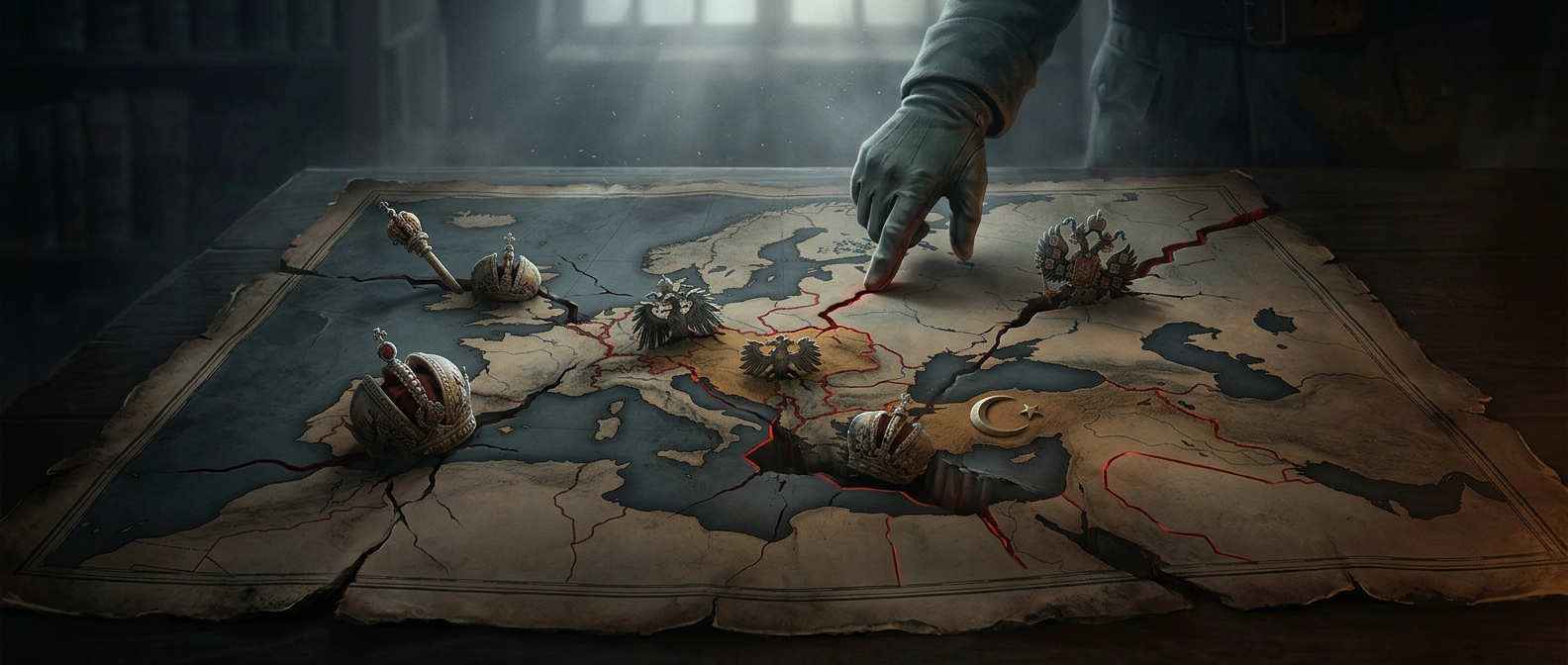
Before the war, several European empires governed many peoples from a single capital. Their borders did not simply separate nations: they enclosed languages, religions, and local loyalties that often overlapped. When military defeat and revolution weakened those governments, the question was not only who had won, but who would rule each province—and which residents would become citizens of the new states.
The German, Austro-Hungarian, Russian, and Ottoman empires all lost territory or broke apart in the war’s aftermath. The process differed in each case. Austria-Hungary disintegrated as its constituent peoples and regions formed or joined new states; Poland was restored as an independent country after more than a century divided among neighboring empires. The Ottoman Empire’s remaining Arab lands were placed under British and French administration rather than immediately becoming fully independent countries.
Borders could not neatly sort people into nations
Peacemakers often invoked national self-determination—the idea that a people should have a say in its political future. But populations were interwoven. A border drawn to place one community inside a new country could leave another community on the other side, or make a town’s residents minorities in the state that now governed them.
Treaties and political decisions converted these lines into law. A resident might keep the same home and neighbors while the government changed, along with the flag, official language, taxes, and rules for citizenship. Some people gained a state associated with their national identity; others found themselves governed by a state they had not chosen.
The new map settled some claims—and created others
The postwar settlement produced independent states, but it did not make the region’s populations fit cleanly within national borders. That gap between political boundaries and lived identities became a lasting source of dispute. The empire could vanish on a map in a single settlement; the people left inside its successor states still had to live with the lines drawn around them.