A vehicle built around a person
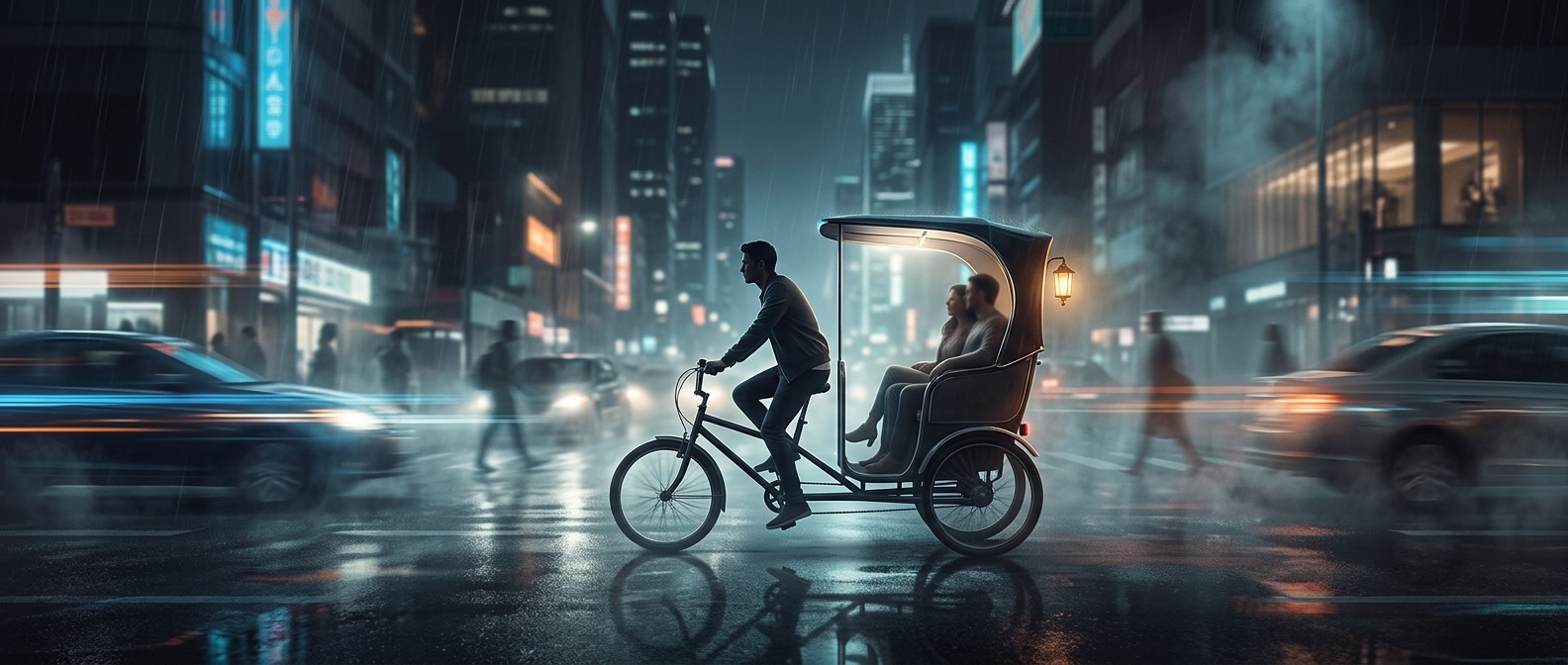
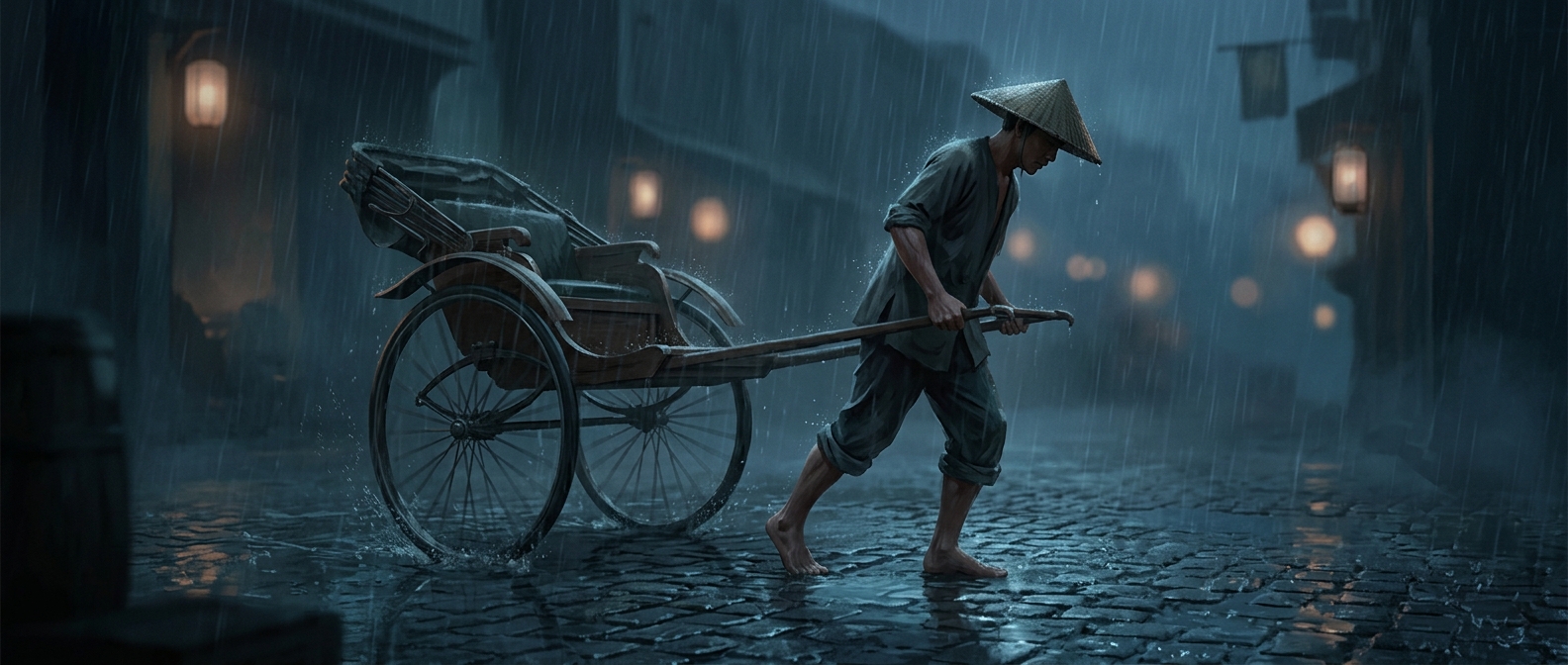
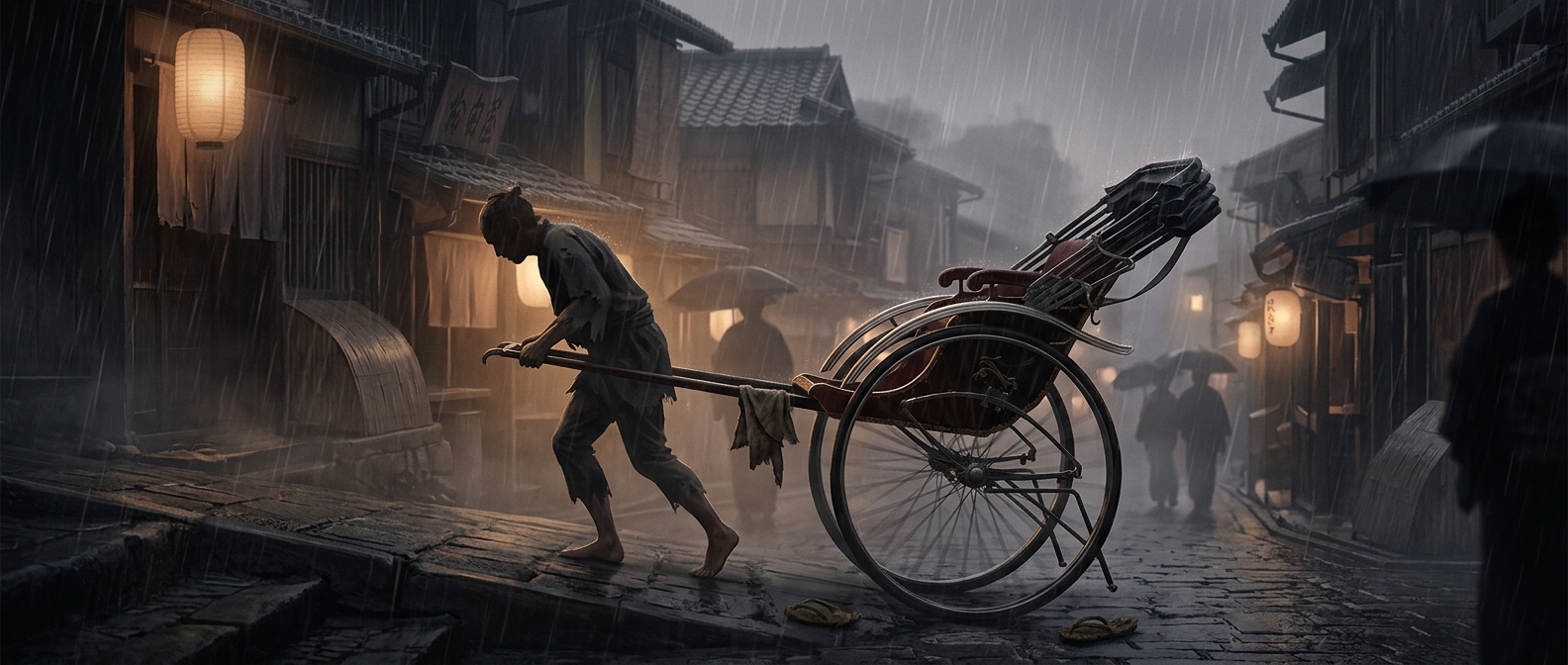
A Japanese rickshaw was a small, two-wheeled carriage balanced between long shafts. The puller ran in front, steering by shifting the shafts and controlling the cart’s pace with each stride. Its light frame and simple construction made it easier to put into service than a vehicle requiring an engine, fuel, or fixed route.
That simplicity changed what counted as a transport business. A worker could earn fares by providing the vehicle’s motive power directly, while passengers gained a private ride that could travel along ordinary streets and stop where needed. The arrangement suited short urban trips, especially when a passenger wanted more convenience than walking but did not need a large carriage.
The tradeoff was written into every trip
The rickshaw’s flexibility came from shifting the work onto the puller. A motor can keep moving without tiring in the human sense; a puller has to supply effort continuously, and the load grows harder as distance, hills, or rough ground add resistance. That limited how far and how often the service could operate without exhausting its worker.
So the rickshaw was more than a compact vehicle: it was a transport system with almost no mechanical overhead and a very visible human cost. Its low barrier to entry made paid urban transport possible for people with little capital, but every fare depended on someone’s legs—and every longer journey made that dependence harder to ignore.