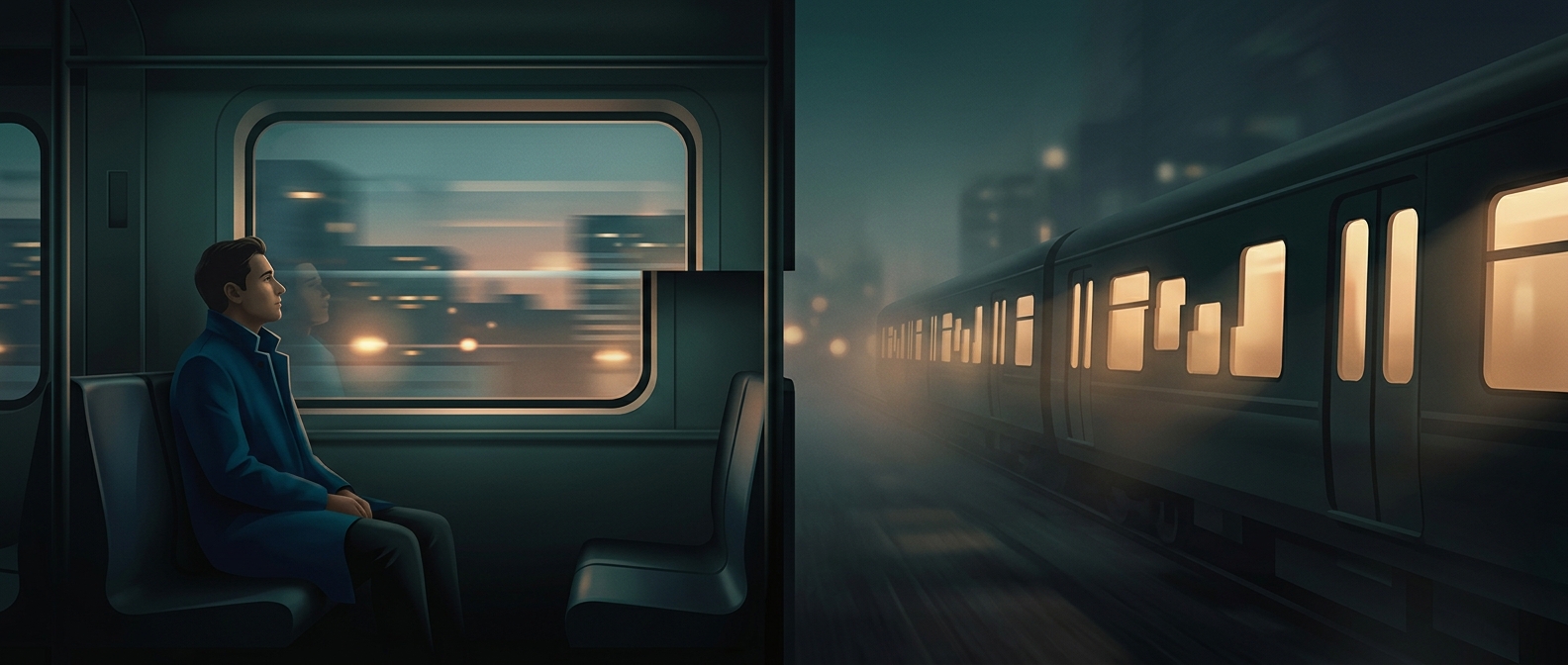
Why the window grid and seat grid drift apart
A train car has two competing layouts. Seats must fit the number of passengers the operator wants to carry, while windows must fit the car’s structure. Those patterns can look as though they ought to line up, but they are set by different constraints—and neither can always be shifted to suit every seat.
The structure sets the openings
Windows are cut into the car body between structural posts and reinforced sections. These breaks help the body remain strong and provide places for panels, doors, wiring, and other equipment. Their spacing is therefore tied to the car’s construction, not simply to where a passenger’s head will be.
Seats, meanwhile, are arranged along the floor to make practical rows. The spacing can vary with the car’s interior plan, including the locations of doors, partitions, and accessible areas. Even a small mismatch accumulates: by the time the seat pattern reaches the next structural post, a seat may face a narrow wall panel instead of glass.
Why not move the seats or windows?
Moving seats can disrupt the intended passenger layout, while moving a window may require redesigning the body structure and interior systems around it. A train is built as a complete vehicle, so the best arrangement overall does not guarantee a clear view from every seat.
That is why a window seat is sometimes a promise only about the seat’s location. The scenery may be just outside, but the car’s structural rhythm has given the view to the passenger one row over.