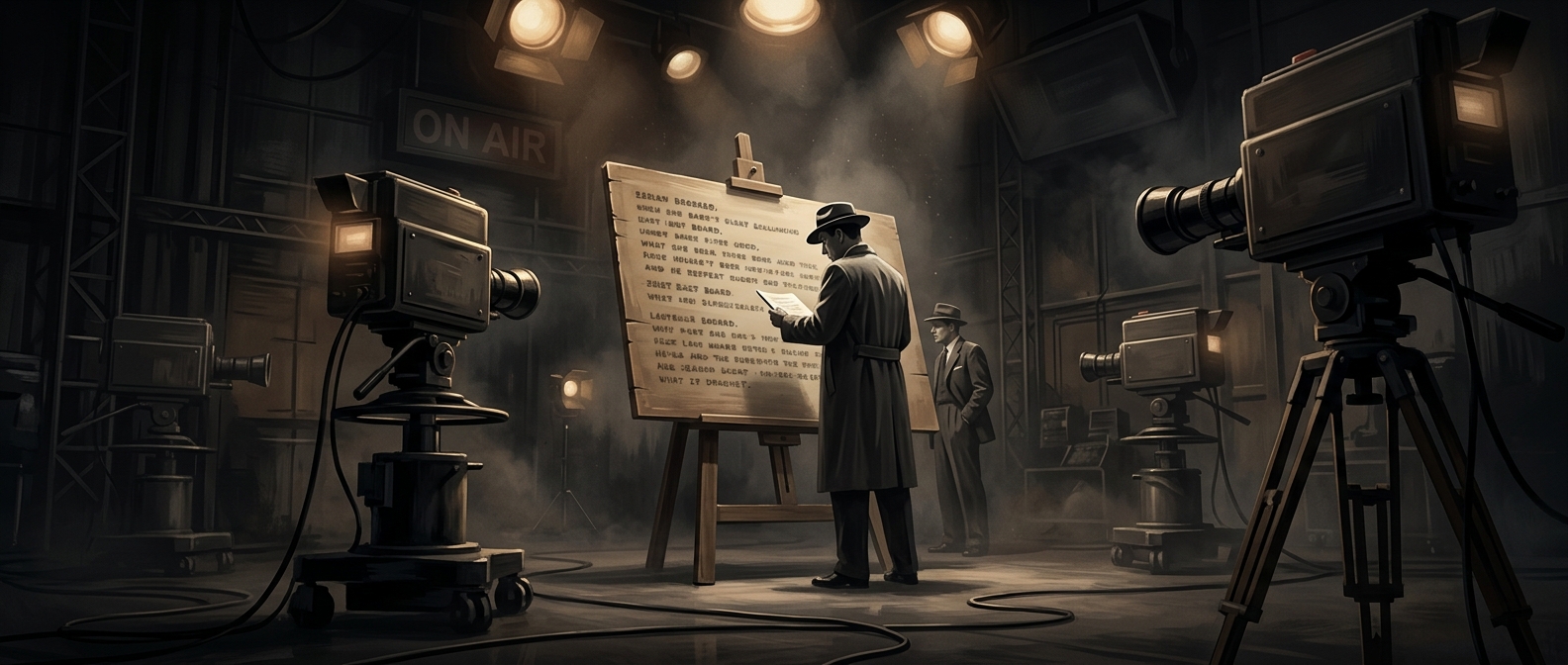
A performance built around momentum
On Dragnet, the quick delivery was not simply a matter of actors forgetting to pause. Jack Webb wanted dialogue without the long silences and heightened emotion common in dramatic acting, so he pushed performers to move through their lines briskly. The result made conversations feel unusually compressed: information arrived in a steady stream rather than being stretched to signal suspense or feeling.
What the teleprompter changed
A teleprompter displays the script for an actor to read while performing. That gave the cast a way to follow Webb’s fast-paced dialogue, but it also shaped how the lines sounded. Instead of relying on pauses to suggest a character’s reaction, an actor could keep reading at the pace the scene demanded. The voice might remain controlled even when the subject was serious, because the style depended on clean, rapid delivery rather than emotional emphasis.
To viewers, that combination could sound like speed-reading: the words came quickly, and the performance offered few of the pauses that usually help dialogue feel conversational. The distinctive cadence was therefore part of the show’s design, not just a quirk of individual actors. It turned a familiar dramatic tool—slowing down for emphasis—into something Dragnet deliberately avoided.