The logo was bent by changing the picture’s scan
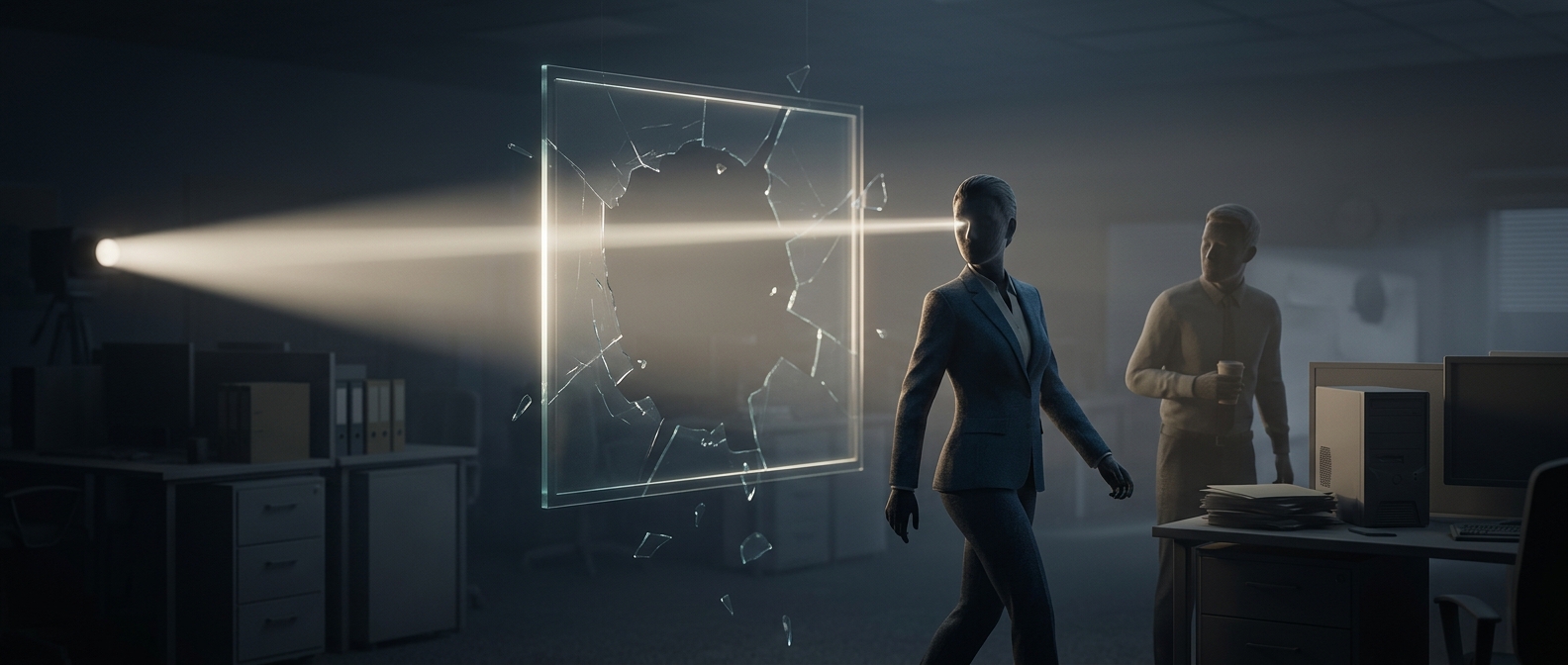
A CRT television does not display an image all at once. Its electron beam sweeps across the screen in rows, guided by electrical signals that control where each row begins and how it is positioned. Scanimate exploited that underlying structure: instead of treating a logo as a collection of fixed dots, it altered the video signals that told the screen where to draw the image.
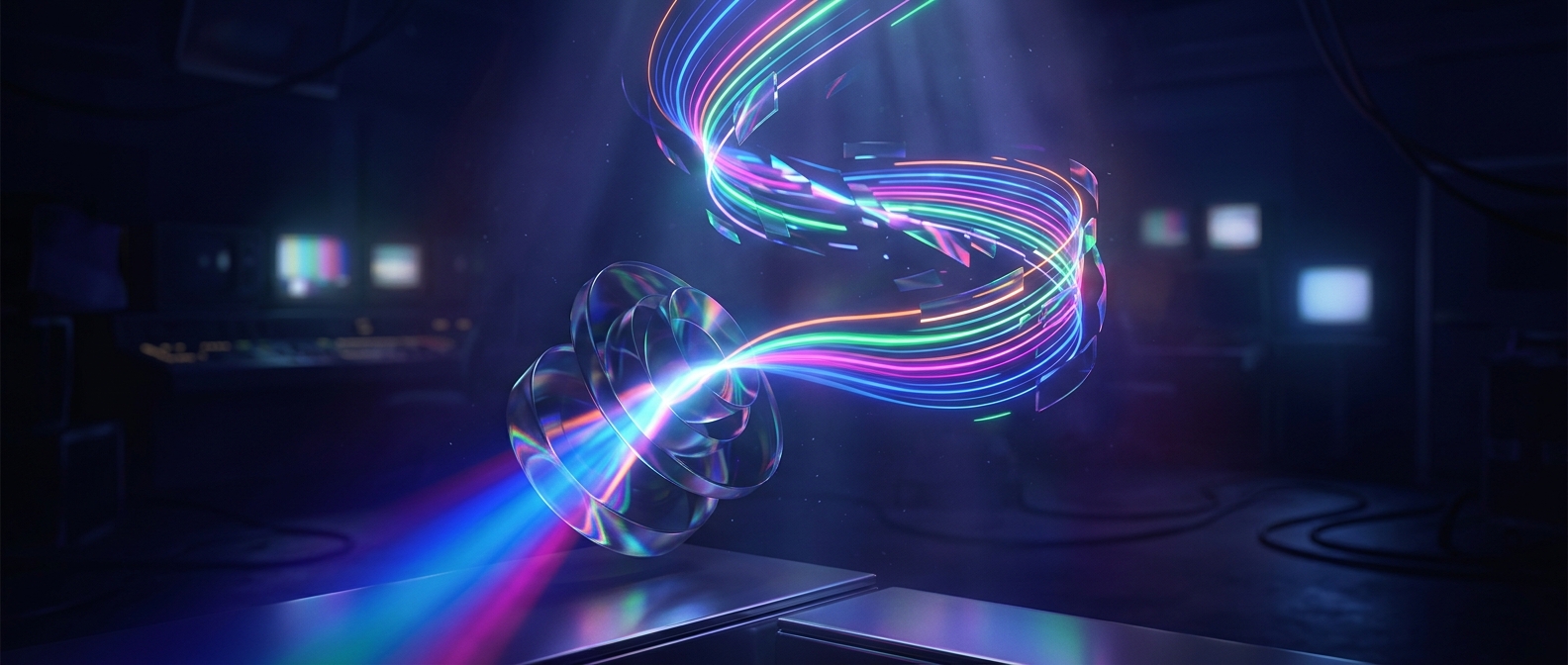
When those signals shifted, parts of the picture landed in different places. A straight letter could stretch, curl, or slide into a wave, while changes to the signal could also affect color and brightness. The familiar neon swoop was therefore not simply a still logo moved across the screen. The shape itself could be reshaped as it moved.
Motion came from live controls, not a finished render
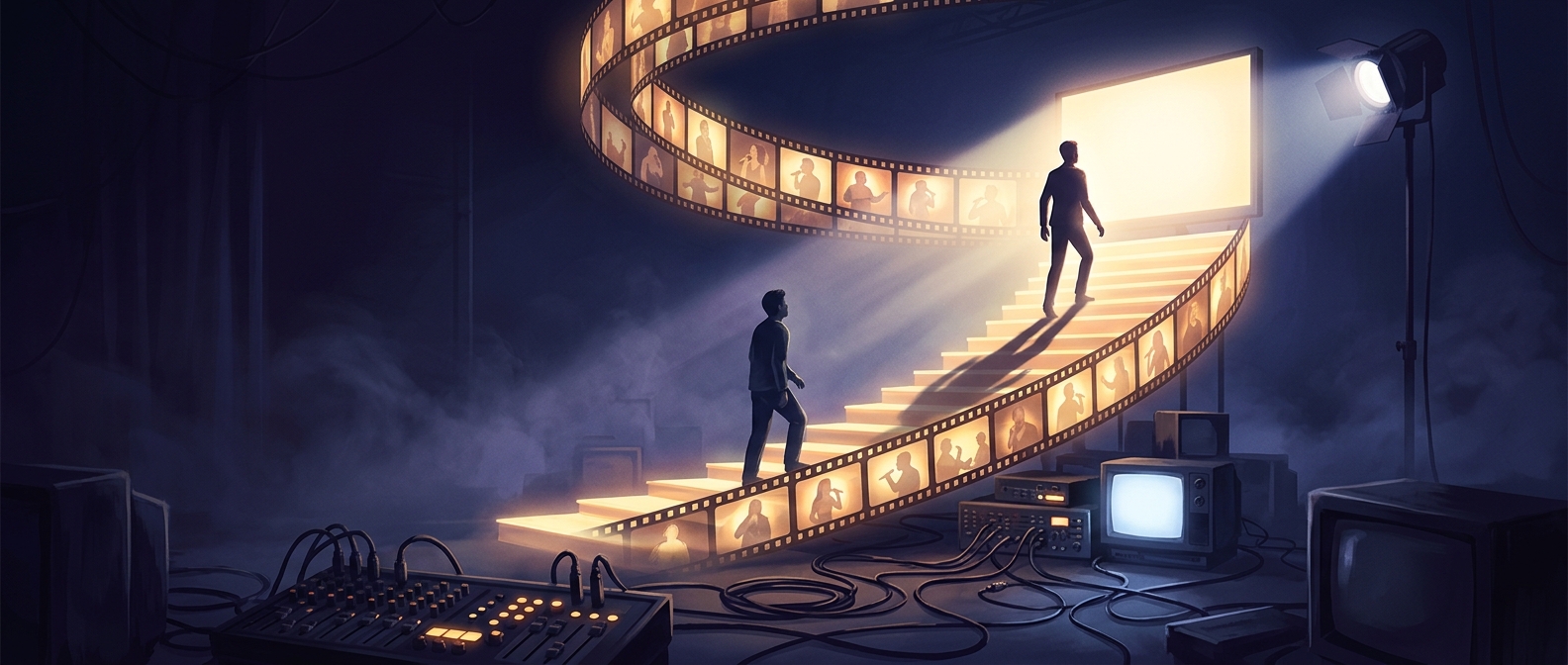
With digital animation, a computer typically calculates successive images and plays them back as frames. Scanimate worked with analog electronics, where continuously varying voltages controlled the picture. An operator could adjust those controls and see the image change immediately, then record the result for a television program.
That live feedback made experimentation practical: push the signal harder, and a logo could become more fluid or distorted; ease it back, and the lettering stayed more recognizable. The visual style came from that balance between a station’s need for a legible identity and the machine’s ability to turn its outline into motion. What looked like a graphic melting across the screen was, at its core, the television picture’s own drawing process being redirected.