A launch is a controlled release of force
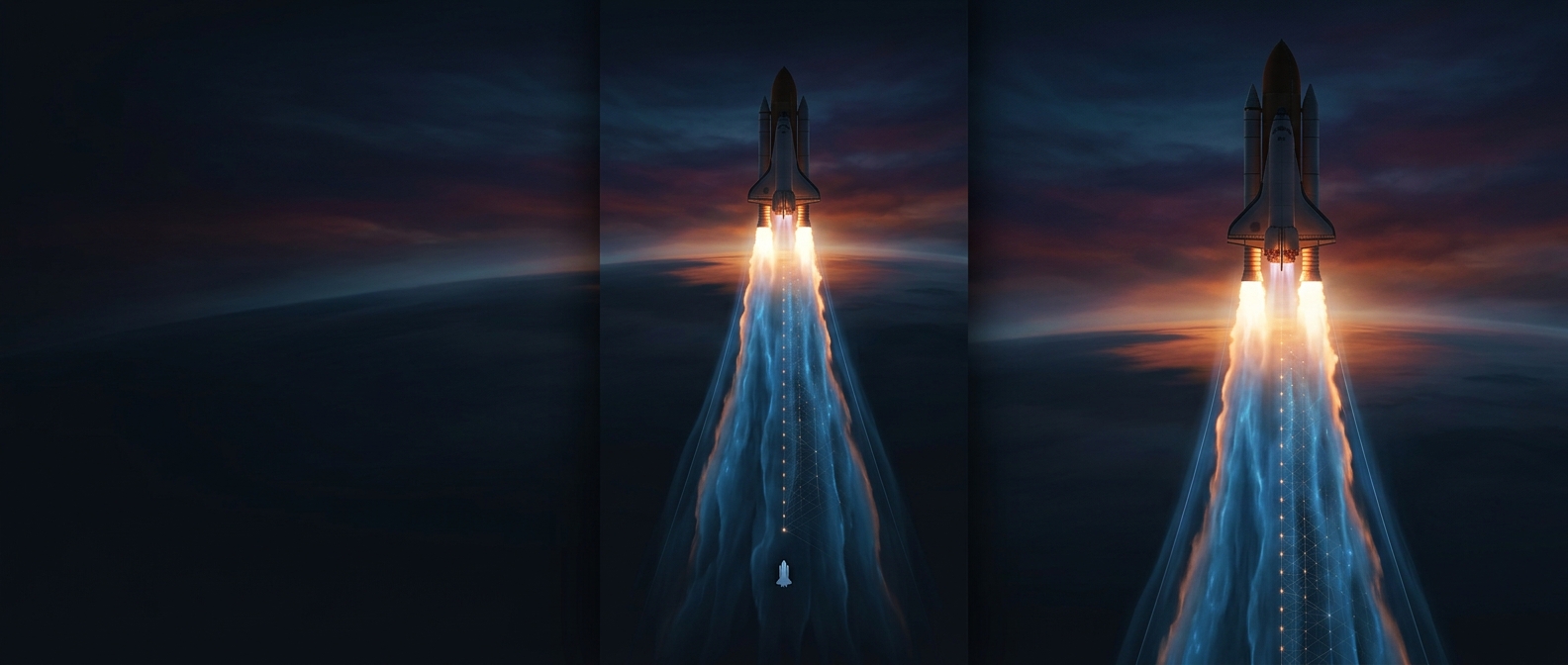
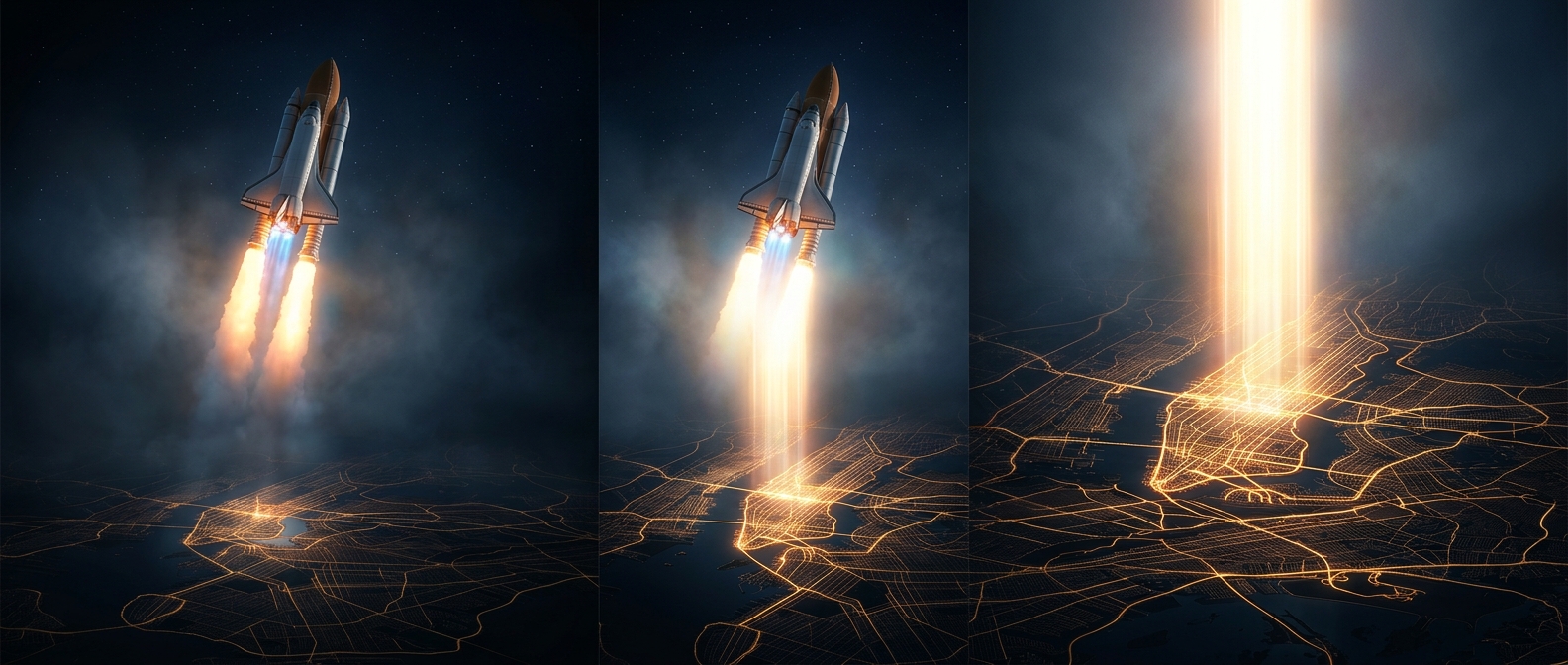
The Space Shuttle’s three main engines and two solid rocket boosters pushed downward by throwing hot exhaust out of their nozzles. The exhaust’s motion in one direction produced an equal push in the other: upward thrust. Together, the engines and boosters generated 7.8 million pounds of thrust at liftoff, enough to overcome Earth’s gravity and begin accelerating the fully loaded vehicle.
Thrust is a force, not a measure of electrical power. The comparison to New York State’s grid translates the launch’s energy into a different form: if that energy could all be captured and converted to electricity, it would supply the grid for a short time. It is a way to convey the scale of the event, not a claim that the Shuttle functioned like a power plant.
Why the Shuttle needed two kinds of rockets
The main engines burned liquid hydrogen and liquid oxygen supplied from the large external tank. The solid rocket boosters, loaded with solid propellant, added the enormous initial push needed to lift the vehicle off the pad. Using both let the Shuttle carry the fuel and oxidizer required for its climb while delivering strong thrust at the moment when the whole stack was heaviest.
As propellant was used, the vehicle became lighter. The boosters eventually burned out and were jettisoned, while the main engines continued firing during the ascent. That change matters: the launch was not one unbroken blast from a single source, but a sequence in which different components supplied thrust as the vehicle climbed.
Force becomes motion
Thrust alone does not say how quickly a vehicle gains speed; that also depends on its mass and on gravity and air resistance. But at liftoff, the Shuttle’s combined engines and boosters had to produce more upward force than the weight pulling the stack down. The result was a gradual departure from the pad that grew into a rapid climb—an immense burst of energy turned into the motion needed to reach orbit.