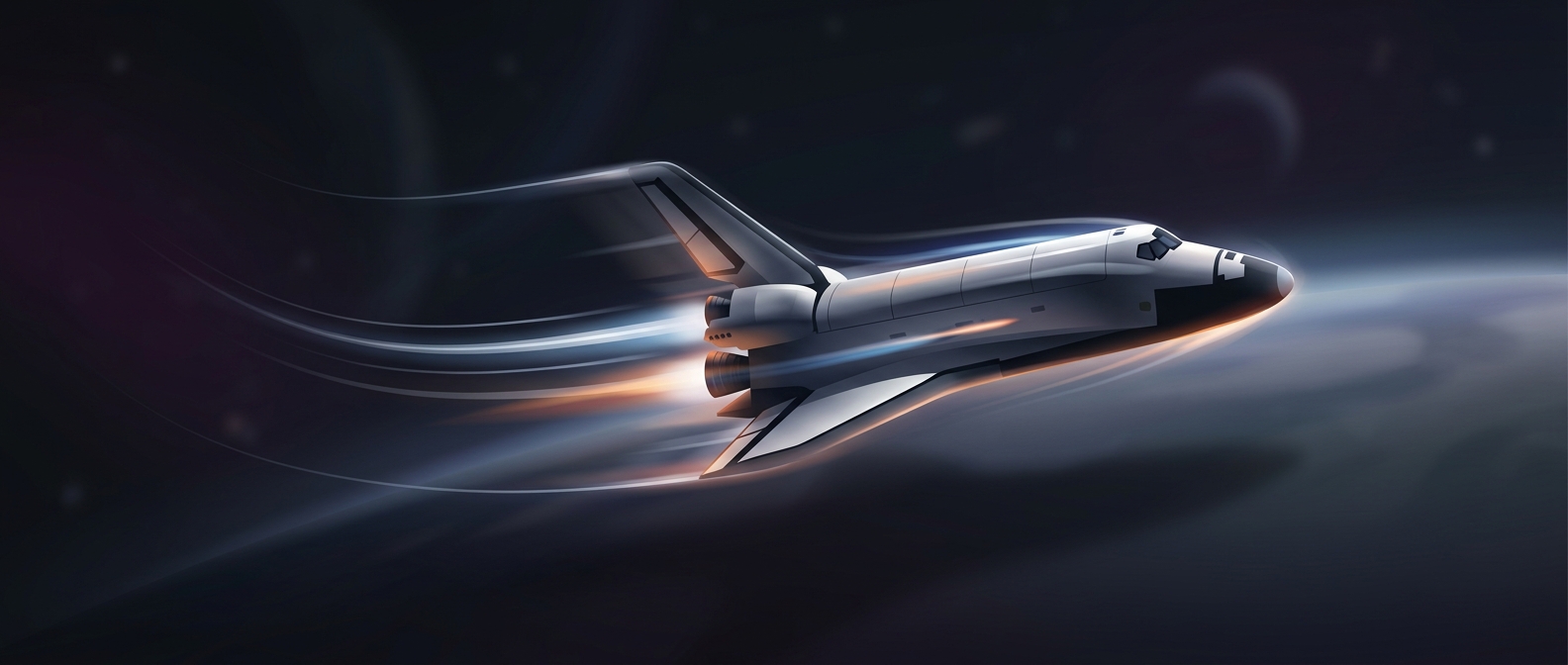
How a spacecraft keeps curving around Earth
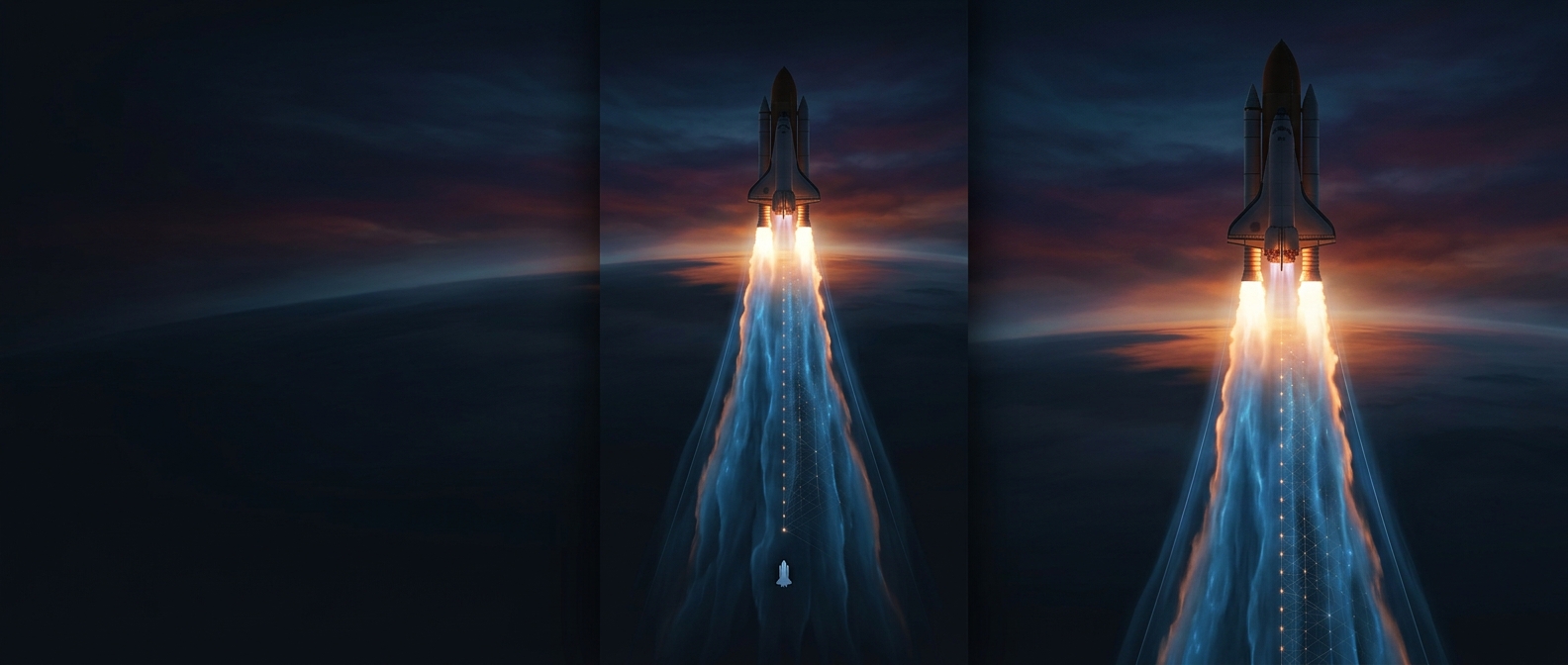
Gravity does not switch off in orbit. It continually pulls a spacecraft inward, bending what would otherwise be a straight-line path into a loop. The spacecraft’s forward motion carries it along that curve, while its fall toward Earth changes its direction. In a low orbit, the balance produces a nearly circular path: the craft is moving fast enough to keep going around rather than reaching the ground.
That speed is not a universal requirement for every orbit. It depends mainly on how far the spacecraft is from Earth: closer orbits require higher sideways speeds, while more distant ones can be slower. The familiar figure of about 17,500 miles per hour describes a typical low-Earth-orbit speed, not every spacecraft’s speed everywhere.
Why engines can stay quiet
Once a spacecraft has reached the right speed and altitude, it does not need to keep firing its main engines to go around Earth. In space, there is very little air to slow it down, and gravity supplies the inward pull that continually turns its motion. Small thruster burns may still be needed to adjust the orbit or point the spacecraft, but they are corrections—not a constant push holding it up.
Low orbits do encounter thin traces of atmosphere. That drag gradually removes speed, lowering the craft into denser air, where drag increases further. Without occasional boosts, a spacecraft in a sufficiently low orbit will eventually reenter. So orbit is not a place where motion stops or gravity disappears: it is a carefully chosen path whose timing lets a spacecraft keep circling until drag or a deliberate maneuver changes it.