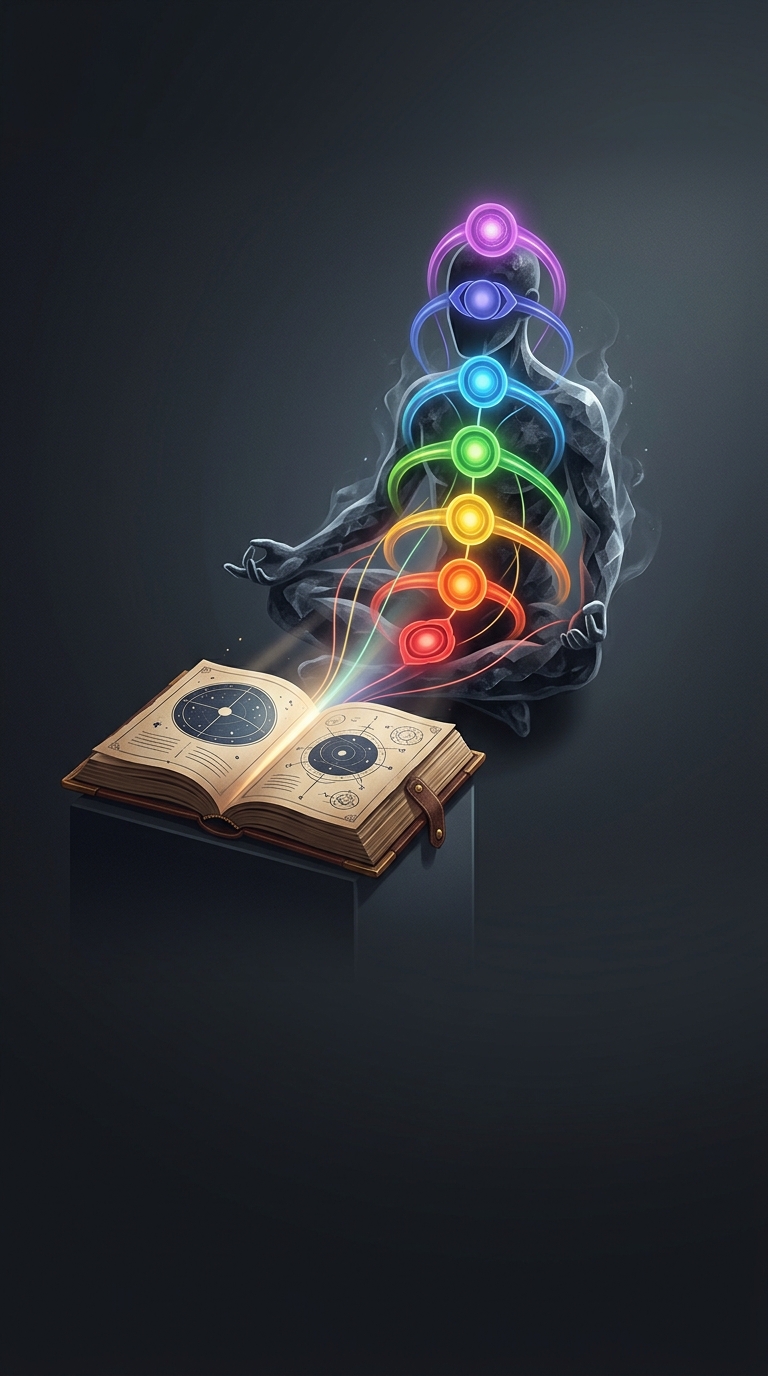
The heart as a meeting point
In many chakra systems, the heart chakra—often called Anahata—is placed between the lower chakras, associated with bodily needs and everyday concerns, and the upper chakras, associated with expression, insight, and spiritual awareness. Its middle position gives it a particular role: it represents the possibility of engaging with ordinary life without being ruled by appetite, and seeking spiritual growth without turning away from other people.
The green color commonly assigned to this center reinforces ideas of renewal and living connection. These are symbolic associations within a spiritual tradition, not descriptions of a physical organ or a measurable energy system.
What “balance” means in practice
To say the heart chakra balances physical and astral concerns is to describe an ethical and emotional ideal. Physical urges—such as wanting safety, pleasure, or recognition—are not treated as inherently bad. The challenge is to hold them alongside care, generosity, and a sense of connection beyond oneself. Conversely, spiritual detachment is not meant to become indifference to the needs of the body or the people nearby.
That makes the heart a bridge rather than an escape hatch: the teaching asks whether a person can remain grounded while becoming more compassionate. In this framework, “balance” is less about suppressing desire than about letting love shape how desire is acted upon.