Why Io’s squeeze does not stop
Io’s orbit is not perfectly circular, and the moon cannot simply settle into a steady, stretched shape. Europa and Ganymede repeatedly tug on it in a pattern called an orbital resonance: their positions line up in a regular rhythm that helps preserve Io’s slight orbital ovalness. As Io travels around Jupiter, the planet’s pull therefore changes, continually deforming the moon.
The deformation is small on a moon-sized scale, but it happens over and over. Rock bends and shifts; internal friction converts some of that motion into heat, much as repeatedly flexing a stiff object warms it. Io’s interior can lose heat through melting and volcanic activity, while the ongoing flexing supplies more.
Heat becomes eruptions
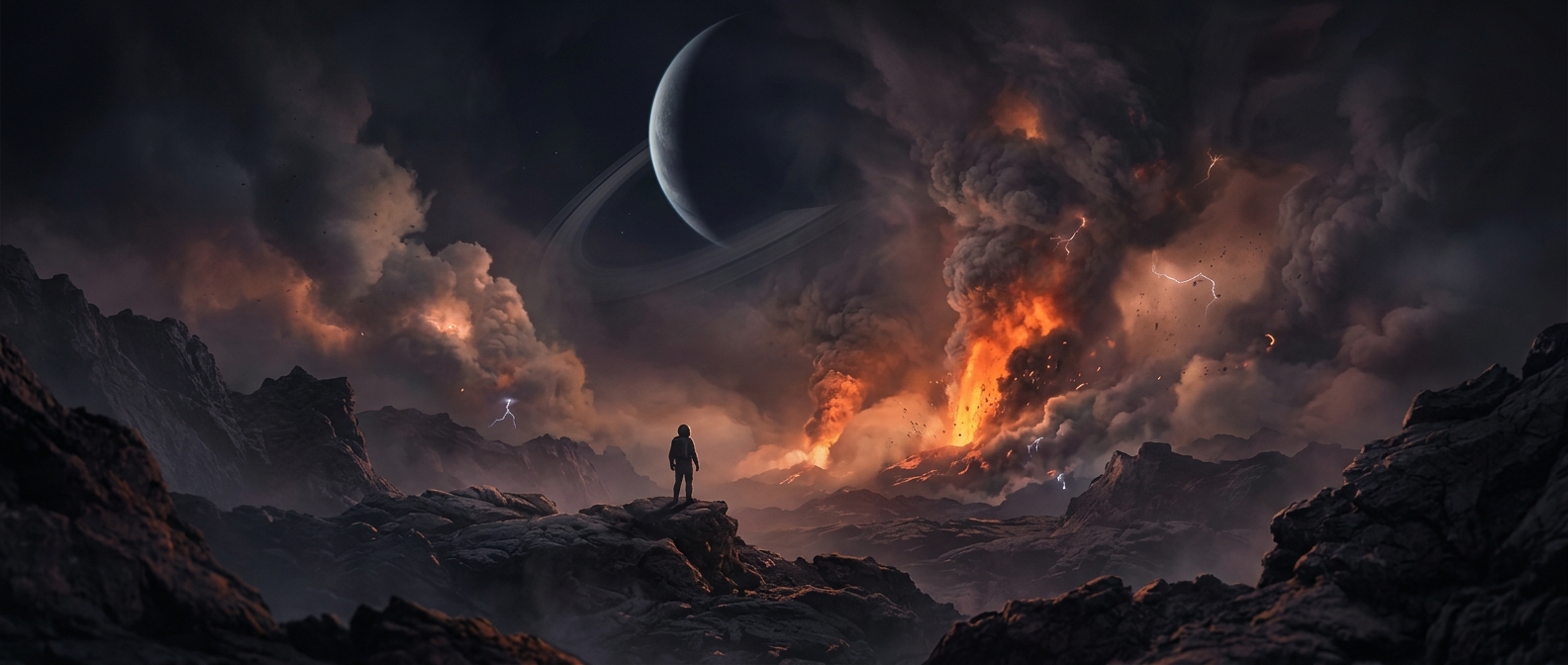
That energy does not emerge evenly across the surface. Hot material rises through cracks and conduits, feeding eruptions that can throw lava across the ground or send plumes above it. Io’s surface is constantly being resurfaced, so familiar landmarks can be buried or altered as new volcanic deposits accumulate.
The result is an unusual energy chain: the orbital dance of three moons keeps Jupiter’s gravity changing, and that changing pull helps power volcanoes on a distant world. Io’s eruptions are not just leftovers from its formation; they are evidence of a process still working inside it today.