The weight your eyes predict
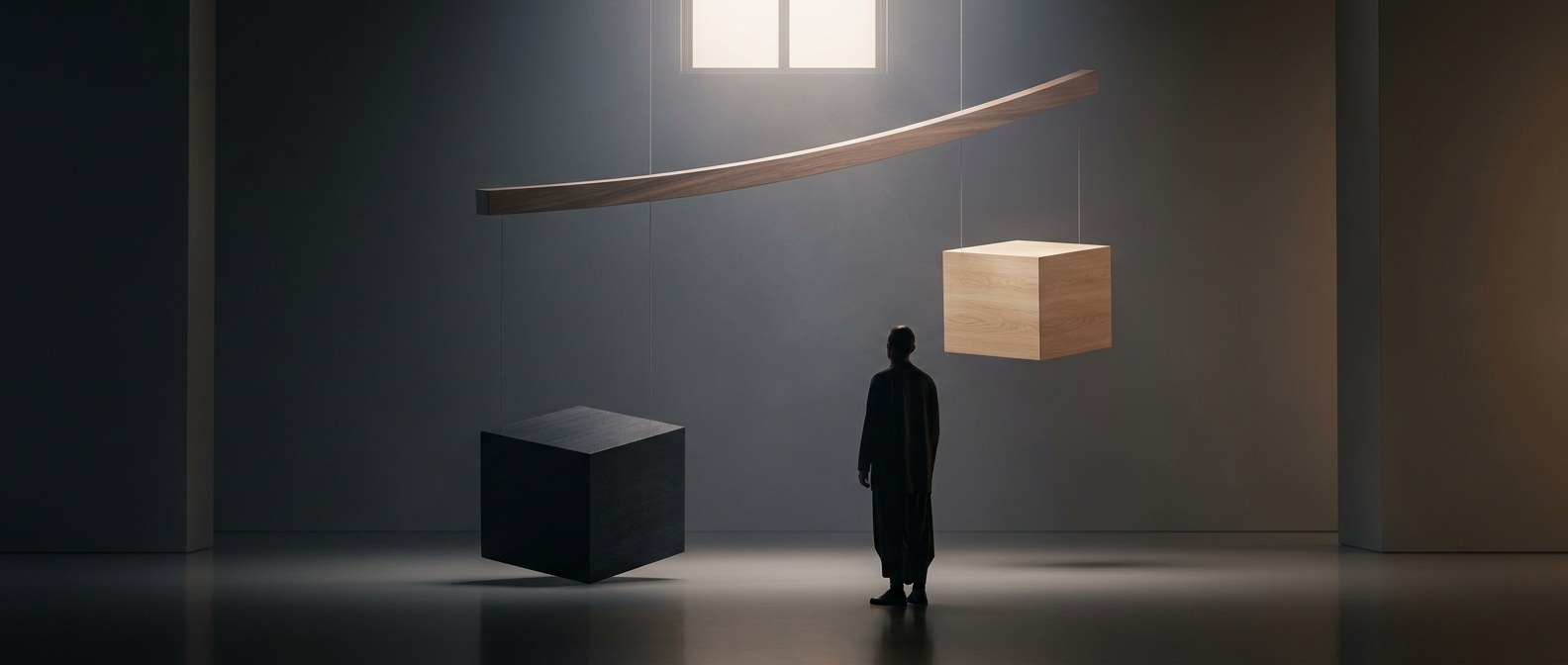
Before you lift an object, your brain has already made a rough estimate of what it will weigh. It uses visual clues—such as size, shape, and material—to prepare the muscles to move it. Color can join that estimate: in many comparisons, a dark-colored object is judged heavier than an otherwise identical light-colored one.
That judgment is not a change in the object’s physical mass. It is a bias in perception: the visual impression helps set an expectation, and that expectation can influence how the object feels when you handle it.
A prediction meets the lift
When you reach for an object, your nervous system must choose how much force to apply before touch provides a full measure of its weight. It makes an initial prediction, then adjusts as the object moves and feedback from the muscles and joints arrives. If the object feels heavier than expected, the mismatch can shape the experience; if it feels lighter, the brain revises its estimate in the other direction.
The color effect is therefore best understood as part of a broader process: perception combines sight with touch and movement rather than waiting for each sense to deliver a separate verdict. The same object can prompt different expectations—and slightly different weight judgments—depending on how it looks. Your hands report what they lift, but your eyes help decide what to expect first.