Blue light changes the evidence your eyes get
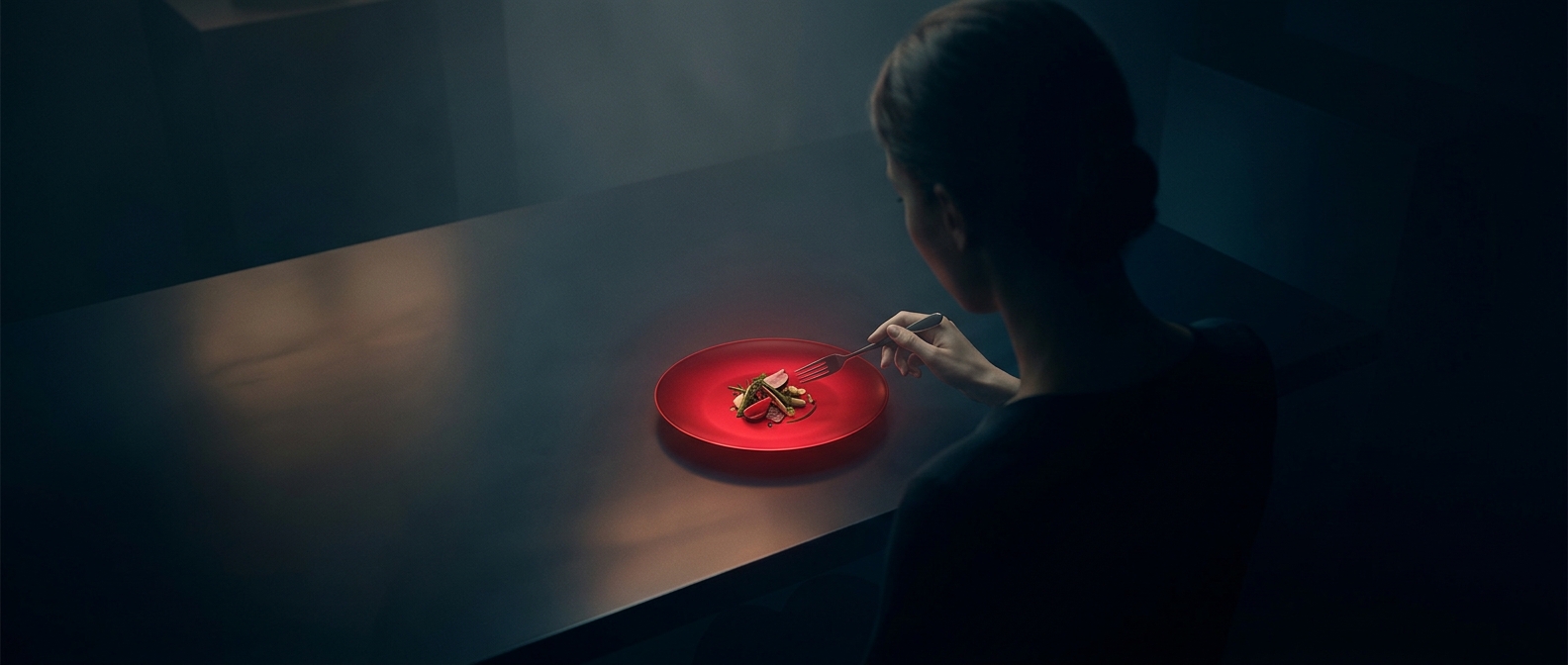
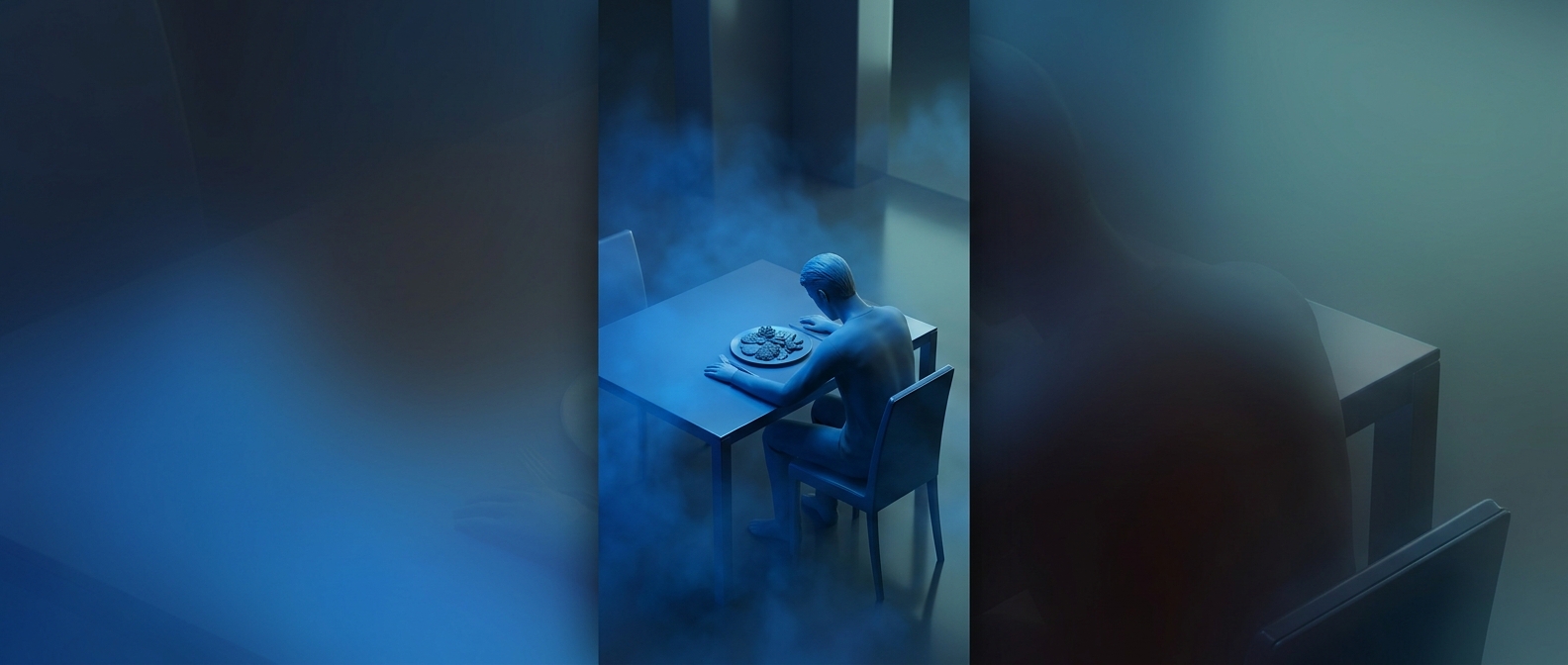
A strawberry looks red because its surface reflects more red light than much of the light it absorbs. But color depends on the light shining on an object as well as on the object itself. Under blue lighting, there may be little red light available to reflect, so the strawberry sends far less of its familiar red signal toward your eyes. Meat can lose the red tones that make it look appealing and take on a duller, grayer appearance.
The food has not necessarily changed. What changed is the illumination—and therefore the mix of light reaching the eye.
Your brain reads color as a clue to freshness
Color is not just decoration: it helps people make quick judgments about what food might be like. A vivid red strawberry fits the visual pattern associated with ripe fruit; grayish meat can suggest that something is wrong. Those impressions arise before a person has checked the food by smell, touch, or taste.
The brain usually interprets color in context, taking surrounding light into account. But when the illumination is strongly unlike ordinary daylight or kitchen lighting, familiar color cues become less dependable. A food can look suspicious simply because the light makes its usual colors difficult to see.
Appearance is a warning signal, not a freshness test
This mismatch shows why visual judgment can be misleading: color is useful evidence, but it is not proof of spoilage. Blue light can make fresh food look unappealing without changing its condition. The practical consequence is simple: an unusual color under unusual lighting tells you to inspect the food under ordinary light before drawing conclusions.