Why the pain outlasts the impact
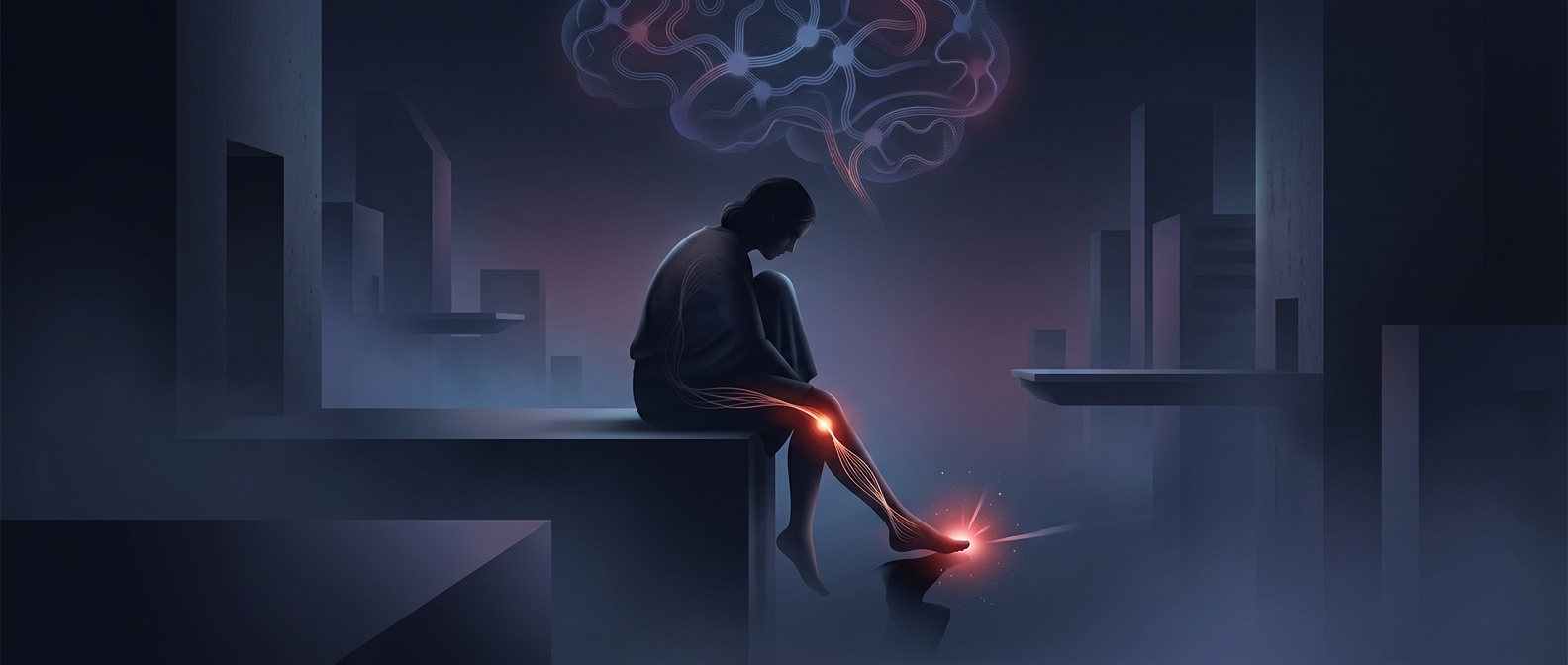
A toe can hurt twice because the blow and its aftermath produce pain in different ways. The impact immediately activates pain-sensing nerve endings in the toe. In the minutes that follow, irritated or damaged tissue releases chemical signals involved in inflammation. These signals can make nearby nerve endings more responsive, so pressure that would normally feel harmless may now hurt.
A lower threshold for touch
This change is called sensitization: the nerves’ threshold for sending warning signals drops. Swelling can add another source of discomfort by putting pressure on already tender tissue. As a result, a sock brushing the toe or a shoe pressing against it can trigger pain even though nothing has struck it again.
The later ache is not necessarily a new injury or a separate wave of pain. It is the nervous system continuing to report an area that remains irritated—and reacting more strongly to ordinary contact while it heals. That is why the same floor, shoe, or sock can feel suddenly unforgiving after the original collision is over.