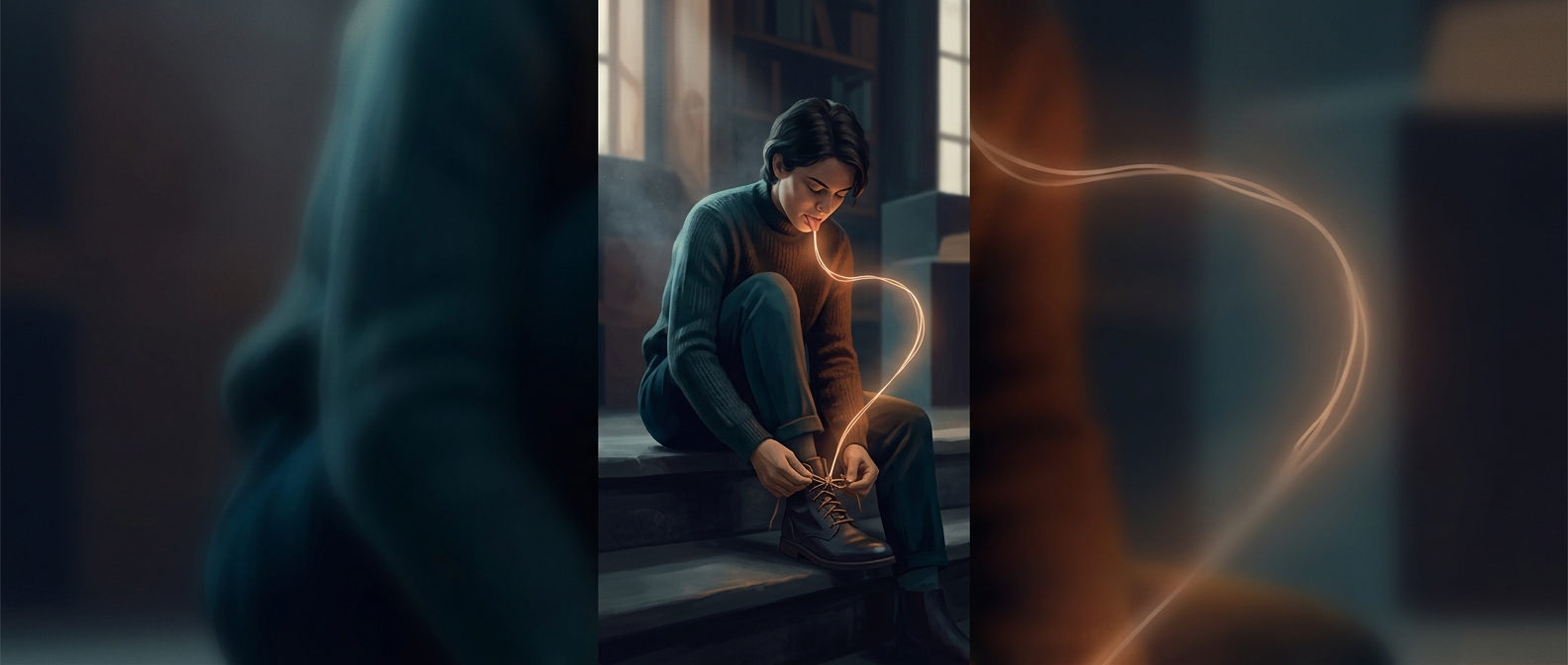
Your brain estimates where your hands are
The sense that lets you locate a hand without looking is called proprioception. Receptors in muscles and joints respond to stretch and movement, sending the brain clues about a limb’s position. Touch adds more information: pressure from a surface, for example, can help distinguish a resting hand from one that is moving.
These signals are not a precise readout. They are brief, imperfect messages that the brain combines with vision and other sensory clues to build an ongoing estimate of the body. When your eyes are closed, the estimate has fewer clues to check against. Ordinary fluctuations in muscle tension and sensory signals can then make a still hand seem slightly displaced or as if it has drifted.
Why the sensation can feel convincing
The brain generally does not wait for perfect certainty before acting. It uses the best available estimate to guide movement—enough to reach for a nearby object or keep a hand in a comfortable position. If vision returns, it can quickly correct that estimate. The apparent drift is therefore not evidence that the hand has actually moved; it shows how the feeling of bodily position depends on the brain’s ongoing interpretation of sensory input.
That is why a small mismatch can be noticeable with your eyes shut: the hand stays put, but the brain’s picture of where it is can shift a little.