Swedenborg’s journeys had a theological map
Emanuel Swedenborg was not describing “astral travel” in quite the modern sense of a soul leaving the body. He wrote of visiting a spiritual world that he believed existed alongside the physical one. In accounts of his visions, encounters with angels, demons, and the dead were not merely symbols: he treated them as communications from a real realm, and used them to develop ideas about the afterlife and human moral life.
That framework mattered. Swedenborg had worked as a natural philosopher before turning increasingly to theology and visionary writing. He presented his spiritual experiences as a new kind of access to religious truth, not as an escape from ordinary life. His reports therefore sit at the intersection of personal revelation and an effort to explain how the visible and invisible worlds fit together.
A spare menu, not a demonstrated cause
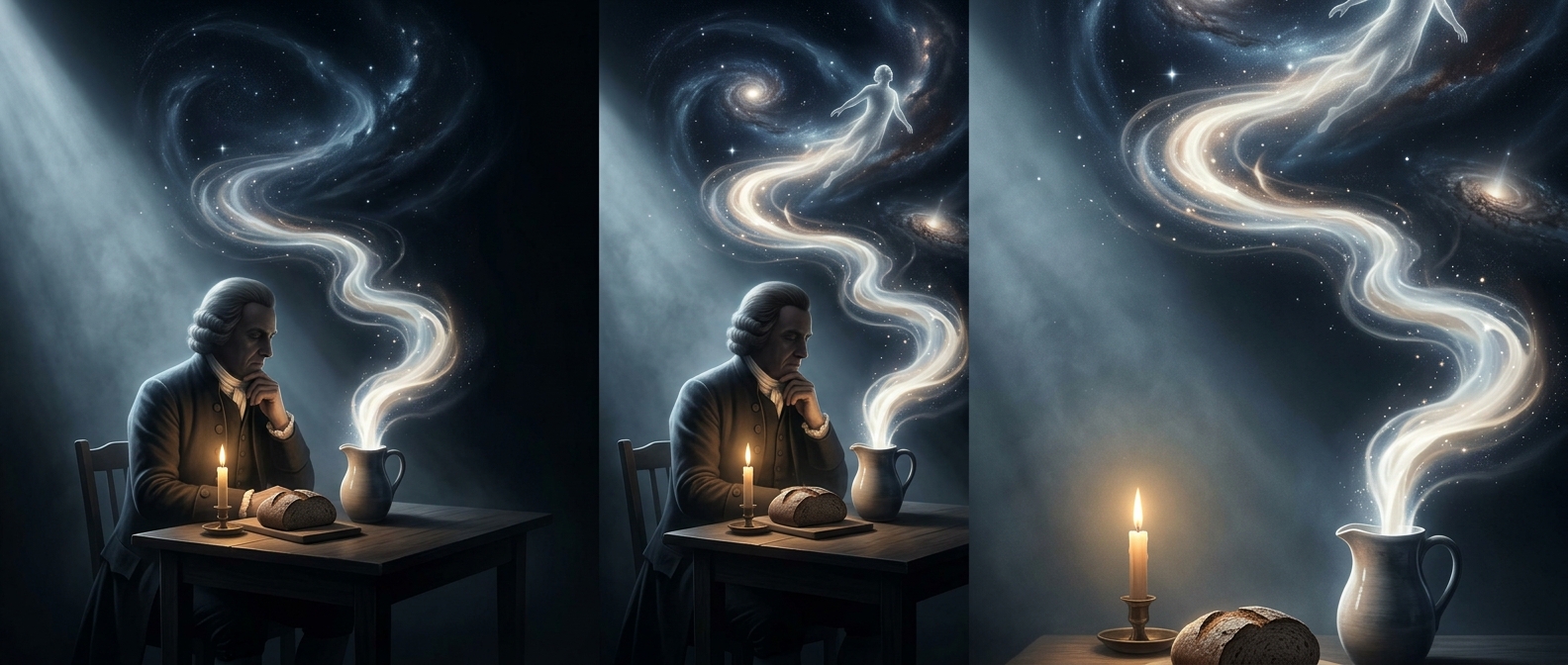
Bread and milk were described as staples of Swedenborg’s diet, with sweetened coffee also reported. Such details give a tangible glimpse of his daily routine, but they cannot establish that food produced his visions. The more revealing connection is cultural: a simple, repetitive diet can look like a form of personal discipline, while Swedenborg’s writing made spiritual perception the center of his life’s work.
His influence lasted because he gave readers a detailed account of what he believed lay beyond death—not because his meals offered a recipe for reaching it. The striking contrast is between an ordinary table of bread, milk, and coffee and the vast invisible world he said he encountered.