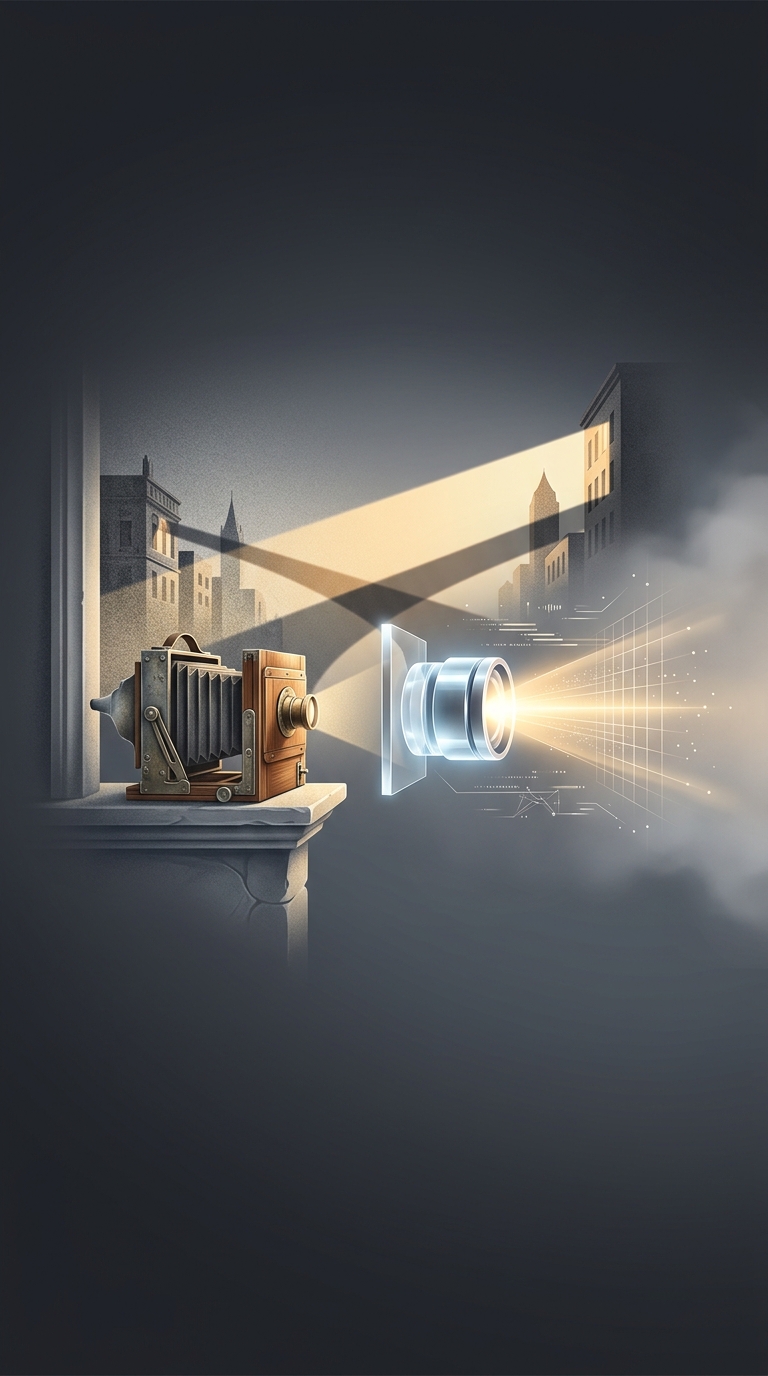
The camera was only half the invention
In 1997, Philippe Kahn’s setup joined three devices that were not designed to work as one: a digital camera, a mobile phone, and a laptop. The camera captured the image, while the laptop helped move it through the phone’s connection to people elsewhere. The result was not yet a sleek camera phone; it was a working demonstration that a picture could travel from a camera to other people almost as soon as it was taken.
That distinction mattered. Digital cameras already let people avoid film, but sharing a picture still meant getting it onto a computer and sending it over a network. Kahn’s workaround connected capture and communication into a single chain. The breakthrough was not just taking a digital photo—it was making immediate sharing part of the act of taking it.
From improvised rig to everyday feature
The equipment was bulky and the process depended on several separate devices. A phone with a built-in camera would eventually make the same basic sequence far simpler: the camera turns light into digital image data, and the phone’s network connection carries that data to someone else. Later phones could handle both jobs internally, without a laptop serving as the bridge.
That change reshaped what people expected a phone to do. A camera no longer had to be a separate object brought along for special occasions. It could be ready in a pocket, and a picture could become a message rather than something saved for later. Kahn’s improvised system pointed toward a future in which photographing and communicating were no longer separate steps.