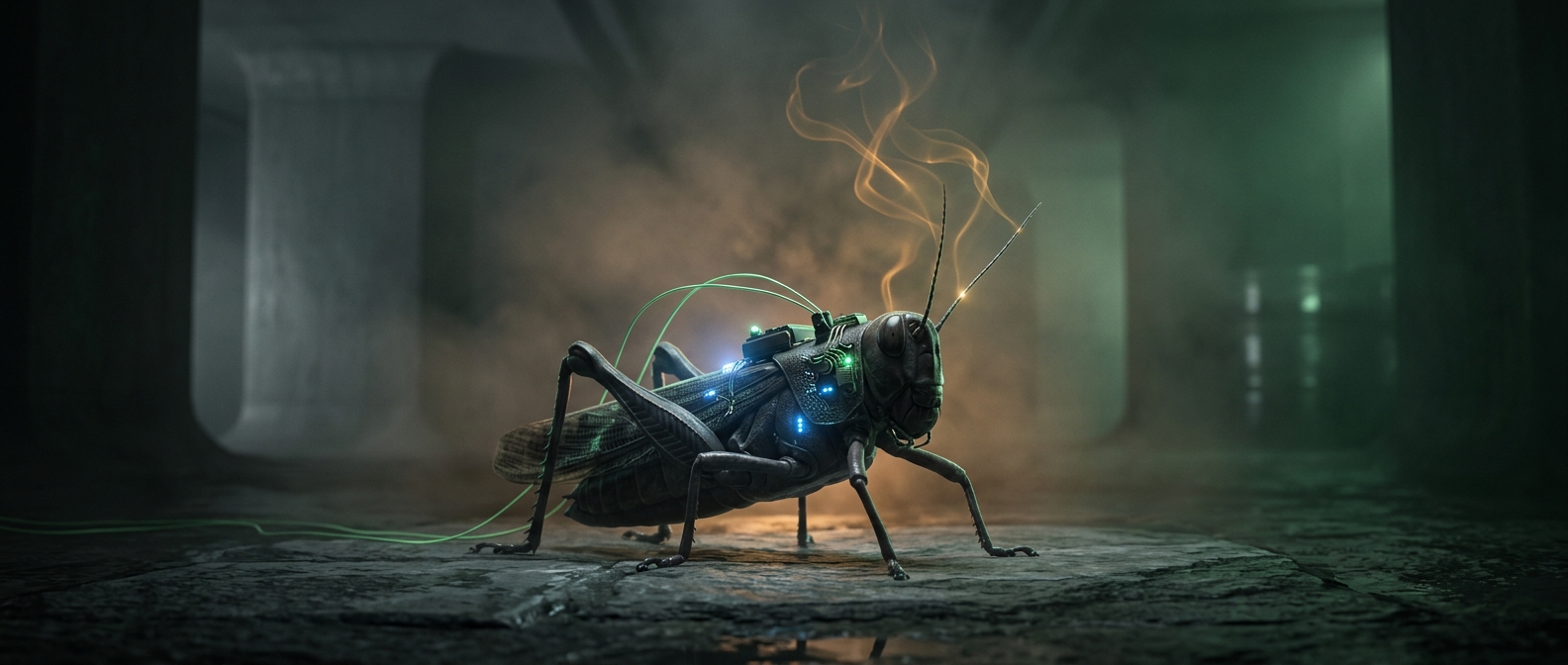
How a locust’s sense of smell becomes a signal
A locust does not identify an odor by measuring one molecule at a time. Receptors on its antennae respond to chemicals in the air, and those responses travel to the brain’s olfactory circuits. Different odors produce different patterns of activity across those circuits—more like a recognizable neural signature than a single on-off switch.
In a biohybrid detector, tiny electrodes monitor that activity. When the insect encounters a target vapor, its neural response changes; electronics can register the change and pass an alert to an operator. The locust supplies the biological sensing machinery, while the electrodes and connected equipment turn its response into a readable output.
Why use an insect at all?
Explosives can release faint chemical traces, which makes finding them a difficult sensing problem. An insect’s antennae are naturally tuned to pick up airborne chemicals, and its nervous system already converts those encounters into fast signals. Using that system offers a different route from building a sensor entirely from manufactured materials.
The key is not simply that a locust reacts, but that its response can be associated with a particular chemical target. A useful detector must separate that pattern from responses to other odors and convey the result clearly enough for people to act on it.
The living sensor’s practical tradeoff
Because the sensing component is an animal, the device depends on keeping that component functioning and interpreting its signals reliably. The electrodes and electronics do not replace the locust’s smell; they make the insect’s response measurable. That unusual division of labor is the point: a tiny airborne trace can trigger a biological reaction, and the hardware can translate that reaction into an alert.