What Alcohol Does to a Bacterial Cell
A bacterium depends on its proteins to carry out essential jobs: processing nutrients, maintaining its shape, and copying its genetic material. Alcohol interferes with those jobs by unfolding proteins, a process called denaturation. Once a protein loses its precise shape, it can no longer work properly.
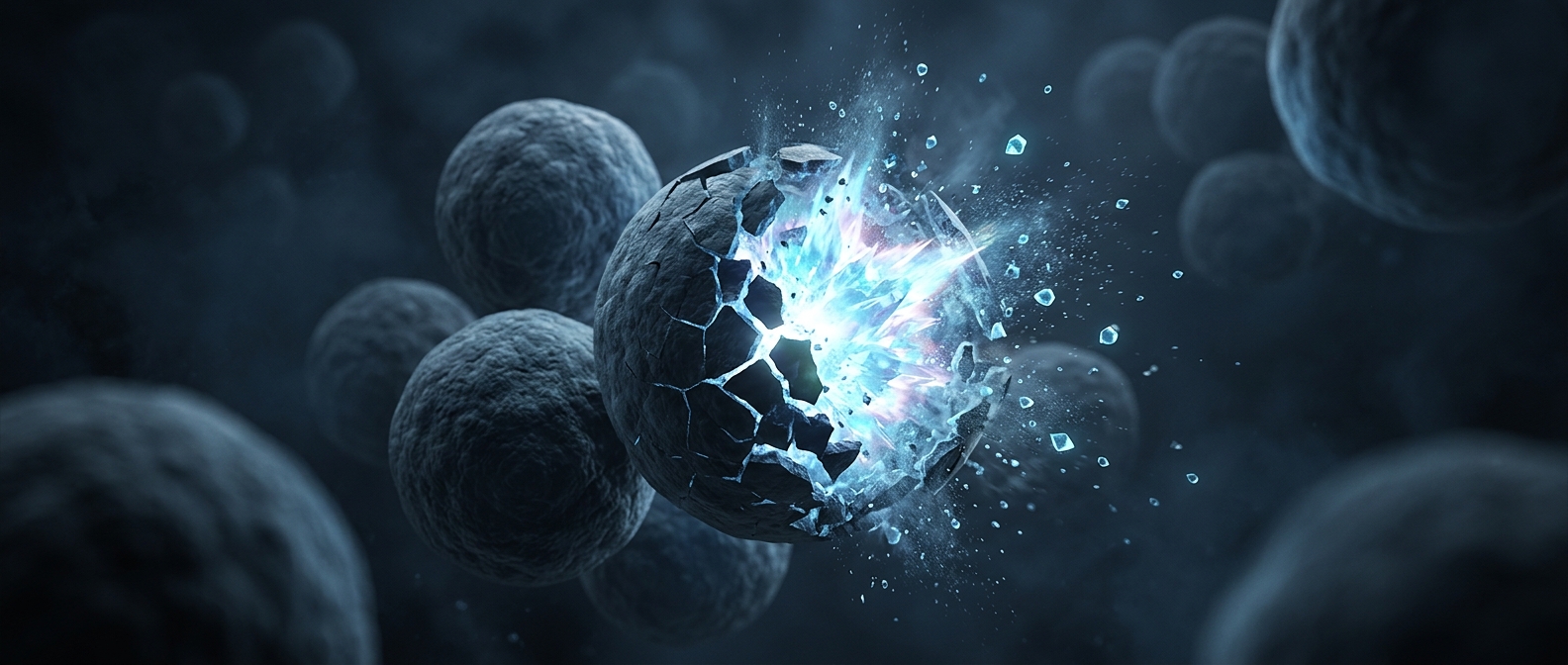
Alcohol also disrupts the cell’s membrane—the thin, flexible barrier that separates the bacterium from its surroundings. The membrane normally controls what enters and leaves. When its structure is damaged, the cell can no longer maintain the conditions it needs to survive. These effects work together; sanitizer does not need to enter a bacterium and poison it like a targeted toxin.
Why Coverage and Contact Matter
Alcohol can act only where it reaches. Rubbing sanitizer over the whole hand spreads it into the creases and around the fingertips, giving it time to contact microbes before it evaporates. If a patch of skin is missed, bacteria there may escape the treatment. Dirt or other material can also make it harder for sanitizer to reach microbes, which is why it is not a substitute for washing visibly dirty hands.
The mechanism has limits: some hardy microbes, including bacterial spores, are much less vulnerable to alcohol than ordinary, actively growing bacterial cells. Sanitizer’s strength is rapid damage to exposed cells—not a guarantee that every kind of microbe is eliminated.