Oxygen turns a tank into a living treatment system
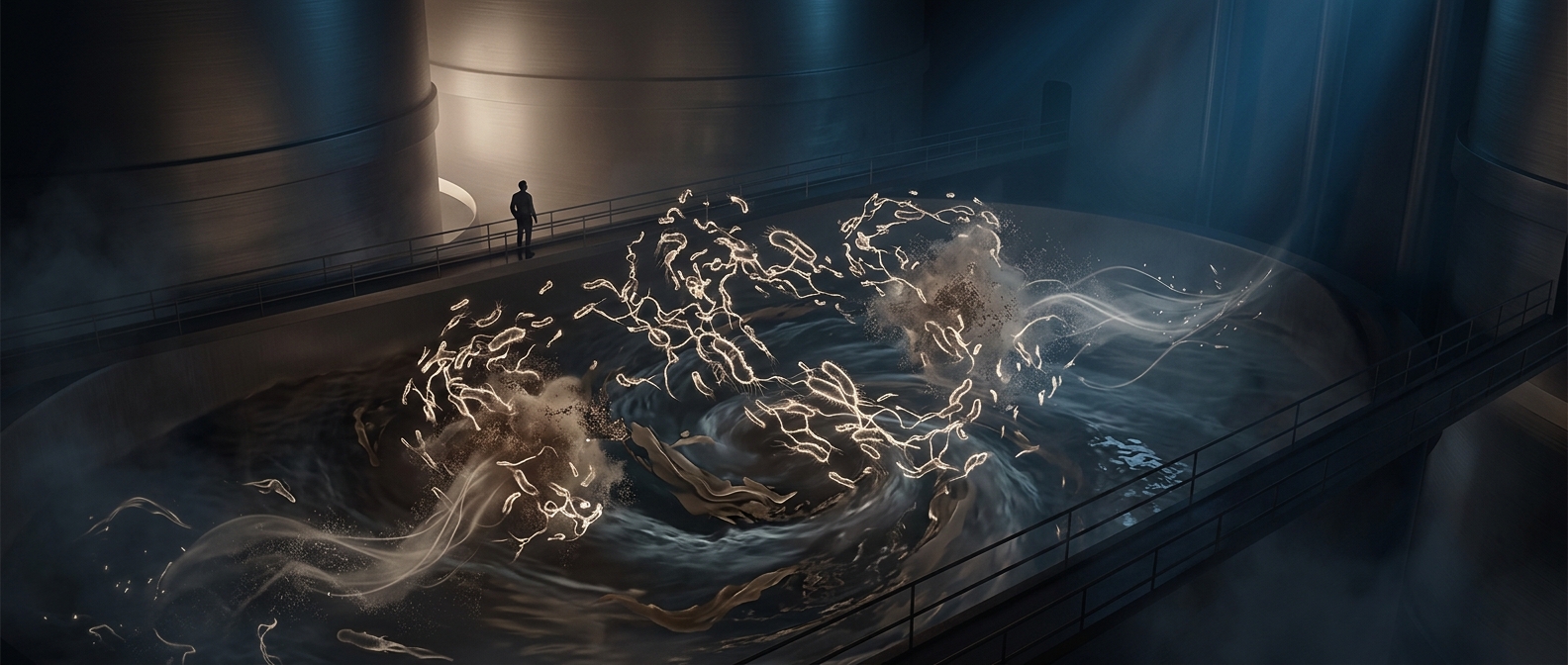
In an activated-sludge plant, wastewater is mixed with a community of bacteria and other microorganisms. Blowers or mechanical mixers keep oxygen in the water and prevent the microbes from sinking too soon. With oxygen available, they break down much of the dissolved and suspended organic material—such as food scraps and human waste—using it for energy and growth.
The microbes gather into tiny, sticky clumps called flocs. These clumps are easier to separate from water than individual microscopic cells. The aerated mixture then flows into a settling tank, where the flocs sink and clearer water passes onward.
The microbes are recycled
The settled material is not simply discarded all at once. Some is pumped back into the aeration tank to maintain a dense workforce of microbes for incoming wastewater. The remainder, called excess sludge, is removed for further treatment and disposal or other managed uses.
This recycling is central to the process: the plant keeps enough active biomass on hand to treat the next flow, rather than starting a new microbial population each time. The result is clearer water with much of its organic pollution removed—not necessarily water safe to drink. Other treatment and disinfection steps may still be needed before discharge or reuse.