How a sensor reads glucose without a blood sample
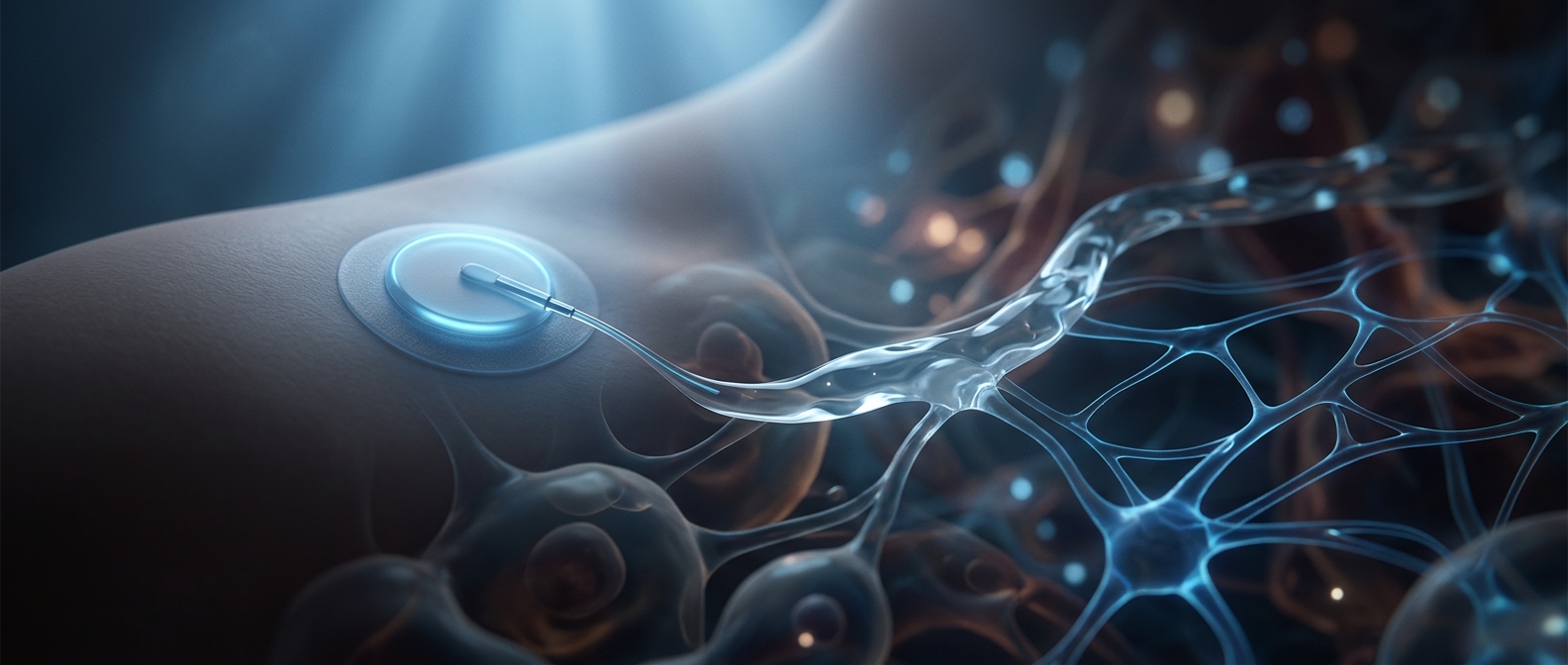
A continuous glucose monitor (CGM) uses a tiny flexible filament placed just beneath the skin. The filament sits in interstitial fluid, the thin layer of liquid that surrounds tissue cells. Glucose moves between the bloodstream and this fluid, so its level there generally tracks blood glucose—but the sensor is reading a nearby compartment, not blood itself.
Many sensors use a glucose-sensitive chemical reaction at the filament’s tip. That reaction produces an electrical signal whose strength changes with the amount of glucose present. The device turns the signal into a glucose estimate, then sends readings to a receiver or phone at regular intervals.
Why the reading can trail a finger-stick
Glucose has to move from blood into the surrounding tissue fluid, and the sensor has to detect and process the change. As a result, interstitial readings can lag behind blood glucose, especially when levels are changing quickly—for example, after eating or during exercise. A CGM is therefore useful not just for a snapshot, but for showing whether glucose is rising, falling, or staying steady over time.
The under-skin approach replaces repeated finger-prick sampling for routine monitoring, though the device is still an indirect measurement. Its value is the stream of readings: instead of seeing one point at a time, a person can follow how glucose responds across the day.