How ECMO Takes Over Part of the Lungs’ Job
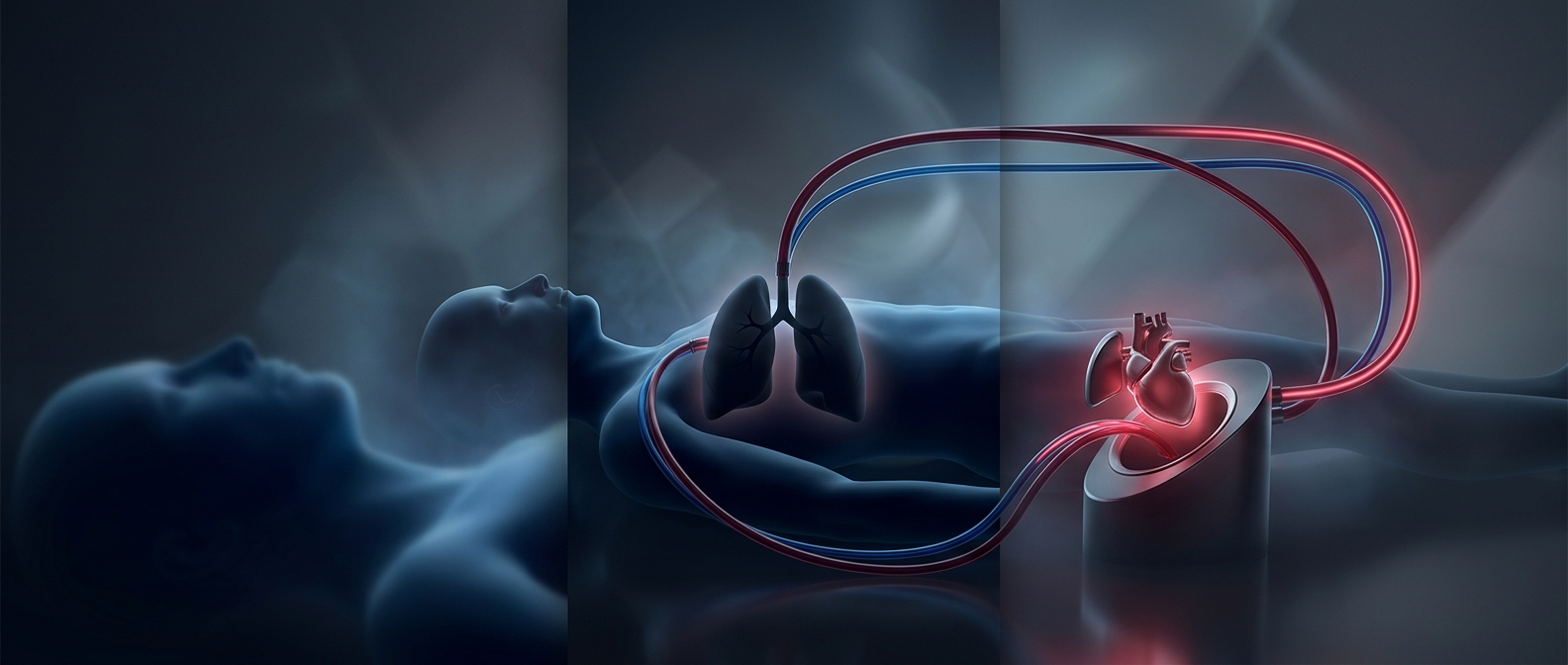
The lungs normally do two things at once: move oxygen into the blood and remove carbon dioxide, a waste gas the body produces. Extracorporeal membrane oxygenation, or ECMO, temporarily moves that exchange outside the body. Blood flows through tubing to a device, passes along a thin artificial membrane, and then returns to the circulation.
The membrane acts as a barrier between blood and a stream of oxygen-rich gas. Oxygen crosses into the blood while carbon dioxide crosses out—much as gases move across the delicate air sacs in healthy lungs. The machine does not pump air into the lungs; it handles gas exchange in the blood itself.
Why Bypass the Lungs?
When severe illness leaves the lungs unable to exchange gases well enough, ECMO can provide support while treatment addresses the cause and the lungs have time to recover. By taking over some of their workload, it can reduce the need to force air through badly injured tissue. It is a bridge, not a cure: the underlying problem still has to improve or be treated.
The exact setup depends on what support is needed. In a common form used mainly for lung failure, blood is drawn from a large vein, oxygenated in the circuit, and returned to another vein. The heart then continues to pump it through the body. Other configurations can also support circulation when the heart needs help.
A Patient Can Be Awake While on ECMO
Because the machine exchanges gases outside the chest, a patient does not necessarily need to be unconscious or connected to a breathing tube. Some people can remain awake and speak, though their condition and other treatments determine what is possible. ECMO gives the lungs breathing room; it does not make the patient independent of intensive care. The tubing, pump, and membrane must keep working continuously while clinicians monitor the blood and the circuit.