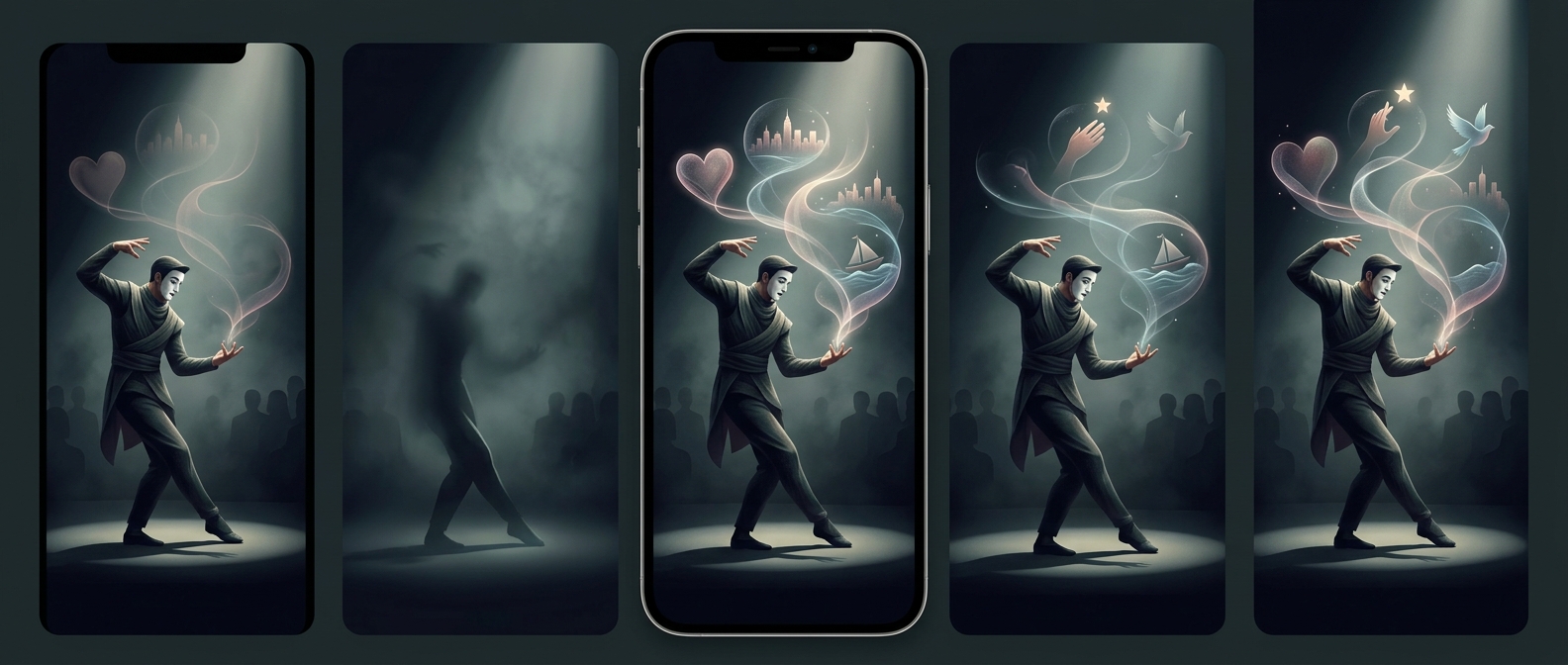
Applause answers a different question
A mime’s story can be hard to follow: a trapped person, an invisible wall, or a tug-of-war with an unseen rope may leave viewers unsure what is happening. But applause does not have to mean “I understood the plot.” It can mean “I saw you perform, and I’m responding.”
That distinction makes clapping a useful social signal. People can acknowledge the performer’s effort and presence without agreeing on what the silent scene meant. The gesture works even when the audience cannot put the action into words.
A familiar cue closes the performance
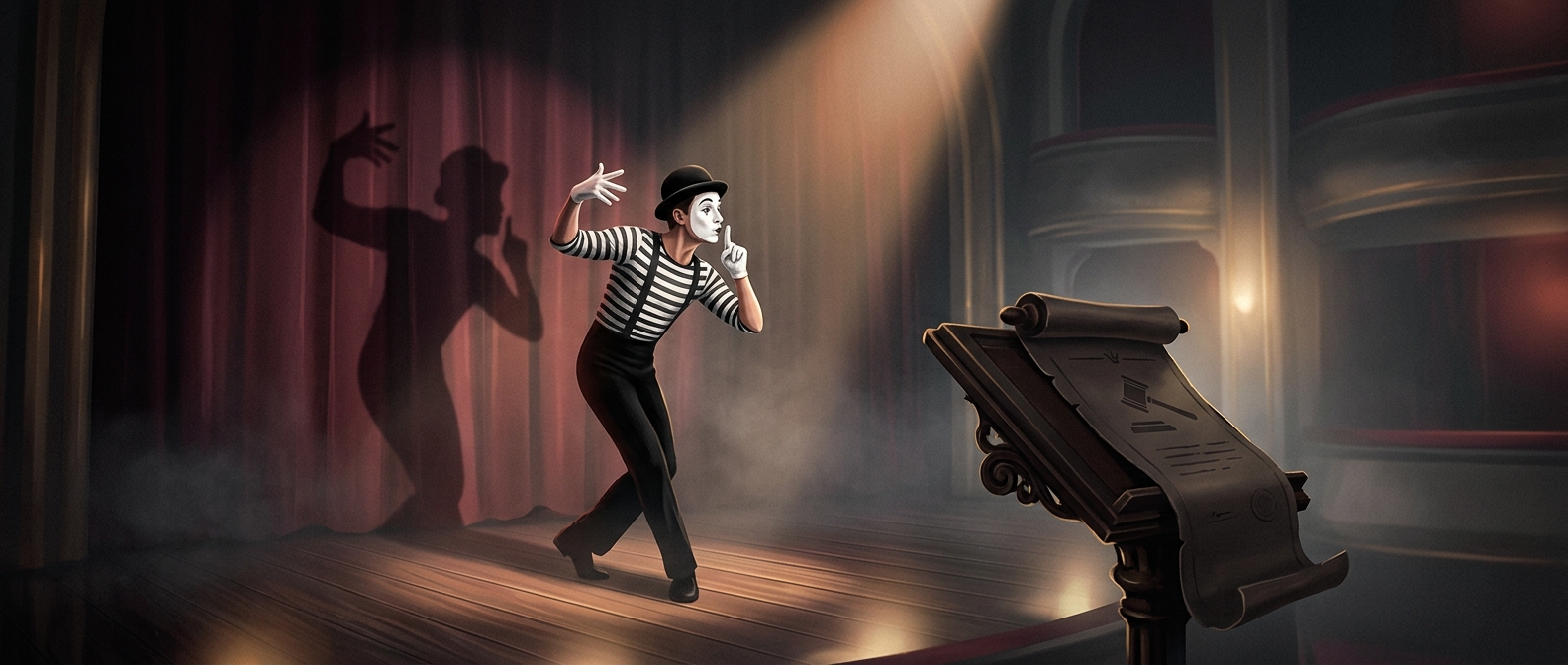
Live performance depends on cues between performer and audience. A pause, a final pose, or a change in movement can suggest that a scene is over. Applause is one familiar way for viewers to answer that cue, letting the performer know the moment has landed—even if its meaning remains unclear.
Clapping is also contagious: when one person starts, others can join without having to decide whether they fully understood or personally loved the act. The group’s response becomes a shared acknowledgment, not a verdict on the mime’s storyline.
Recognition without interpretation
Mime makes this gap especially visible because the performer’s skill is on display even when the narrative is not. Viewers may notice the careful gestures and bodily control while missing the imagined situation that connects them. The applause can recognize the performance without decoding it.
So the invisible-box struggle can earn a response even if nobody can explain what the box represents. The audience has understood enough to know that someone is performing—and that the scene has reached a moment to answer.