A pose that is easy to read—and easy to animate
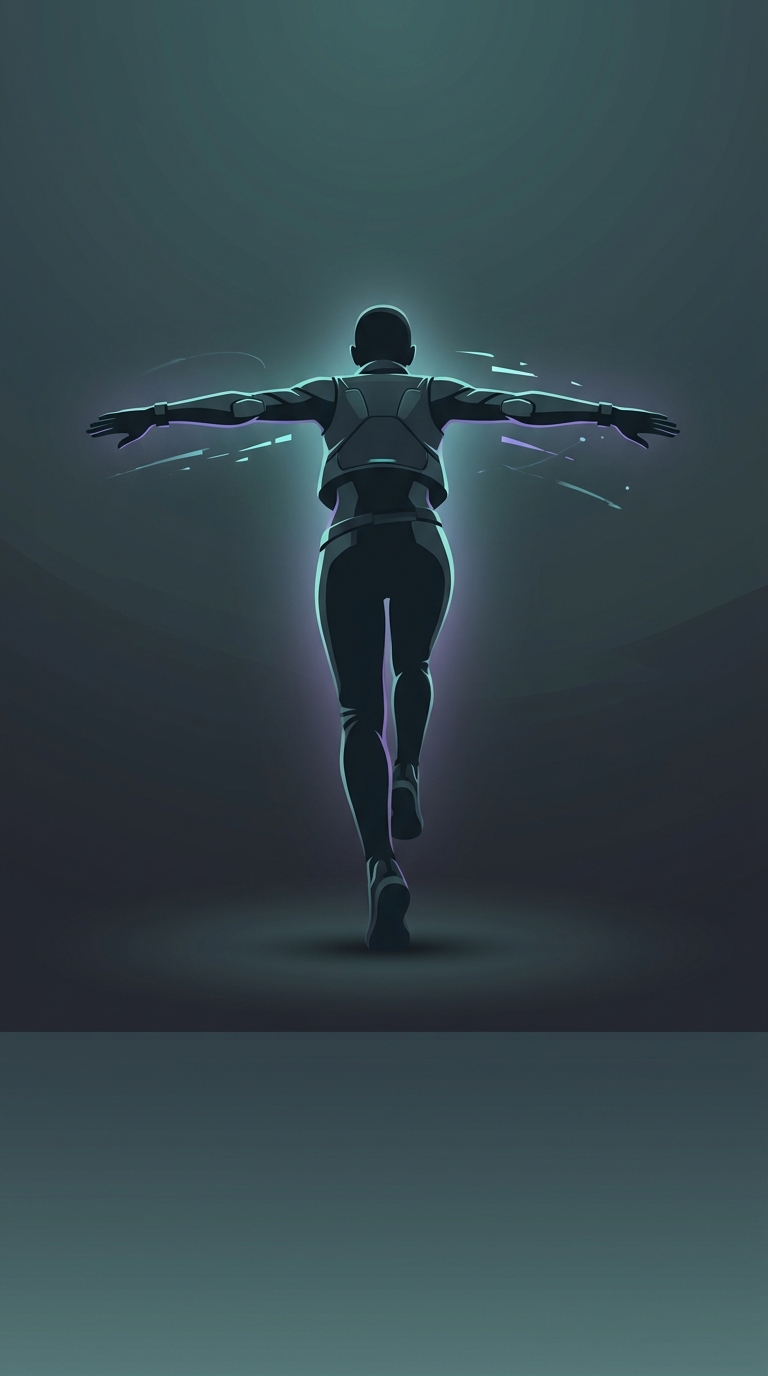
With both arms held behind the body, a running character forms a long, clear shape pointing in the direction of travel. In a fast-moving scene, that silhouette helps viewers register “sprinting” at a glance, even when the character is small on screen or appears for only a moment.
The pose can also simplify the animation. A conventional run involves arms swinging back and forth in coordination with the legs. Keeping the arms mostly fixed behind the torso gives animators one less moving element to draw and time across a sequence of images. It is not a universal rule or the only reason the pose appears, but it is a useful design choice—especially in energetic scenes where clarity and speed matter.
Why real runners don’t do it
Arms normally swing to help balance the body and counter the rotation caused by each leg. Holding them back removes that help, so the familiar anime sprint is not a practical way to run faster in real life. Its appeal is visual: the rigid arms make the body look streamlined, while the forward lean and long stride suggest momentum.
The pose became especially recognizable through anime’s ninja imagery, where it reads as a compact, forward-driving dash. Its staying power comes from that combination: a distinctive silhouette that communicates speed while keeping the motion comparatively simple to animate.