How Mime Makes Empty Space Feel Real
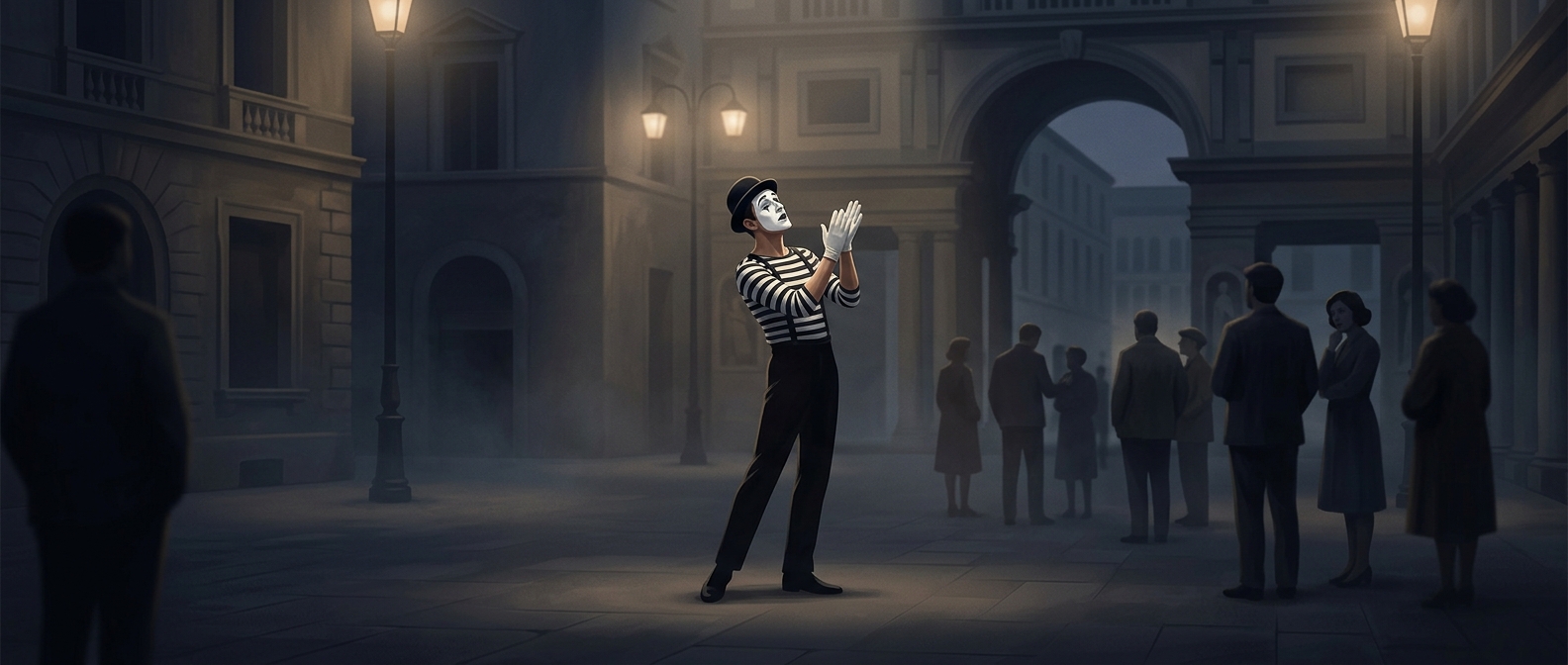
A mime performer cannot point to a prop and rely on its shape, color, or sound. Instead, the body has to supply the missing information. A hand meets an invisible surface at a consistent height; fingers trace its edge; the performer’s face registers surprise or frustration. Those repeated cues give the audience a rough mental model of the object.
The key is not simply making gestures large. It is making them consistent. If an imagined door has a handle, the performer must keep reaching for it in the same place. If an invisible object is heavy, the body must show resistance: muscles tense, posture shifts, and movement slows. A sudden change in those patterns can then communicate a new event, such as the object slipping or the door refusing to open.
Turning Movement Into a Story
Silent action also has to establish cause and effect. A performer might first show a boundary, then struggle against it, then discover a way around it. The audience reads the sequence much as it reads physical behavior in everyday life: an action meets resistance, and the reaction reveals what happened.
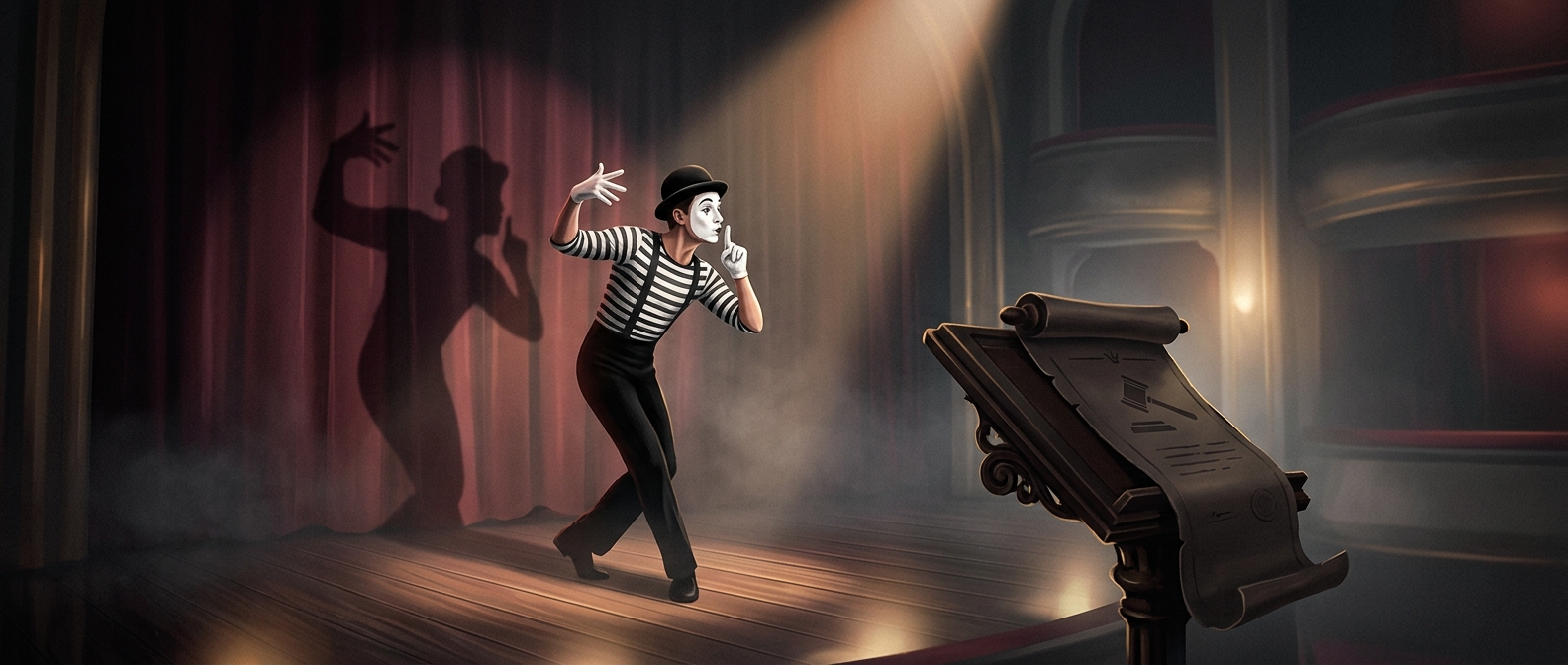
Exaggeration makes those clues visible from a distance, but clarity depends on selection. Too many small motions can blur the action; a few distinct gestures let viewers follow where the imagined objects are and what they mean. Facial expression adds another layer, showing whether a situation feels comic, frightening, or urgent without changing the physical setup.
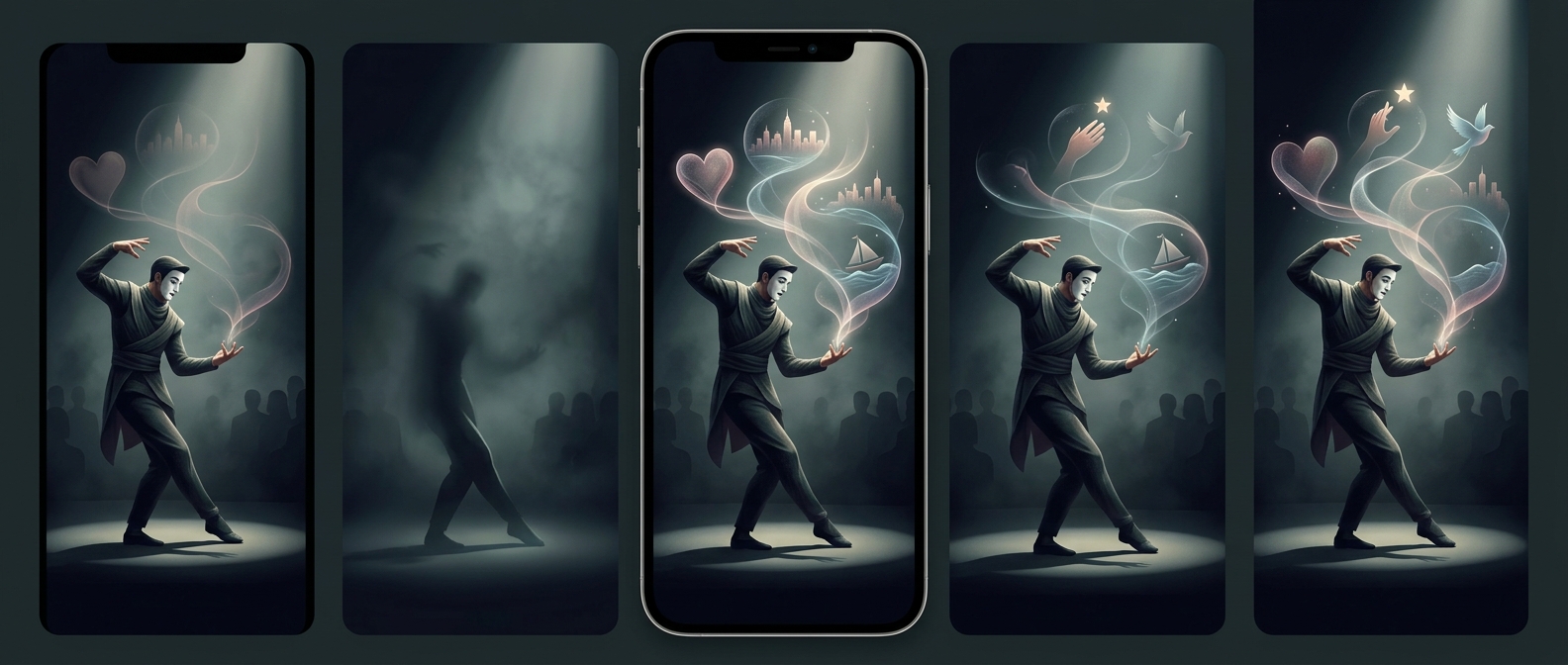
This creates a useful constraint: the audience must do some of the imagining, but the performer must give it enough structure to do so. When the movements remain legible and spatially stable, an empty stage can feel crowded with objects—and a simple sequence of gestures can carry a surprisingly intricate plot.