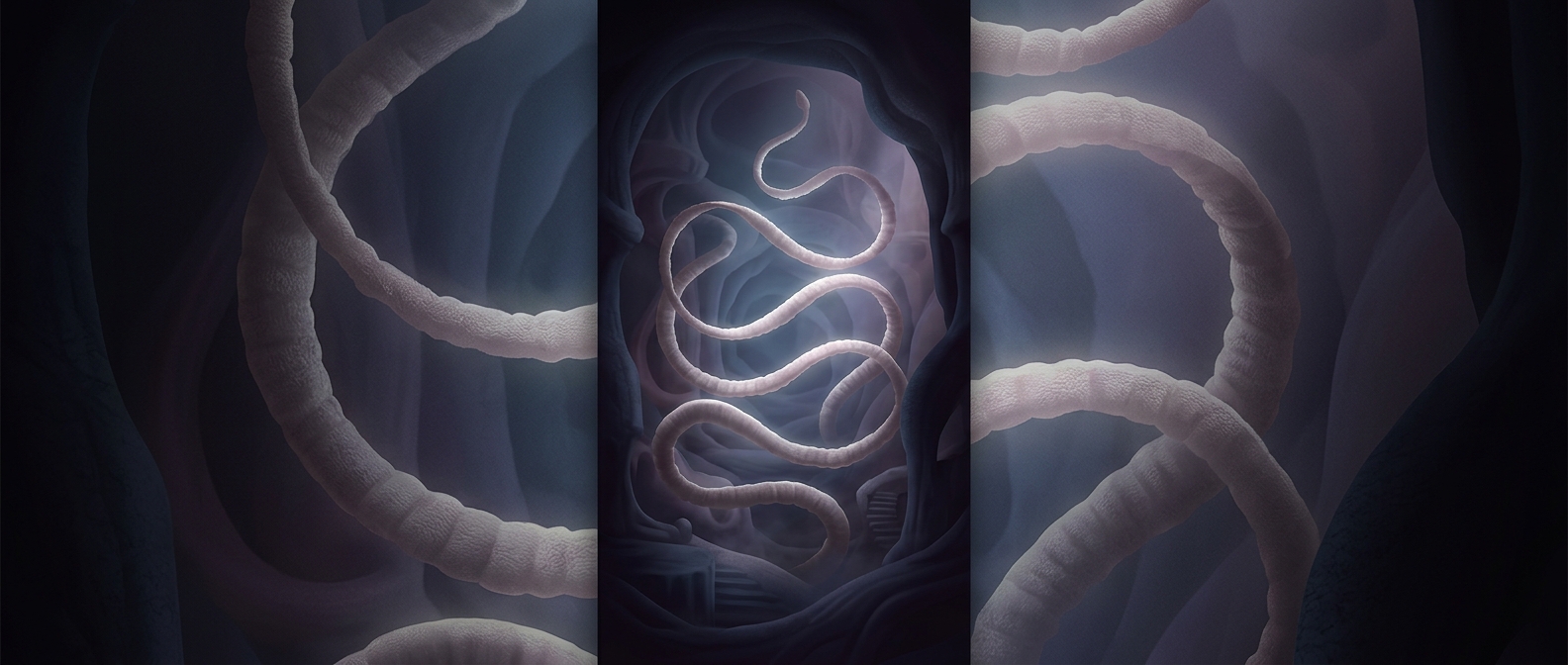
How a tapeworm settles in the intestine
Infection begins when a person eats pork containing living tapeworm larvae that has not been killed by thorough cooking. In the intestine, a larva can develop into an adult worm. At its head is a small attachment structure that grips the intestinal lining, keeping the worm from being swept along with digestive contents.
The worm does not need a mouth to feed. Its outer surface absorbs nutrients already broken down in the gut. As it grows, it produces body segments containing eggs; segments or eggs can pass out in stool and continue the parasite’s life cycle if they reach a suitable host.
Why it can remain unnoticed
An adult tapeworm may cause few or no obvious symptoms, so someone can carry it without realizing it. If the infection is not diagnosed and treated, the attached worm can persist for years—and, in some cases, decades. Its long residence is not a sign that it is invulnerable: it is simply living in an environment where food is continuously available and symptoms may be subtle.
Pork tapeworm infection also has a separate, more serious route. Swallowing the worm’s eggs—not larvae in pork—can allow larvae to form cysts in body tissues, including the brain. Cooking pork thoroughly helps prevent infection from larvae in meat; good handwashing and sanitation help limit the spread of eggs. The distinction matters: the same parasite can cause very different problems depending on which stage enters the body.