How a feed turns yesterday’s attention into tomorrow’s choices
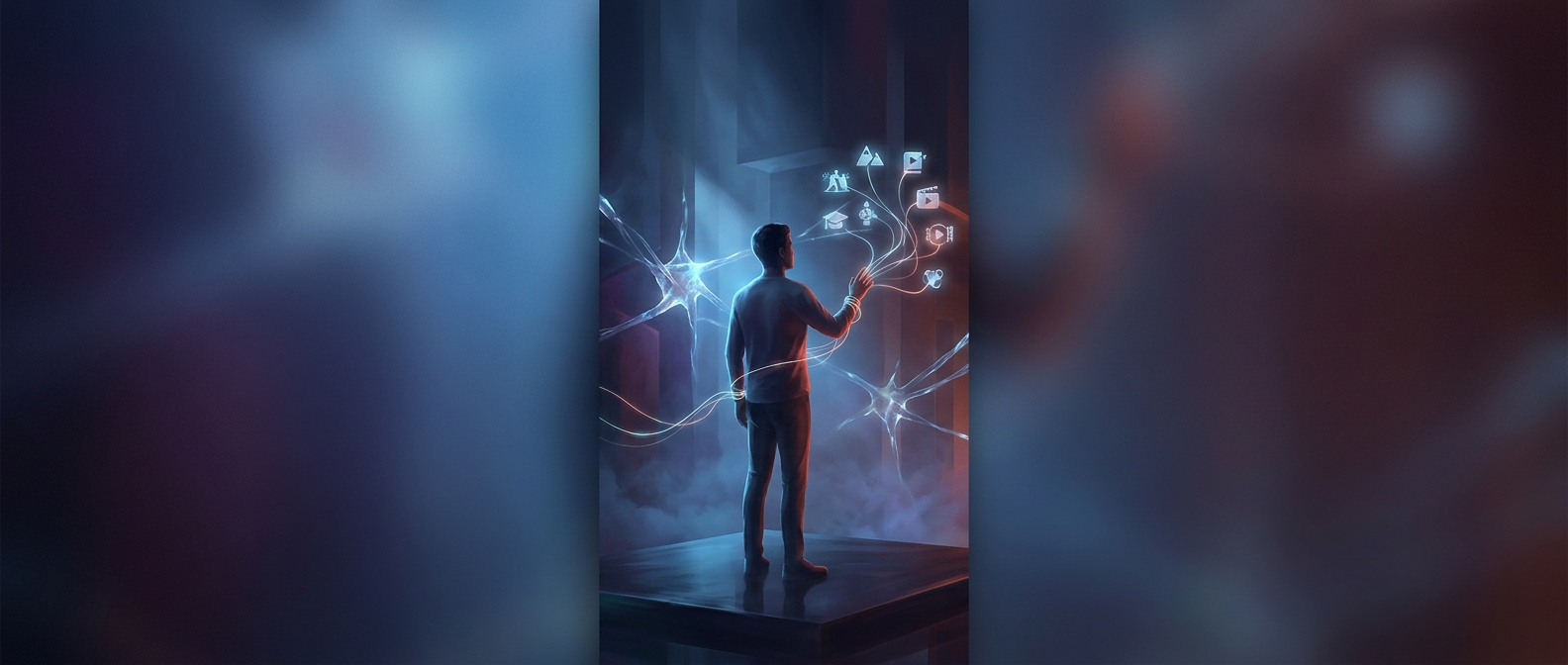
A recommendation system does more than retrieve videos you already want. It uses your behavior—such as what you watch, skip, replay, or click—as evidence about what might hold your attention next. The system then ranks possible videos and places its guesses in front of you. What you see becomes the next batch of evidence.
That creates a feedback loop: a few seconds spent on a topic can lead to more videos about it; those videos give you more chances to watch, skip, or engage, and the system adjusts again. The feed is responding to your behavior, but it is also shaping the menu of choices from which that behavior comes.
Exposure can change the preference being measured
Repeated exposure can make a subject feel more familiar and easier to choose. A video you watch because it appeared near the top may lead to related videos, which can make that subject more prominent in your mind. Familiarity is not the same as lasting interest, but in the moment it can affect what seems appealing or worth clicking.
This makes a recommendation a subtle kind of influence. The system does not need to persuade you directly; it can alter which options you encounter and how often you encounter them. Meanwhile, your clicks may be interpreted as signs of preference even when they reflect curiosity, convenience, or a brief mood.
A small signal can redirect the next scroll
The result is not that a feed dictates what you want. It is that wanting and watching can shape each other. A passing interest can grow when the feed keeps supplying related material, while interests you rarely encounter may fade from view. The next video is both a response to your past attention and a prompt for where your attention goes next.