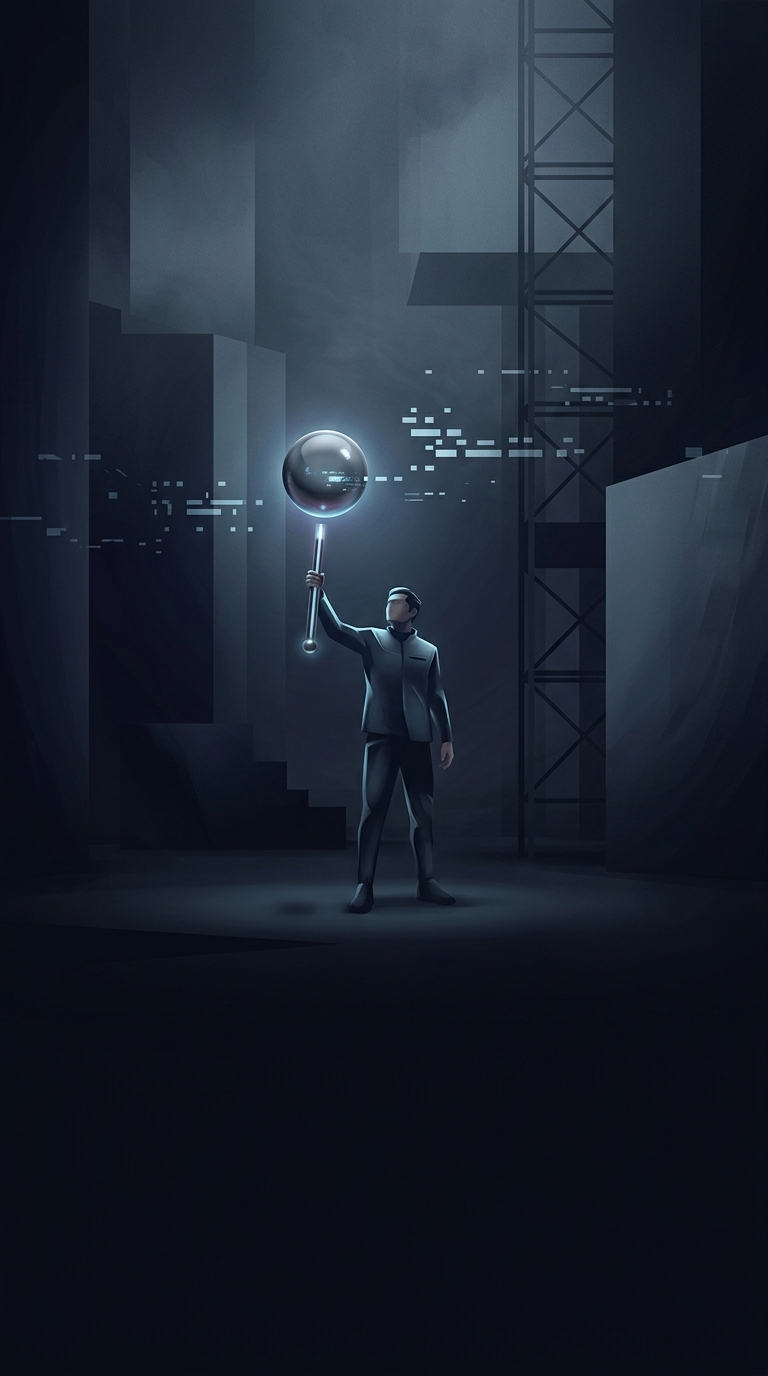
The metal wand is a lighting reference
The tool is usually a pair of reference spheres: one shiny and mirror-like, the other matte gray. A visual-effects crew member holds them near the actors or other important spots in a shot so the camera can record what the real set’s light looks like there.
The chrome sphere acts like a tiny, curved mirror. Its reflection shows where bright sources—windows, lamps, or the sky—are positioned around the camera and set. The gray sphere provides a less distorted view: because its surface is matte and neutral, the way light and shadow fall across it gives artists a practical guide to the scene’s overall illumination.
Matching computer-generated elements to the set
Later, artists use these references when lighting digital objects or characters. A CG object that is too bright, too cool in color, or lit from the wrong direction can look pasted into the footage. The spheres help the team judge the real conditions the computer imagery must match, including the balance between light and shadow.
Crews may capture additional photos of the surroundings to build a more complete lighting environment. The spheres are useful visual checks, but the chrome ball alone is not a perfect, all-around record: its reflection is curved and does not show every direction with equal clarity.
Why carry them around?
Light can change across a set. A window may brighten one side of a room, while a nearby lamp colors another; even a small change in where an actor stands can alter the shadows. Moving the spheres to relevant positions gives artists references tied to the actual shot. That small, odd-looking prop helps make a later digital addition seem to belong in the same room—and under the same light—as the people on screen.