When a Movie Reached Beyond the Screen
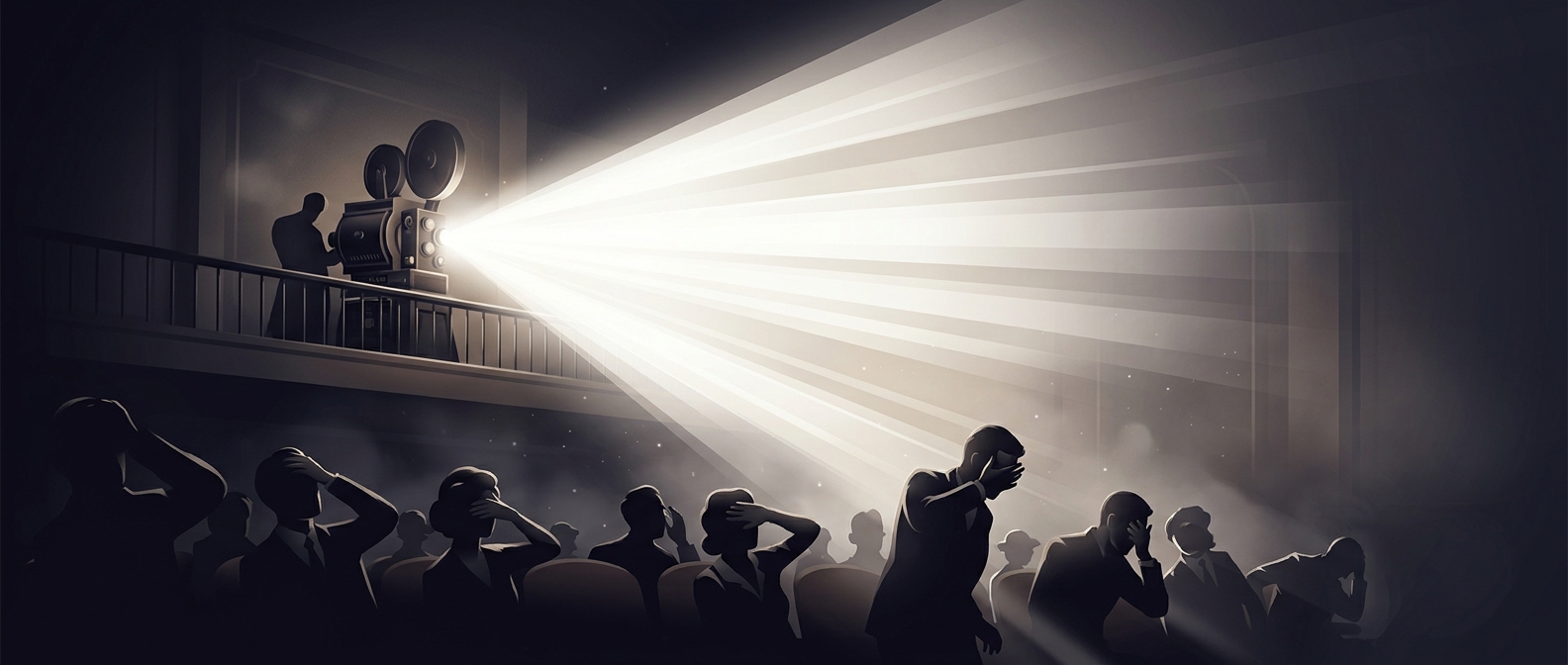
“Tactile vision” turned a theater screening into a set of physical cues. Strobe lights punctuated the image with abrupt flashes, while strong, recognizable odors gave the scene a scent the audience could actually experience. Instead of relying only on pictures and sound, the system used the room—and the viewers’ senses—as part of the presentation.
How the Effects Changed the Experience
A strobe makes light arrive in sharp bursts rather than as a steady glow. That interruption can make a moment feel startling and difficult to ignore. Odors work differently: they travel through the air and linger, linking a smell to whatever is happening on screen. Together, the effects could make a scene feel less like something watched at a distance and more like an event happening around the audience.
The goal was not simply to add decoration. Conventional movies ask viewers to sit still and follow a sequence of images; physical interruptions can break that passive rhythm. A flash or a sudden smell demands attention whether or not the viewer chooses to focus on it.
A Tradeoff Built Into the Gimmick
That immediacy also made the experience less controlled than an image on film. A visual cue appears in the frame, but a smell spreads through the theater and may remain after the scene changes. The same effect could therefore feel vivid to one person and distracting to another.
The lasting idea is that a movie’s “screen” need not end at the edge of the picture: light in the room and scent in the air can become part of the story’s impact.