Grooming Can Turn Parasites Into Prey
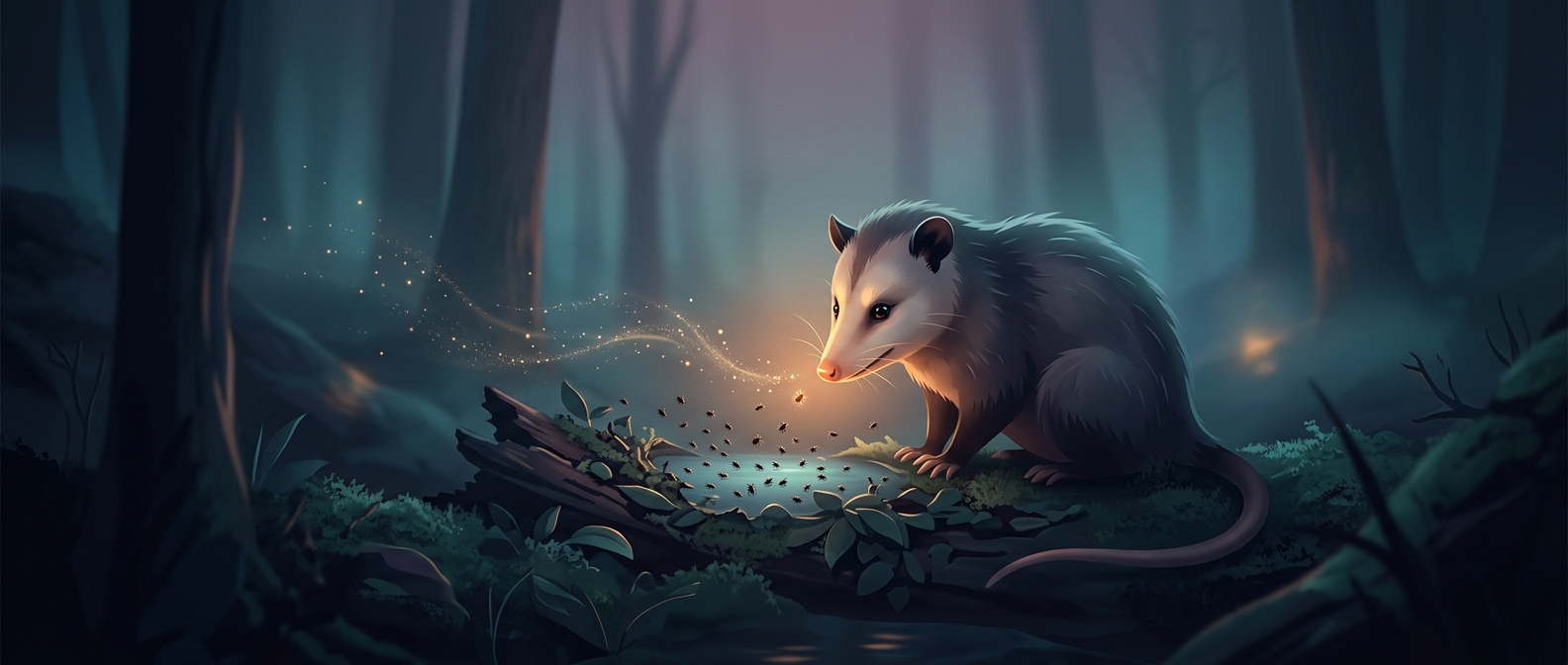
A tick that has attached to an opossum is already within reach of the animal’s grooming routine. Opossums clean their fur with their paws and mouths; in the process, they can dislodge ticks and swallow them. The tick is then food rather than a parasite drawing blood from its host.
That is a real route by which an opossum may consume ticks, but it does not mean the animal is sweeping them out of the surrounding habitat. Grooming mainly removes parasites from the opossum’s own body. Ticks elsewhere—on other mammals, birds, or in the environment—are unaffected.
Why One Animal Does Not Equal Landscape Control
Ticks need hosts to complete parts of their life cycle, and many different animals can serve as hosts. A tick removed from one opossum is one fewer parasite on that individual; whether this meaningfully changes local tick numbers depends on what happens across the wider network of hosts and tick reproduction.
So the ecological effect is best understood at the scale of an animal’s coat, not as a dependable pest-control service for a whole area. An opossum may eat ticks while grooming, but that incidental meal is a small piece of a much larger—and more complicated—cycle.