Why a Tasmanian devil’s tail changes with its condition
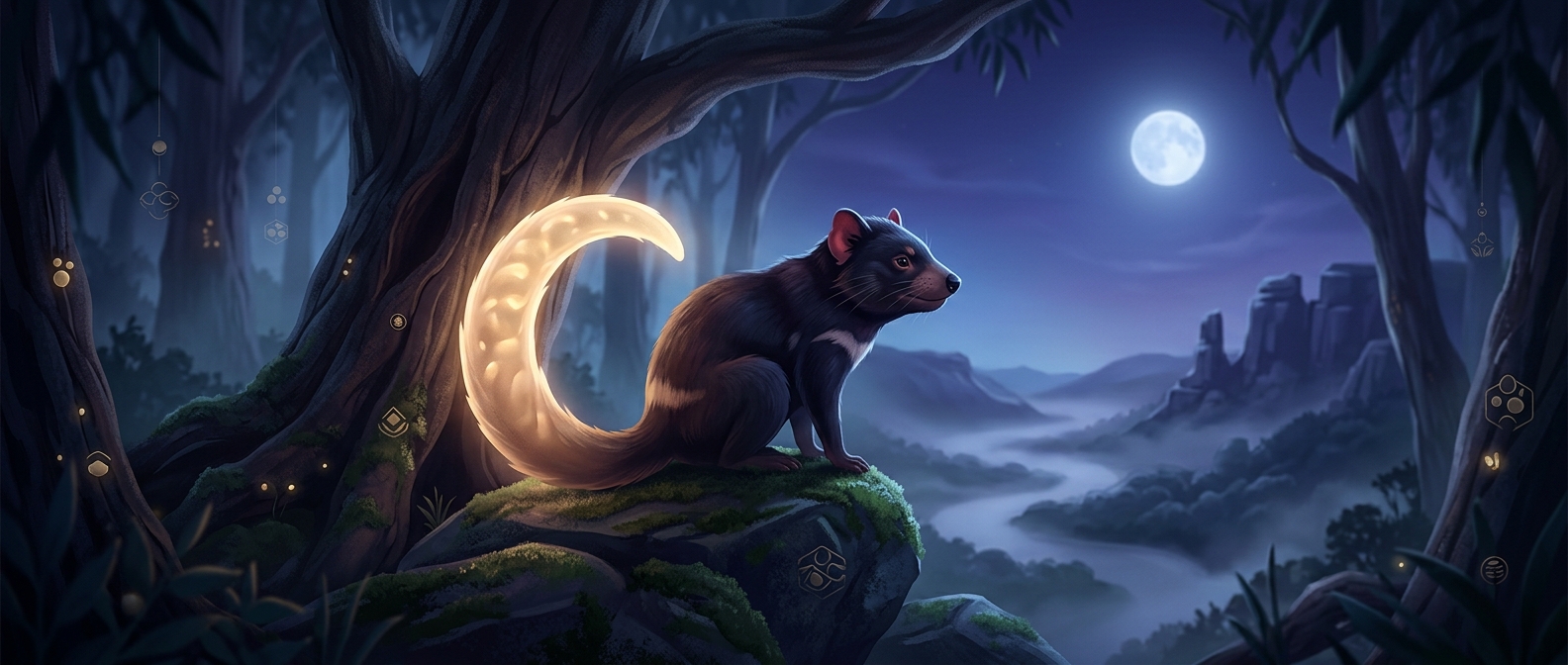
A devil’s tail is more than a counterweight: it is also one place where the body can deposit fat. Fat is stored in cells beneath the skin, and as those stores grow, the tail can become thicker. The change is visible from the outside, which is why a full-looking tail can offer a rough clue to an animal’s condition.
A reserve, not a separate food supply
Like other mammals, devils use stored fat when they need more energy than they are getting from food. That matters for a scavenger whose meals can vary: a carcass may provide a large feed, while food may be less available later. The body can draw on its reserves between meals, including fat held in the tail.
The tail still has ordinary physical jobs, helping with balance and movement. Its stored fat is part of the devil’s overall energy budget, not a special pouch that can be emptied independently or a substitute for finding food. A plump tail is therefore best understood as a visible sign of recent energy reserves—not a guarantee that the animal will have plenty to eat next.