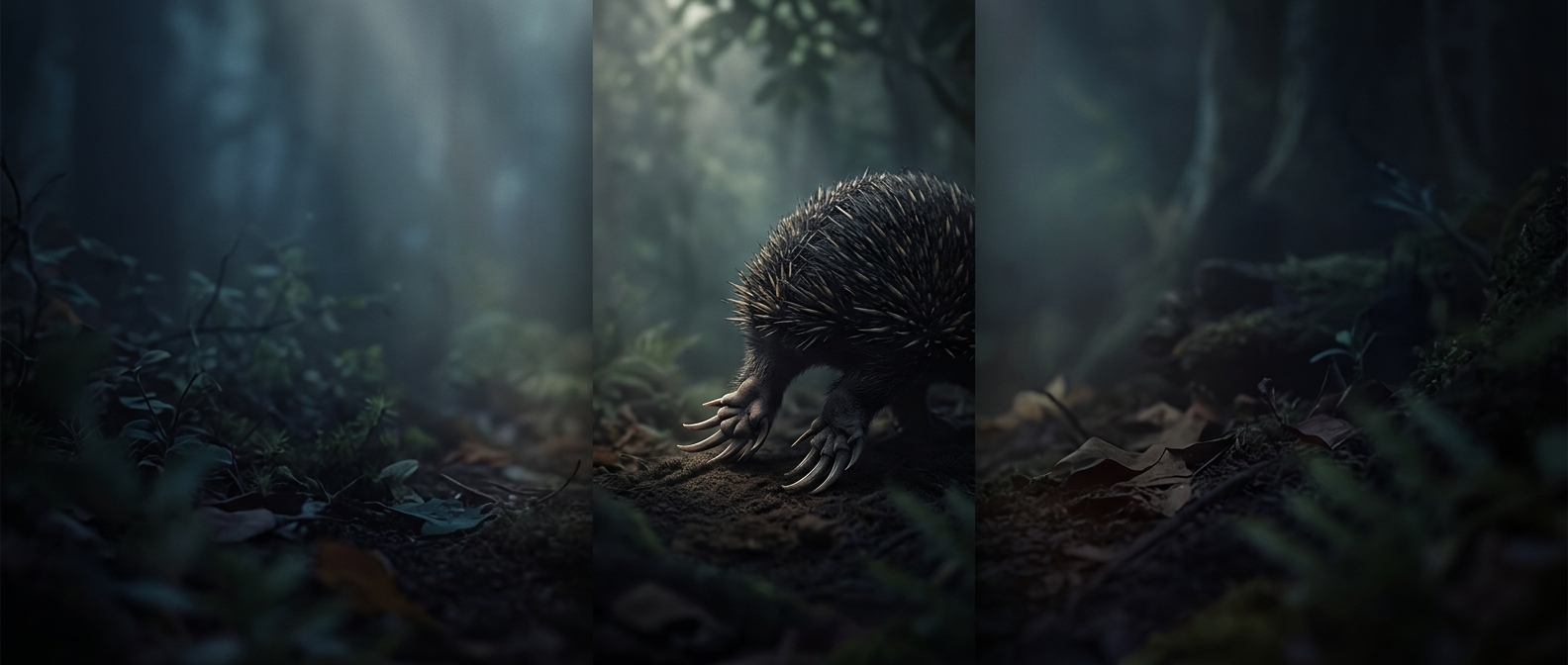
A digging tool built into the hind feet
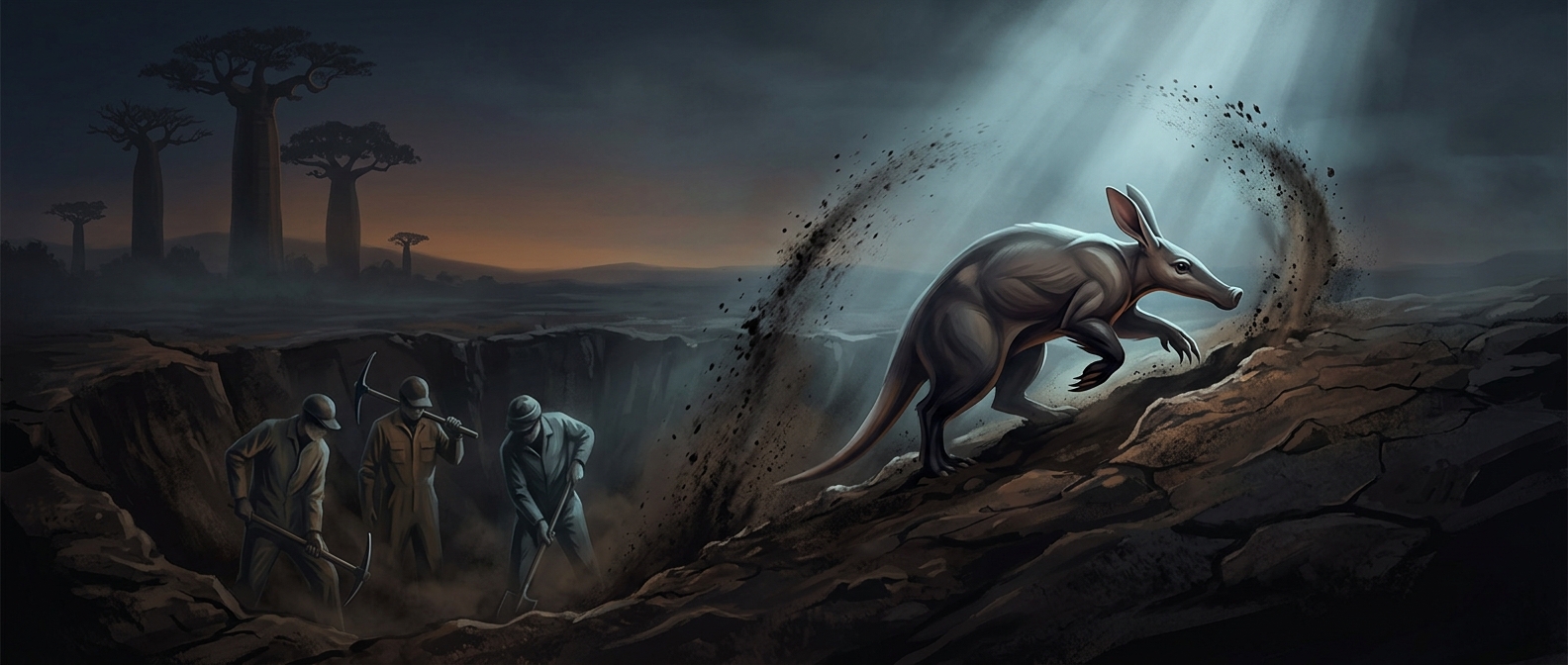
An echidna’s rear feet are oriented in the opposite direction from its front feet. That arrangement makes sense once digging is viewed as a two-part job: the forefeet break and loosen earth, while the hind feet help rake it away. Their long claws can catch the loosened soil and sweep it clear instead of simply pressing it forward.
The difference matters in a tight hole. Dirt that piles up beneath an animal can obstruct its movements and make each new scrape harder. Clearing it behind the body helps keep the working space open as the echidna digs.
Not backward walking
The feet are adapted for what they do during digging, not for walking in reverse. Echidnas use powerful limbs and claws to work through soil, and the unusual direction of the hind feet gives those claws a useful angle for moving earth. The apparent mismatch between front and back is really a division of labor: one pair loosens the ground; the other helps clear it.
What looks like a misplaced foot is therefore part of the echidna’s digging equipment—built to keep soil moving out of the way.