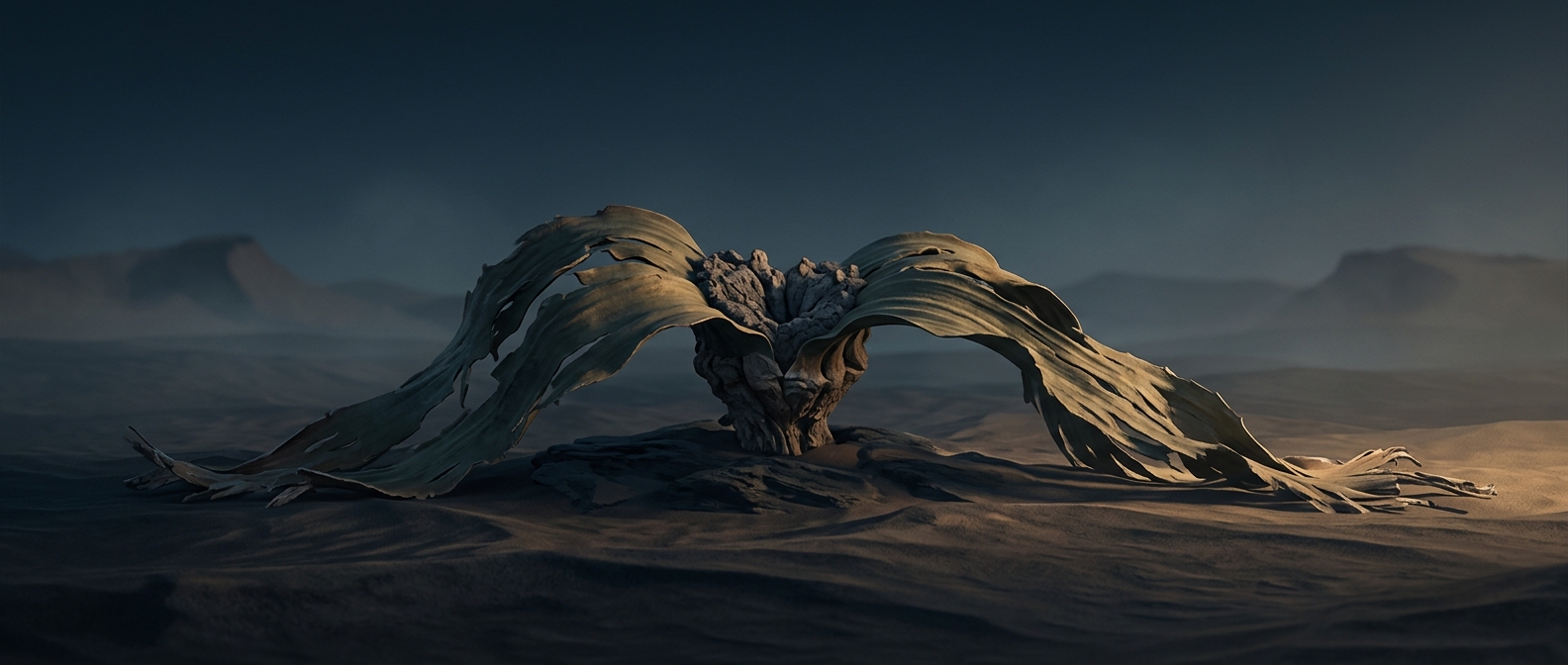
How Welwitschia Keeps One Pair of Leaves Growing
Welwitschia mirabilis, native to the Namib Desert region of southwestern Africa, builds its leaves differently from most plants. Its two leaves begin as the first pair produced by the seedling, then keep lengthening throughout the plant’s life. The growing tissue is near the base, where each leaf emerges from the plant’s low central stem. New tissue is added there, while the far ends are the oldest parts.
That arrangement makes the leaves seem to multiply. As the ends age, they dry, split into strips, and fray. Wind and contact with the ground can worsen the shredding, leaving long ribbons that overlap and twist together. The apparent heap is therefore not a tangle of newly made leaves, but the worn remnants of two leaves that have continued growing from their bases.
Growth at the Desert’s Pace
Keeping leaves is costly in a dry environment: exposed surfaces lose water. Welwitschia’s leaves are broad and close to the ground, where they can collect moisture from the air and occasional rain. Their persistent growth also means the plant does not need to replace its entire leaf canopy each season. Instead, the bases continue producing tissue as the outer portions weather away.
The result is a living record of growth and wear: two narrow bands of new tissue at the center, surrounded by older leaf material gradually breaking into ribbons. It is the plant’s growth point—not a hidden cluster of extra leaves—that keeps the apparent pile connected.