How a Pine Cone Moves Without Muscles
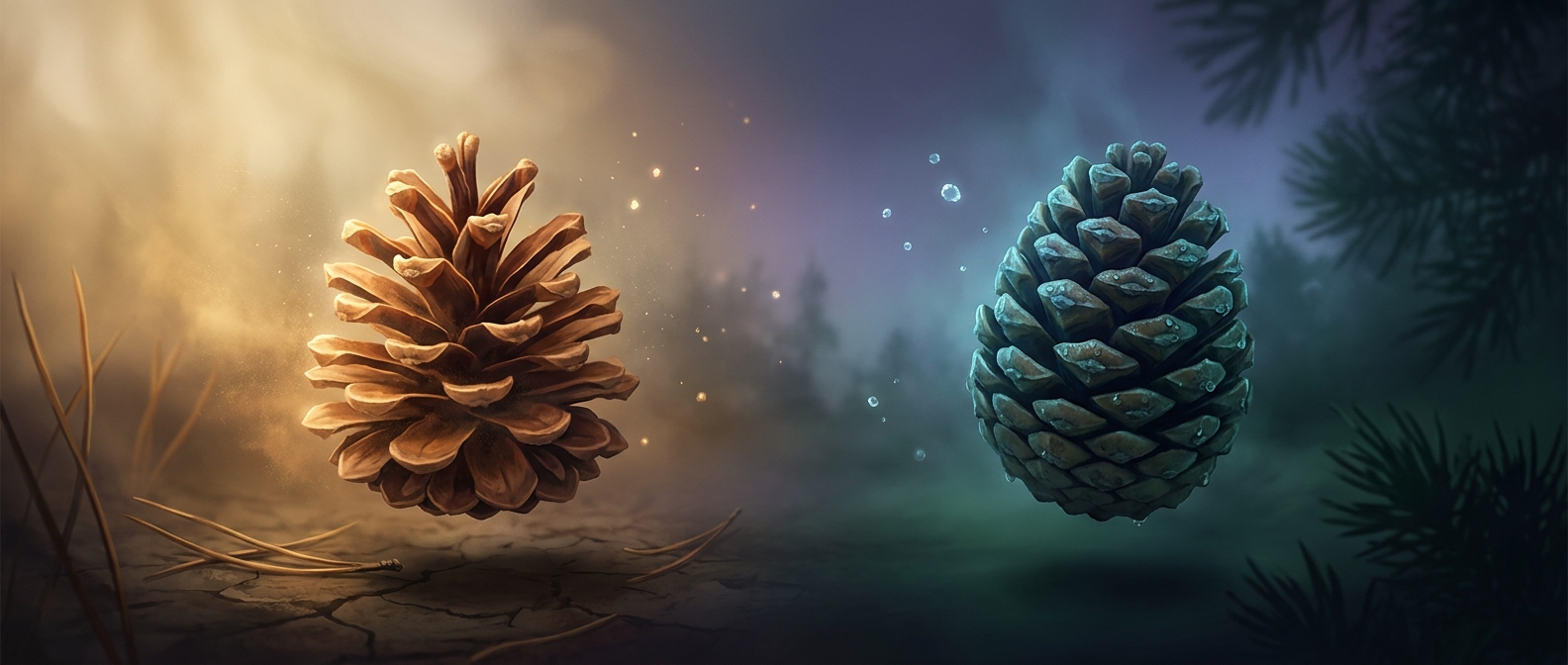
A fallen pine cone can still respond to changing weather because its scales are built from layers that swell and shrink by different amounts. When moisture enters the scale, those layers expand unevenly, bending it inward. As the cone dries, they contract unevenly in the opposite direction, and the scale bends outward. The motion is passive: the cone needs no living cells, muscles, or energy supply to operate it.
Why Humidity Changes Seed Release
Many pine seeds are light enough to be carried away by wind, but they are tucked between the cone’s scales. In dry conditions, the scales spread apart, giving seeds a path out. In damp conditions, they close around the seeds. This makes the cone’s movement a simple form of weather-responsive timing: seeds are more readily released when the air is dry, rather than when rain may weigh them down or leave them close to the parent tree.
The mechanism is similar in principle to a strip made of two materials that respond differently to moisture. Because the cone’s scale layers do not change size equally, their mismatch produces a bend. The same physical process can keep working after the cone has fallen and died.
A One-Way Journey for Each Seed
Opening and closing can repeat as humidity shifts, but the cone does not retrieve seeds once they have escaped. Its scales are adjusting to the environment, not making a conscious choice. On a forest floor, that small passive movement can still matter: a dry spell opens the cone and gives wind a chance to carry its seeds outward.