Why a quiet booth can feel stuffy
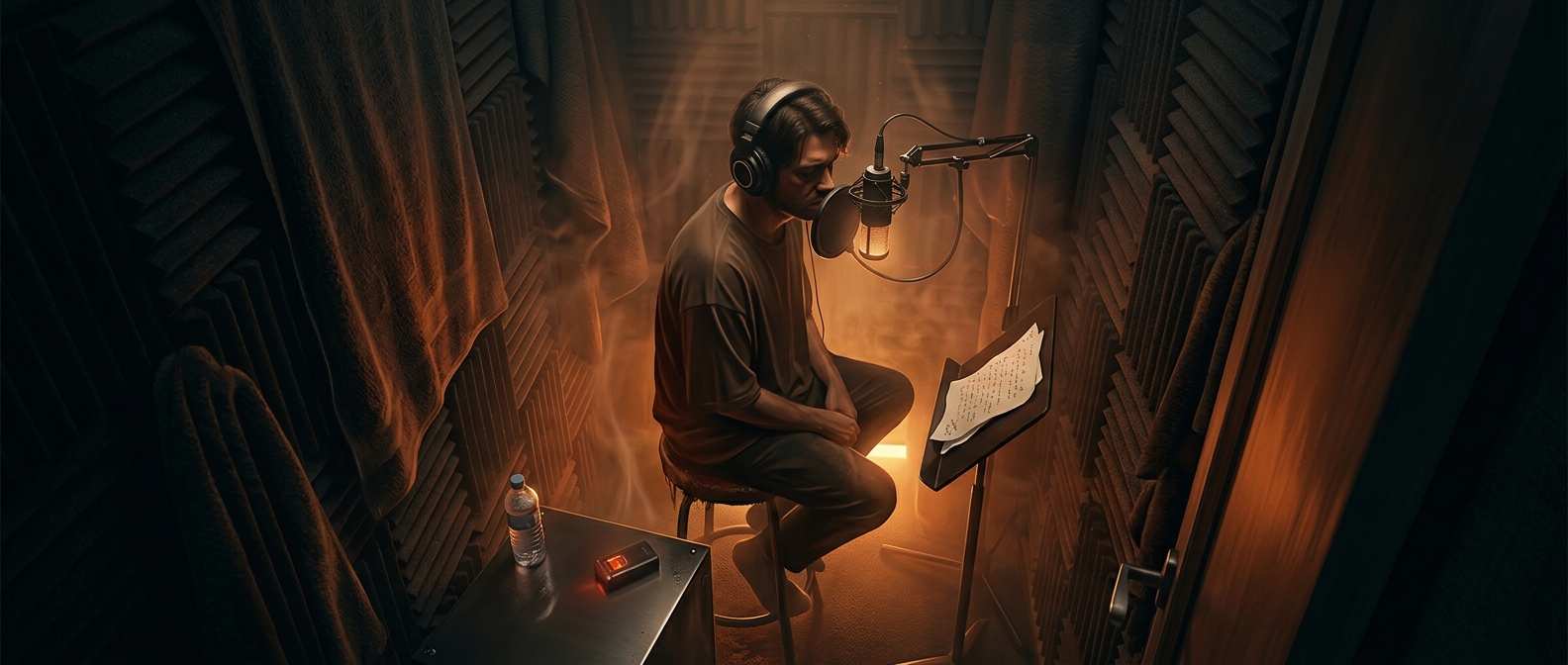
A narration booth has to solve two different sound problems. Soundproofing limits noise entering from the room or building; acoustic treatment reduces echoes inside the booth. Thick, layered walls help block sound, while absorbent surfaces keep a spoken line from bouncing back into the microphone. Together, they create a controlled recording space—but the walls also restrict ordinary airflow.
The ventilation tradeoff
Air conditioning and ventilation can make noise that a sensitive microphone picks up: a fan’s steady hiss, a brief rattle, or air rushing through a vent. In a quiet passage, those sounds can be as troublesome as a louder interruption. A booth may therefore have limited or carefully managed airflow, and the person inside can grow hot during a long session.
The small enclosure also reduces distractions and keeps the voice-to-microphone setup consistent. But with little room for outside sound, a narrator may notice bodily sounds that would normally disappear into the background, such as a pulse or breathing. Heat and that heightened self-awareness can make sustained reading more demanding.
Why sessions need breaks
Recording is not simply reading until the last page: a narrator may repeat lines, pause for corrections, and maintain the same vocal tone across many takes. A stuffy booth makes that focused work harder, so breaks and ventilation between takes are practical parts of the process. The same walls that help a recording sound clean can make the quietest workplace feel surprisingly physical.