A civic monument built into the commute
Moscow’s grand metro stations were designed to do more than move passengers. In the Soviet era, public buildings were expected to express the society being built, and the subway offered an unusually visible stage: millions of people would pass through it, often every day. A station could therefore function as both transport infrastructure and a statement that modern public life deserved impressive surroundings.
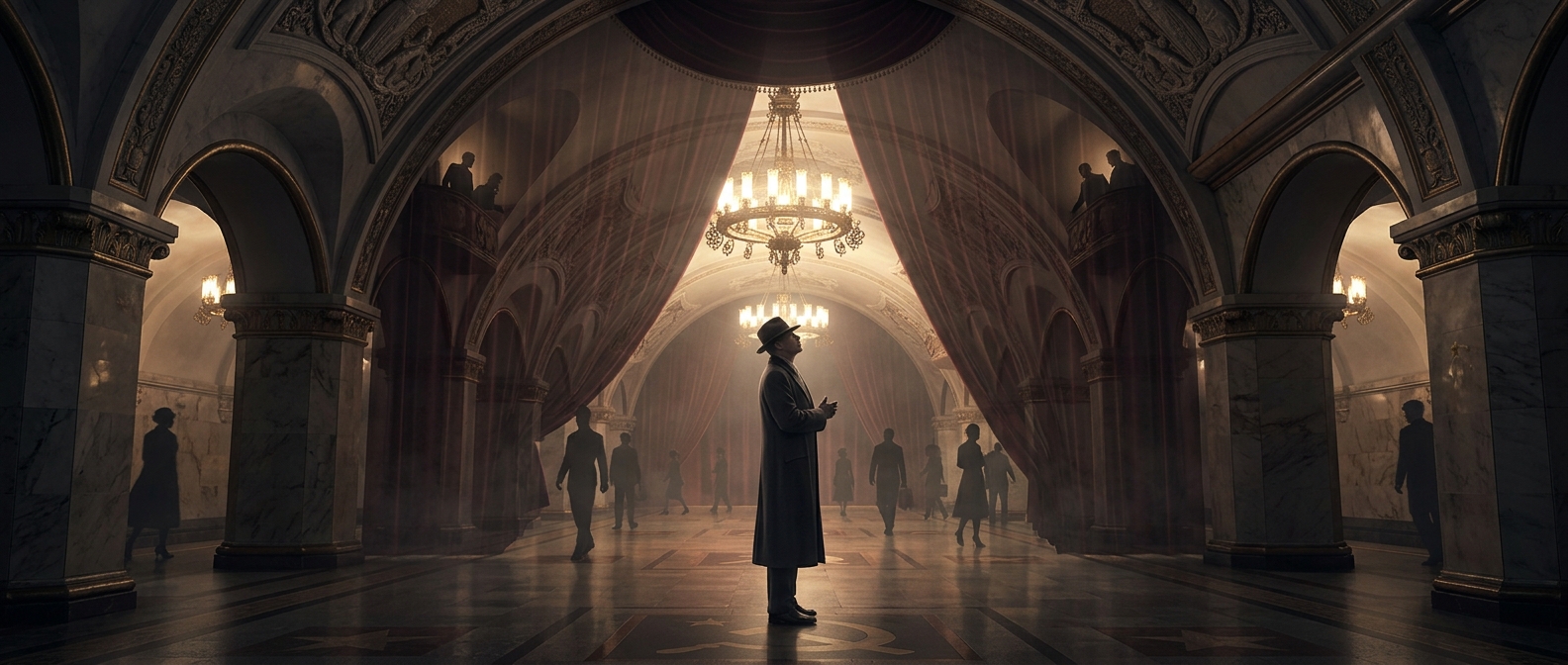
That ambition shaped what riders encountered underground. Marble-covered walls and columns, mosaics, sculpted details, and elaborate lighting transformed platforms and passageways into decorated civic interiors. Their scale and finish borrowed from the language of palaces and grand halls, but the people using them were commuters, not a private elite. The contrast was part of the message: magnificence was presented as something shared.
The station had to work as well as impress
A metro station is still a machine for handling crowds. Passengers need to enter, find their platform, board trains, and move out again. Decoration had to fit around those practical demands, in spaces shaped by tracks, platforms, and supporting structures. The result was not simply a ballroom placed underground; it was a working transit space whose architecture made the journey feel ceremonial.
The stations also made public art part of an ordinary routine. A mosaic or sculpted figure was not tucked away in a museum: riders saw it while changing trains or waiting on a platform. The remarkable idea was that everyday infrastructure could carry the visual weight of a national monument.
Not every Moscow station is equally ornate, and the city’s metro has changed over time. But the palace-like stations leave a lasting impression because they make a familiar trip feel different: the route to work passes through rooms designed to be seen, not merely crossed.